Hemp vs. Eucalyptus: two crops, many impacts, and a sustainable future
Agronomist José Martins reveals everything about hemp cultivation in Brazil, its environmental and economic advantages compared to eucalyptus. Discover how hemp can transform industries and drive sustainability in the country!

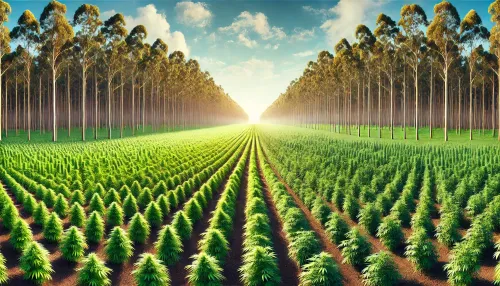
If you haven't paid attention to hemp yet, now is the time to do so! This plant, a variation of cannabis, is a true green gold mine. And the best part: its versatility is spectacular! From the stem to the flowers, every part of the plant has a use, making hemp one of the most sustainable raw materials on the planet. And did you know you can make clothes, shoes, and even food with it? Yes, the potential is enormous, but here in Brazil, hemp has not yet been fully legalized for production.
Recently, a historic decision by the Superior Court of Justice (STJ) determined that the Union and the National Health Surveillance Agency (Anvisa) regulate industrial hemp, focusing on its use for medicinal, pharmaceutical, and industrial purposes. This regulation will allow the cultivation of Cannabis sativa with a THC content of less than 0.3%, and, who knows, put Brazil on the map as a major producer of this crop.

In an exclusive interview with Sechat, José Martins, agronomist and technical director of FAI Therapeutics, shared some insights on the advantages of cultivating hemp in Brazilian soil. He also compared hemp with eucalyptus, which is already a major name in national agriculture.
According to Martins, hemp is a perfect fit for Brazil. He stated that hemp prefers flatter soils, with a pH between 7.0 and 7.6, and can be grown in more inland areas of the country. On the other hand, eucalyptus, which adapts to steeper soils, has a wider pH range and is more demanding in terms of drainage. "While hemp is grown in rotation with other crops, benefiting biodiversity, eucalyptus, which is more intensive, can have a greater environmental impact," he explains.
But what about profitability? Hemp, with its six-month cultivation cycle, can generate returns faster than eucalyptus, which only undergoes the first cut at 12 years, according to data from European countries. "Crop rotation and diversified use of hemp increase profitability," points out the specialist.
Hemp is not only a good choice for those thinking about sustainability, but it also brings a range of industrial possibilities. With over 50,000 potential applications, it ranges from fibers for textiles to bioplastics and medicines. According to Martins, in some situations, hemp can even replace eucalyptus – "in technological terms, for example, hemp has the upper hand," he reveals.
But the real revolution that hemp promises will only happen with legalization. Cultivation still faces significant barriers in Brazil, but the correct regulation will open doors to a massive production chain. "Hemp will diversify agriculture, create jobs, and bring economic development, especially in rural areas," Martins concludes.
Regarding environmental impact, the specialist reveals that while eucalyptus captures 8 to 10 tons of carbon per hectare, hemp can reach 14 tons in the same space and time. "In degraded areas, hemp has a great capacity to absorb heavy metals and has even been used to decontaminate soils in Chernobyl," he highlights.
Hemp versus Eucalyptus: a battle of giants
The comparison between hemp and eucalyptus reveals a range of advantages for hemp, especially in terms of sustainability and versatility.
While eucalyptus shines in paper and cellulose, hemp is a wildcard. Here's a summary of what each can offer:
- Fibers and textiles: hemp offers strong and biodegradable fibers, better for high-quality fabrics. Eucalyptus, with its shorter fibers, is more suitable for common paper.
- Bioplastics: hemp takes the lead, offering biodegradable bioplastics for various sectors. Eucalyptus is still in its early stages in this market.
- Energy: hemp can be used for biofuels with lower environmental impact, while eucalyptus, despite being good for biomass, consumes a lot of water.
- Construction: hemp excels with Hempcrete, a sustainable and insulating material. Eucalyptus dominates construction woods.
- Food and medicines: while hemp is a source of proteins, oils, and even therapeutic supplements, eucalyptus is more commonly used in respiratory treatments and aromatherapy.

“The regulation of industrial hemp in Brazil represents a significant opportunity to diversify agriculture, promote environmental sustainability, and boost the economy, especially in rural areas. With the development of a robust production chain and overcoming legal challenges, hemp can become a strategic crop for the country,” Martins concludes.
If regulation occurs, Brazil can take advantage and become a major player on the global stage. What is missing now? Overcoming legal obstacles and investing in a robust production chain to make hemp take off. Let's wait for the next chapters.
Agro & Tech Cannabis
The Brazilian Medicinal Cannabis Congress (CBCM) of 2025 will feature a new module focused on the agricultural and technological sector: "Agro & Tech Cannabis". In partnership with Embrapa, the event organized by Sechat promises to explore the vast potential of hemp cultivation and its applications, expanding the discussion on the feasibility of its production in Brazil. This module aims to bring together key players in the cannabis and agribusiness market, highlighting technological innovations that can transform the hemp production chain in the country.
During the congress, experts from various fields will share their knowledge on best agricultural practices, industrialization processes, and advances in scientific research related to hemp. The goal is to highlight the strategic role of this plant for the economy, focusing on sustainable cultivation possibilities, creating new markets, and the positive environmental impact that hemp cultivation can promote.
In addition to discussing the medicinal use of cannabis, the CBCM 2025 will become a vital space for the debate on the economic and technological development of the sector. The collaboration between Embrapa and the event organization is an important step to strengthen hemp agriculture in Brazil, promoting a more efficient and sustainable model for the production of cannabis derivatives. [CLICK HERE AND SECURE YOUR SPOT]