Medical cannabis transforms the routine of a multiple sclerosis patient
Marcelo Meneses reports pain relief after starting medical cannabis treatment. A court ruling authorizes home cultivation for therapeutic purposes.

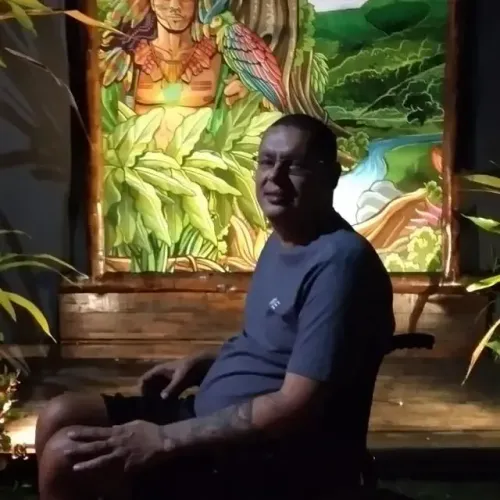
How did medical cannabis relieve Marcelo's pain and change his routine?
Marcelo Meneses reports relief from pain, anxiety, and insomnia after starting medical cannabis treatment. The courts authorized the cultivation of up to 78 plants per year for his own therapeutic use, under the conditions established in the habeas corpus.
After living with multiple sclerosis for more than two decades, Marcelo Meneses, 53, reports a significant change in his quality of life since he began using medical cannabis. A resident of Araruama, in the Região dos Lagos of Rio de Janeiro, he also lives with spastic paraplegia and intractable chronic pain. About 11 months ago, he started treatment with plant-based products prescribed by a doctor and says he has been able to relieve pain that directly interfered with his daily routine.
“The improvement is truly incredible. In terms of changing my life, it's everything, it's completely different. Only those who feel the pain can really understand,” says Marcelo.
The patient's journey gained a new chapter when the Rio de Janeiro Court of Justice (TJRJ) granted a habeas corpus authorizing him to cultivate cannabis for his own treatment. The decision allows the growing of up to 78 plants per year, in addition to the importation of seeds and the transportation of products intended for medicinal use, in accordance with the conditions set by the court.
The authorization also provides an alternative for the patient to produce part of his treatment at home, in a context where access to cannabis-based products can involve high costs and obstacles for people living with chronic illnesses.
Pain relief and a change in treatment
Marcelo reports using oil with cannabidiol (CBD) and tetrahydrocannabinol (THC), in a 1:1 ratio, alongside vaporized flower. According to him, the treatment was prescribed by a physician and is part of his daily routine.
The patient says he takes between five and eight drops of oil per dose, two to three times a day, and uses the vaporizer four times a day. In addition to pain relief, he reports improvement in symptoms related to anxiety and insomnia.
“It helps me so much with the pain, it relieves it significantly. I’ve already tried going without it, and it’s unbearable,” he says.
According to Marcelo, the improvement also allowed him to stop using the medications he specifically took for pain management. He attributes this change to his response to medical cannabis.
“I replaced the medications I was taking for pain. I don't take any pain meds anymore, and it provides substantial relief for my pain on a daily basis,” he shares.
This experience is individual and does not mean that cannabis will yield the same results for everyone with multiple sclerosis. Replacing or discontinuing medications should always occur under medical supervision, taking into account the symptoms, risks, and clinical evolution of each patient.
Court authorizes cultivation for personal use
The TJRJ ruling allows Marcelo to cultivate up to 78 plants per year to extract oil and use flower in his own treatment. The habeas corpus also authorizes the importation of up to 94 feminized seeds per year, along with transporting the seeds to the cultivation site and possessing the products specified in the ruling.
The document further stipulates that samples of the plants and oil be sent to laboratories or research institutions for cannabinoid content analysis. The ruling provides protection against the seizure of plants and the confiscation or destruction of materials intended for the patient's medical treatment, within the judicially defined limits.
The case involves health conditions that require ongoing monitoring and an individualized treatment plan. For Marcelo, the authorization represents the opportunity to manage his own medicinal cultivation under the conditions set by the court.
The habeas corpus does not equate to a blanket authorization for cannabis cultivation in Brazil. It is an individual judicial ruling, with specific boundaries tailored to the beneficiary patient.
Free legal assistance for vulnerable patients
Marcelo's legal defense was provided pro bono by attorney Lucas Dantas, who specializes in the rights of persons with disabilities and medical cannabis, in partnership with the patient association Santa Cannabis.
According to Dantas, the initiative offers legal assistance to members in socially vulnerable situations seeking court authorization to cultivate their own medical cannabis.
“We have a home cultivation access program. For members in socially vulnerable situations who want to grow their own medicine, we provide pro bono habeas corpus legal services. In his case, it was voluntary,” explains the attorney.
The association's work also includes technical training. According to Gabriela Kreffta, pharmacist and technical supervisor at Santa Cannabis, the cultivation and extraction courses offered by the organization help patients understand the processes involved in producing their own preparations.
The organization has held authorization from the Federal Court to cultivate cannabis and produce oil since 2023, according to information provided by the association.
“We have a social commitment to the most vulnerable patients. And the judiciary has been sympathetic to their cause,” says Kreffta.
Medicinal cultivation and legal boundaries
Marcelo's case unfolds amid ongoing discussions regarding access to medical cannabis and the possibilities for therapeutic cultivation in the country.
The individual authorization granted by the court establishes conditions that do not automatically apply to other patients. Therefore, home cultivation demands careful attention to each individual's legal standing, relevant court decisions, and current sanitary regulations.
In Kreffta's view, general limits regarding cannabis possession do not necessarily meet the needs of those using the plant to produce ongoing medications.
“Today, cannabis possession is decriminalized for up to six plants. However, for treatments of more severe conditions, that amount is insufficient,” she states.
This reference requires a legal distinction: the Supreme Federal Court's (STF) ruling on cannabis possession for personal use set a threshold of up to 40 grams or six female plants to differentiate consumers from dealers, without legalizing cultivation or granting a blanket permit to plant. The protection granted to Marcelo stems from a specific judicial ruling, subject to its own conditions.
Quality of life at the core of the debate
For Marcelo, the significance of the treatment lies in the effects he experiences in his day-to-day life. After approximately 23 years of living with multiple sclerosis, he describes the pain relief as a change that resonates across different areas of his life.
The authorization to cultivate adds a practical dimension to his experience: the ability to produce cannabis for his own treatment within the boundaries set by the court.
The case brings together issues central to the debate on medical cannabis in Brazil, such as clinical follow-up, product access, treatment costs, social vulnerability, and legal certainty for patients seeking therapeutic alternatives.
Although Marcelo's account is no substitute for scientific evidence regarding the efficacy and safety of cannabis for each clinical condition, his experience highlights the profound impact that symptom management can have on the life of someone living with a chronic disease.