Medicinal Cannabis, Also a Matter of Communication
How can the debate on the uses of cannabis be expanded in Brazil?

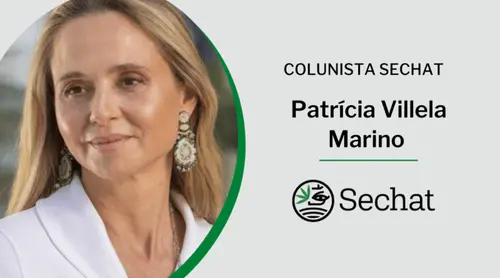
By Patrícia Vilela Marino
A survey conducted in July 2022 by PoderData brings us sad news about society's perception regarding cannabis: the number of Brazilians rejecting its legalization for medicinal and therapeutic purposes in Brazil has increased. In January, this number was 26%, and now it is 37%. Recently on Provoca – a program hosted by journalist Marcelo Tas – Dr. Carolina Nocetti, International Coordinator of the American Academy of Cannabinoid Medicine, said: "cannabis is a communication challenge".
On one hand, it is clear that this increase in rejection is also a reflection of the subject's greater visibility. There are already products based on cannabidiol and other cannabis derivatives being sold in pharmacies and cosmetic stores in the country; there are more discussions about cannabis in the Brazilian press, and increasingly more scientists, activists, and other interested sectors of the market are joining the conversation.
The research shows that this rejection decreases as the group becomes more educated, but beyond this data, in general, no more than 60% of the population supports the legalization of medicinal cannabis, whether among women or men; younger or older individuals; those with low or high income, from all regions of the country.
Cases like that of the state of Colorado in the United States, which was one of the first to decriminalize the medicinal use of cannabis, are also an example of the importance of communication in educating the population. As Dr. Carolina also mentioned in the conversation with Marcelo Tas, it was the impactful posters with simple and assertive messages spread across the streets of Colorado cities that helped raise awareness among the population regarding the plant's legalization.
Therefore, in addition to judicial decisions like the one in June – where for the first time a higher court authorized the cultivation of medicinal cannabis for three individuals – it is necessary to also work on public debate and educating the population in the broadest sense possible about the benefits of this treatment.
As scientist Stevens Rehen reminds us, we already have one of the world's largest scientific productions on cannabis. We have also been discussing this at the Legislative Assembly of São Paulo, where a series of public hearings of the Parliamentary Front in Defense of Medicinal Cannabis and Industrial Hemp are taking place, led by Deputy Sergio Victor (Novo Party) and other deputies.
But the impact of the topic on the legislative and judicial branches is much stronger when the population engages and debates – with arguments, knowledge, without prejudices.
How can we expand our debate? The invitation and suggestion remain.
The opinions expressed in this article are personal and the responsibility of their authors.
About the author:
Patrícia Villela is a lawyer, entrepreneur, activist, Sechat columnist, and president of the Humanitas360 Institute, a non-governmental organization that aims to rehabilitate people who are or have been incarcerated.