Medicinal Cannabis Brings Comfort and Hope to Pets with Tumors: 'It's About Living Better Until the End'
Veterinarian relies on medicinal cannabis to relieve pain, restore appetite, and improve quality of life for pets with tumors

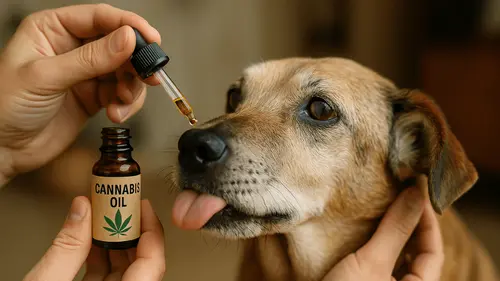
When a cure is no longer possible, every gesture of relief becomes invaluable. The spark in their eyes, the wagging tail, the revived appetite are small signs that give meaning to the journey of pet owners and veterinarians who opt for a different kind of care. In the world of pets with tumors, medicinal cannabis is proving to be not just a treatment, but a bridge between pain and well-being.
For veterinarian Veridiana Soares Roberto, who has been working with small animals in São Paulo since 2006 and prescribing cannabis since 2020, the secret lies in balance. 'The first changes we notice are improved sleep and appetite, pain and inflammation control, and a more balanced immune response. The quality of life for these patients improves significantly, whether in palliative care or in conjunction with conventional therapies like chemotherapy'.
The Role of Cannabis in Animal Palliative Care
It is estimated that 45% of female dogs and 30% of female cats develop some type of tumor in their lifetime, according to data from the Brazilian Association of Veterinary Oncology (ABOV). And when the diagnosis comes late, palliative care becomes the most humane path. In a study conducted by Unesp, dogs that received this type of care showed significant improvement in pain, energy, and appetite, clear indicators of well-being even in the face of disease progression.
Read Also:
A Look at Diseases in Pets Treatable with Cannabis
From Pain to Relief: How Cannabis Supports Pets and Horses
It is in this context that cannabis has gained ground. The endocannabinoid system, responsible for maintaining balance in the body, seems to be a powerful ally against the symptoms that most afflict oncology patients. Veridiana explains that phytocannabinoids, such as CBD and THC, can directly act on tumor development, interfering with the formation of new blood vessels (angiogenesis), stimulating the death of cancer cells (apoptosis), and even limiting cell invasion in cases of metastasis.
Breaking Prejudices and Expanding Horizons

Despite promising results, the doctor points out that the biggest barrier is still prejudice, especially within the veterinary community itself. 'I see families becoming more open, but there is still resistance among professionals who are unfamiliar with the mechanisms of cannabis. And this only delays the advancement of therapies that could alleviate so much suffering,' she states.
Another crucial point is the lack of regulation in the cultivation and national production of phytocannabinoids, which drives up treatment costs and limits access. 'Brazil has the ideal climate and soil. Producing here would reduce costs and boost research, especially in oncology and palliative care areas,' she emphasizes.
For Veridiana, each of these animals represents a story that can be told in a lighter way: 'because living better, even when time is short, is what gives meaning to the veterinary medicine I chose to practice'.