Ministries release booklet condemning cannabis
The report makes it clear that the text was written in a suggestive manner, seeking to influence opinions against a possible attempt at regulation and/or legalization of the uses of the plant

By João R. Negromonte
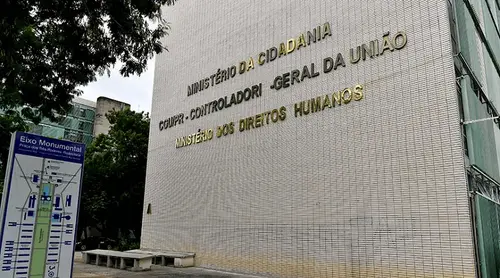
On June 22, during the IV Intersectoral Seminar on Prevention, Awareness, and Combat of Drugs, the booklet entitled "The risks of marijuana use and its legalization" was officially launched, created jointly by the Ministry of Citizenship, Ministry of Women, Family and Human Rights, as well as the Ministries of Health, Infrastructure, Justice, and Public Security.
>>> Join the Sechat WhatsApp group and be the first to receive news
Upon reading the content, it is evident that the purpose of this material is to confuse the public and influence political actors who are against the regulation of cannabis, including for medicinal purposes.
"They are possibly concerned about a possible future attempt at regulation or advancement in the expansion of cannabis uses in Brazil," says Norberto Fischer, a columnist for this portal and father of Anny Fischer, the first patient to import cannabidiol to Brazil.

"Note that parts of the text follow an academic pattern, where at the end of the paragraphs the bibliographic reference appears, but this does not happen throughout the text, so it is noticeable that each topic was researched and written by different people. But what stands out are the phrases highlighted in blue, as if the sentence were the conclusion of the research conducted and transcribed, which it is not... The blue phrase was possibly the conclusion of those reading the research and making the 'analyses,' so much so that no blue phrase has a bibliographic reference from any researcher," highlights Fischer.
Here are some examples:

>>> Join the Sechat Telegram group and be the first to receive news
Another interesting point is that the booklet also states, in the chapter entitled "The danger of so-called 'medicinal' marijuana," that in Brazil, the "National Health Surveillance Agency (Anvisa) published, in 2020, through two resolutions, regulations for manufacturing, importation (by individuals and legal entities), commercialization, prescription, dispensing, monitoring, and inspection of marijuana-derived products, observing the restrictions of the Federal Council of Medicine for its prescription. Thus, there is no need for legislation allowing the 'therapeutic' use of marijuana derivatives".
With this statement, pertinent questions arise:
- 1. What kind of message do they want to convey to nearly 80% of people who approve the medicinal uses of cannabis in Brazil today?
- 2. How does the government position itself regarding mothers and children who suffer from some type of refractory pathology, that is, when conventional treatments do not work?
- 3. Would the studies and research demonstrating the medicinal properties of cannabis derivatives, not only cannabidiol (CBD), have no place in this booklet as a way to counter the arguments?

According to the lawyer specialized in topics involving the uses of cannabis, Emílio Figueiredo, "This is material produced by a government that still lives in the imaginary world of a drug-free society. Something that is impossible to happen. Cannabis is there, being used by millions of people. This type of government stance reinforces stigmas and praises an infamous policy that makes Brazilian mothers cry because of state violence, whether due to young people killed in the peripheries or due to children who are left without the medicine, which is marijuana."
Health professionals, patients, researchers, and other market experts also noted the content which, according to the report itself, "shows strong indications of the health, social, and economic harms of cannabis use".
Renato Filev, who is a neuroscientist, Ph.D. in psychiatry and medical psychology, and co-author of several studies related to the therapeutic use of cannabis, as well as having been one of the arms of the professor and researcher Elisaldo Carlini, also gave his opinion:
"The material raises a series of relevant issues. Some are minor, such as spelling errors, others more serious, such as its own language, using outdated concepts like 'chemical dependence,' which today is referred to as 'substance use disorder'," the researcher discusses.

He also continues: "A large part of the references used corroborate a biased narrative, which brings up some questionable points, saying, for example, that the medicinal use of cannabis is not safe and can be highly harmful to people, but on the other hand, the extent of these problems is not equated with the damages caused by the prohibitionist scenario, such as people killed by state violence, collective overincarceration of social profiles like Black, poor, and peripheral individuals, among others."
This booklet, produced in collaboration with some ministries, makes clear the ideological alignment that the material intends to convey. If you have not yet had the opportunity to read the content in full, the report can be downloaded here: