National Cultivation and RDC 660 Review Could Redefine the Medicinal Cannabis Market in Brazil
Entrepreneur Joaquim Castro states that the advancement of national cultivation and the review of RDC 660 will be decisive for prices, competition, importation, and patient access in Brazil

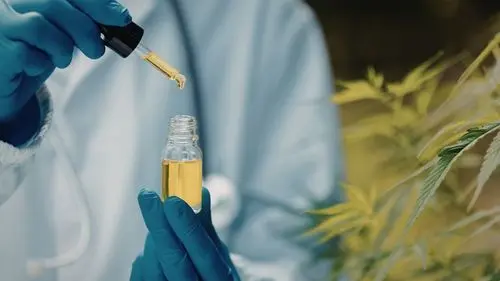
The medicinal cannabis market in Brazil is experiencing one of the most strategic moments since the creation of the first specific health regulations. With the authorization for commercial cultivation and research and the indication of a review of current regulations, the debate about the sector's future has intensified — especially regarding competitiveness, importation, and the role of the State in regulation.
According to Joaquim Castro, director of Equilibra, the opening to national cultivation represents a historic turning point. “The possibility of commercial cultivation, or industrial, as well as that focused on research is a new chapter, and the most relevant so far, in the history of medicinal cannabis in the country,” he said.
He stated that the real impact on prices and access will still depend on concrete results. “Within a horizon of up to 3 years, we will be able to have the answer as to whether local cultivation on an industrial standard will actually reduce production costs and therefore facilitate access in Brazil,” he assessed.
Cannabis Cultivation in Brazil and New Products

Although the new regulation maintains limitations — especially in the standardization of oils with up to 0.2% THC and different concentrations of CBD — Joaquim highlights important advances. “The new resolution continues to prevent major differentiations between oils, which in practice will mostly be with up to 0.2% THC and with different concentrations of CBD. However, the opening to new pharmaceutical forms and routes of administration is a great advance, and the trend is that new products will begin to appear on the shelves of Brazilian pharmacies in this horizon,” he stated.
This movement can boost the national medicinal cannabis industry, stimulate scientific research, and expand the portfolio available to patients.
RDC 660: Specific Review and Cannabis Importation
Another central point is the specific review of RDC 660, a regulation that governs the exceptional importation of cannabis-based products by patients. According to Joaquim, Anvisa's decision to treat the resolution separately was correct. “This was the most appropriate decision from a regulatory practice standpoint. 660 deserves this. It is largely responsible for driving the use of medicinal cannabis in Brazil,” he said.
He also refutes criticisms from protectionist sectors. “Protectionists who have an aversion to competition baselessly claim that 660 products pose a risk to public health without any evidence of this,” he said.
At the same time, he acknowledges that the regulation can evolve. The raising of quality control criteria, in his assessment, is legitimate — as long as it does not become a barrier to the entry of innovative products developed abroad.
Free Competition versus Protectionism
The debate about the regulatory path of medicinal cannabis in Brazil, in Joaquim's view, revolves around defending free competition.
“Exactly what path it needs to follow is a complex question. But I can guarantee that the protectionist path will not be good,” he said.
He argues that Brazilian patients need broad access to products from different sources. “We do not need another protected nascent sector. Brazilian patients do not deserve that. They deserve broad access to products from different sources,” he declared.
In his assessment, artificial barriers — whether tariff or phytosanitary — can compromise the competitiveness of the Brazilian market in the long term. “Local entrepreneurs will have the opportunity to cultivate here, but they cannot be artificially protected with barriers to entry, whether phytosanitary or tariff. This will be the recipe for falling behind in the long term. Free trade, albeit regulated, is the future if we want to have a relevant industry,” he assessed.
He also commented on recent statements by the president of Anvisa, Leandro Safatle. “The phrase from the Honorable President of Anvisa Leandro Safatle stating recently that ‘now the cycle is national’ is concerning. It is beautiful and promising. But only if the industry is born in an environment of competition that will regulate prices and product variety in the national market,” he said.
Physician-Patient Autonomy at the Center of Regulation
For Joaquim, any changes to RDC 660 should preserve the principle of autonomy in the relationship between physician and patient.
“The ideal model is not for me, but for the Brazilian patient, which is to preserve the initial concept of 660, that the State does not oversee the private relationship between physician and patient,” he said.
He emphasizes that the regulation itself establishes this responsibility. “660 in article 15 already makes it clear that it is up to the physician and the patient to assess the risk,” he said.
And he warned of possible regulatory excesses. “Whenever the State tries to oversee a private relationship without any evidence that it is necessary, there is a potential risk for those under tutelage, even if the argument is noble in trying to protect them,” he assessed.
Future of Medicinal Cannabis in Brazil
Despite regulatory uncertainties, Joaquim demonstrates confidence in the sector's growth. “I am very optimistic,” he said.
He believes that Brazilian entrepreneurs will rationally assess risks and opportunities, internalizing cultivation and manufacturing when economically viable. “But we will have serious entrepreneurs who know how to calculate risks and returns and will choose to internalize either manufacturing or cultivation plus manufacturing,” he stated.
He also sees room for greater international presence in the country. The current moment of medicinal cannabis in Brazil is marked by regulatory decisions that can define the level of competitiveness, innovation, and access for the coming years. “I cannot remember the last relevant foreign player who entered Brazil, and now is the time for them to start looking for local partners,” he concluded.