One in Three Associative Patients Seeks Treatment for Mental Disorders
Anxiety, depression, and other emotional disorders are the most common diagnoses among cannabis users in Brazilian associations


Mental and behavioral disorders are the main diagnoses among patients undergoing treatment with medical cannabis in the Brazilian associative sector. According to the National Overview of Cannabis Associations, published in July 2025, almost one in three patients (29.76%) turn to the plant to relieve symptoms related to these conditions — including anxiety, depression, mood disorders, among others.
The study reinforces the role of associations in accessing cannabis in Brazil and presents robust data on the profile of patients and the actions of entities throughout the country.
The national survey, created with the aim of co-creating a document on the performance of medical cannabis patient organizations, reveals that 130,742 people are currently undergoing treatment, with 7,056 of them being pets.
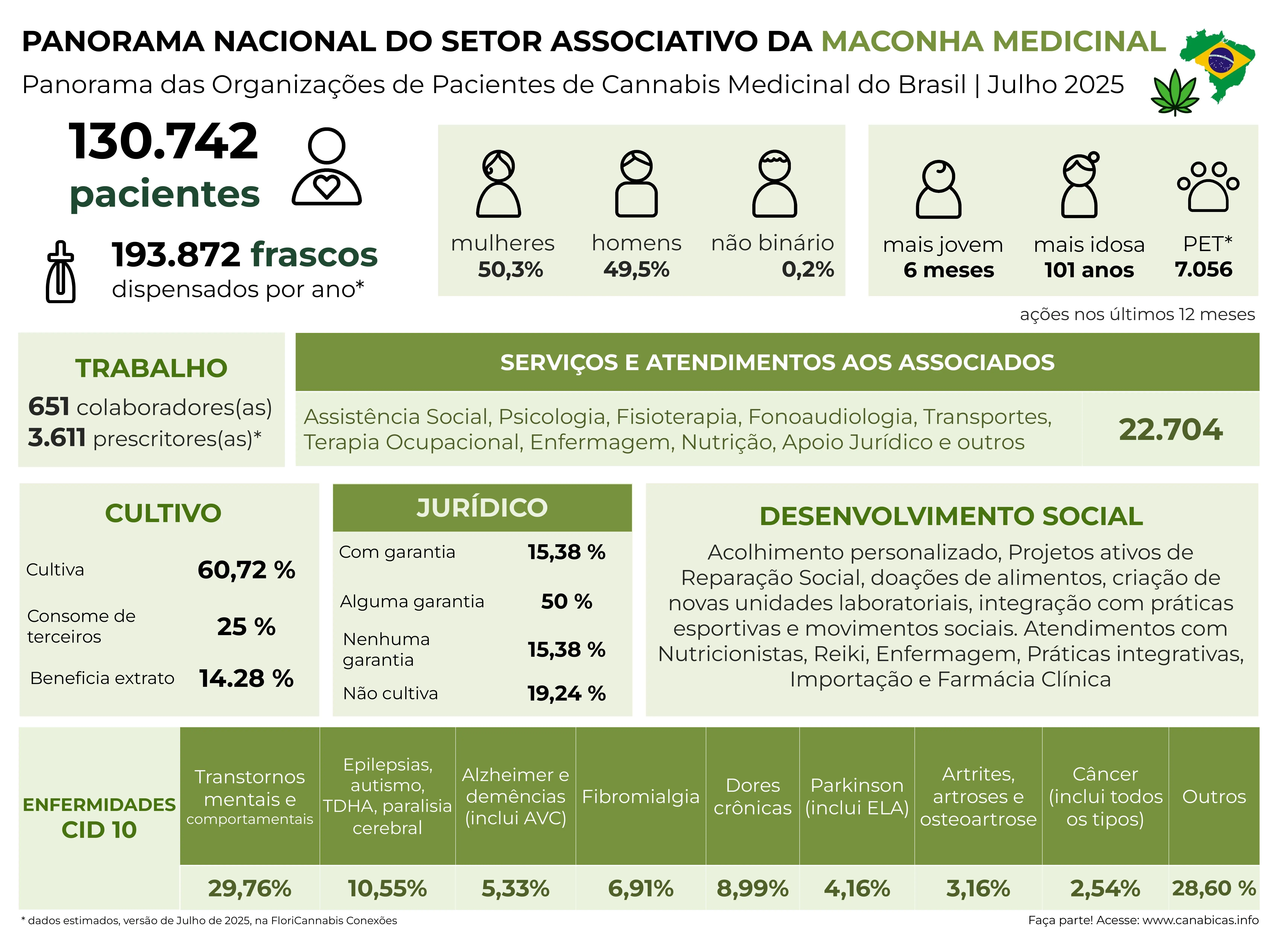
Among human patients, women show a slight predominance (50.3%). 49.5% are men and 0.2% identify as non-binary. Another important data point is the product distribution. Over the course of a year, these associations distributed 193,872 bottles of cannabis-based medications.
Which diseases receive the most treatment with cannabis in associations?
In addition to mental and behavioral disorders, other conditions that frequently appear among patients include:
- Epilepsy, autism, ADHD, and cerebral palsy – 10.55%
- Chronic pain – 8.99%
- Fibromyalgia – 6.91%
- Alzheimer's and other dementias (including post-stroke) – 5.33%
- Parkinson's and ALS – 4.16%
- Arthritis and osteoarthritis – 3.16%
- Cancer – 2.54%
A diverse group of other diagnoses represents 28.6% of the treatments, highlighting the wide range of conditions that can benefit from the medicinal use of cannabis.
Multidisciplinary structure reinforces quality of care in associations
The Overview also maps the actions of different types of organizations — associations, collectives, traditional communities, clubs, federations, and other arrangements — and identifies 28 descriptive factors about the practices adopted in the sector.
One of the highlights is the multidisciplinary structure that provides support to patients. 651 professionals and collaborators work in the associations. In addition, 3,611 doctors prescribe through the entities.
According to the overview, associations have teams of social assistance, psychology, physiotherapy, speech therapy, occupational therapy, nursing, nutrition, transportation, and legal support.