Parliamentary Front for the Defense of Medicinal Cannabis is Installed in Goiás
After the approval of the bylaws, the objective now is to promote debates aimed at establishing a policy for palliative treatment of various diseases through medicinal cannabis
Originally published by Agência Assembleia de Notícias de Goiás
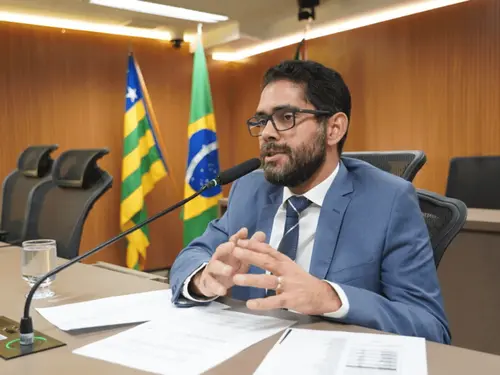
Under the presidency of Deputy Lincoln Tejota (UB), the Parliamentary Front in Defense of Medicinal Cannabis was installed at Alego on Wednesday, the 23rd. The opening of the debates took place in the committee room of Palácio Maguito Vilela and was attended by parliamentary members of the association, as well as representatives of entities advocating for the issue.
After the approval of the bylaws, Tejota highlighted the objective of creating the Parliamentary Front, which consists of promoting debates aimed at establishing a policy for palliative treatment of various diseases through medicinal cannabis. The parliamentarian emphasized that the discussions will be based on scientific evidence and references, with the aim of offering an alternative option to public health.
“Cannabis is a source of treatment and an option for people who need to alleviate their pain,” emphasized the deputy, stating the need to advance the discussion of the issue in a mature and conscious manner. “We want to discuss science here, not ideology. We are not advocating for recreational or indiscriminate use of the plant, but rather for those people who may benefit from this type of treatment to have access to it,” he pointed out.
In addition to Lincoln Tejota, the following deputies will be part of the Parliamentary Front in Defense of Medicinal Cannabis: Dr. George Morais (PDT), Dra. Zeli (UB), Gustavo Sebba (PSDB), José Machado (PSDB), Lucas Calil (MDB), Lucas do Vale (MDB), Mauro Rubem (PT), Veter Martins (Patriota), and Wagner Camargo Neto (Solidariedade).
Present at the meeting's opening, Deputy Rosângela Rezende (Agir) congratulated the initiative and offered to work with the group to advance public health through medicinal cannabis. “We need to learn a lot about this. I want to see the progress of this story and hope that we can be pioneers. Count on me,” emphasized the parliamentarian.
Also present at the meeting, the founding president and general director of the Goiás Association for Support and Research on Medicinal Cannabis (Agape), Yuri Tejota, emphasized the importance of the discussion, stating that “Goiás has a lot to gain” from the initiative.
The professional stated that the association, which “currently has almost 300 registered families and an impact on over a thousand families,” is available to the Parliamentary Front in Defense of Medicinal Cannabis to align the issue with science and the public sector and present to society the relevance of using the plant as an alternative to health treatments.
“This debate is fundamental. While other countries are integrating this plant into the productive cycle of science and health, we are here stuck in time,” he reflected. “As a society, we need to understand that this plant alone is a pharmacy and how we can use it safely,” he added.
Representing the Brazilian Bar Association - Goiás Section (OAB-GO), Matheus Scoponi also expressed support for the parliamentary group throughout the working period, aiming to ensure access to health for all people in every possible way. The professional highlighted the organization of the seminar “Advocating with Medicinal Cannabis,” to be held by the Goiás institution on Thursday, the 24th.
According to the lawyer, it is a course aimed at training professionals to work in this new segment, assisting in the debate and collaborating with the judiciary to ensure access to health. “We work on the topic of medicinal cannabis exclusively based on scientific perspectives, with a completely rational view, aimed at ensuring the best possible treatment for all people,” he pointed out.
Upcoming Meetings
During the installation of the Parliamentary Front in Defense of Medicinal Cannabis, Lincoln Tejota emphasized the need to seek references and assistance from national and international entities to understand, through places where the policy is already well established, what the challenges and ways of progress are.
The initiative's author also highlighted the importance of partnerships with other states and proposed presenting the project to the National Congress, National Union of Legislators and State Legislatures (Unale), Health Departments, among other relevant bodies for the evolution of the issue.
“We are not discussing any other topic here than public health. We need the support of society, and the only way this will happen is if we are well-grounded, showing society that the State can offer even better health care,” emphasized the deputy.