Psychedelics and Mental Health: The Promise That Transforms Lives
When traditional medicine falls short of reaching pain, science seeks new paths. Understand how psychedelics have become the new hope for mental health

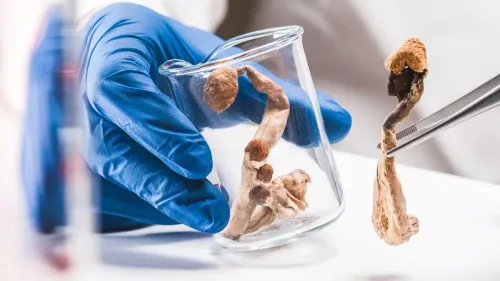
Psychedelics - There are pains that cannot fit into words and wounds in the soul that traditional medicine sometimes struggles to reach. For millions of people facing the silent burden of post-traumatic stress, deep depression, or addiction, the search for relief is an arduous journey of hope and reconstruction.
It is on the horizon of this search that psychedelics cease to be a taboo of the past and reveal themselves as a healing and restoring embrace, lighting a beacon where before there was only shadow.
When politics bows to science to embrace human suffering, paths open for entire lives to find peace once again.
In this article you will see:
Alexandria Ocasio-Cortez's (AOC) stance in the U.S. Congress
The amendments passed to boost research with psychedelics
How psychedelic compounds act on the brain and in trauma treatment
The bureaucratic challenges and the role of military veterans in legal reform
The international landscape of psychedelic medicine and the next steps
The advancement of psychedelics in mental health and in the U.S. Congress
The discussion on the therapeutic potential of substances such as psilocybin and MDMA has reached another decisive milestone in the international political and scientific scene.
During the consideration of federal funding bills in the United States House of Representatives, Representative Alexandria Ocasio-Cortez (AOC) once again publicly defended the use of psychedelics in treating severe mental health conditions.
The Democratic lawmaker from New York emphasized that easing federal research barriers is an urgent and humanitarian step.
According to the original article from Marijuana Moment, AOC stressed that science needs freedom to study substances that show promising results where other treatments have failed.
"We are seeing an extraordinary amount of promise in the use of psychedelic substances to treat everything from Post-Traumatic Stress Disorder (PTSD) to severe depression and addiction," said Alexandria Ocasio-Cortez, in remarks on the floor of the U.S. House (via Marijuana Moment).
How science views the use of psychedelics in mental healthcare
The scientific and medical community's interest in psychedelic compounds is no coincidence.
Studies conducted by renowned institutions, such as Johns Hopkins University and Imperial College London, have been showing that substances such as psilocybin (found in certain mushrooms) and MDMA have the ability to promote neuroplasticity.
In practice, this means these substances help the brain form new neural connections and "undo" rigid thought patterns associated with trauma and depression.
LEARN MORE: Understand the difference between adult use and therapeutic use of controlled substances
Main benefits being investigated by medicine:
Trauma remission: MDMA combined with psychotherapy has shown high efficacy in treating severe PTSD in war veterans and survivors of violence.
Relief from treatment-resistant depression: psilocybin acts quickly in patients who do not respond to conventional antidepressants.
Addiction treatment: research indicates a significant reduction in alcohol and nicotine consumption after guided sessions.
Legislative amendments and breaking down bureaucratic barriers
During debate sessions on the National Defense Authorization Act (NDAA) and other budget proposals, lawmakers from both parties (Democrats and Republicans) introduced amendments focused on military veterans' health.
The inclusion of data on the benefits of psychedelics in treating older adults, veterans, and individuals with severe trauma helped build a bipartisan bridge.
AOC recalled that, for decades, the classification of these substances in "Schedule I" of the Controlled Substances Act created nearly insurmountable financial and administrative hurdles for academic researchers.
"For far too long, red tape prevented our best scientists from researching the healing potential of these substances. We need to remove these barriers so that medicine can move forward responsibly," noted Alexandria Ocasio-Cortez, as highlighted by Marijuana Moment.
The approval of amendments instructing the Department of Defense and the Department of Veterans Affairs to conduct clinical studies with cannabis oil, psilocybin, and MDMA represents an unprecedented institutional paradigm shift in the United States.
An unlikely alliance: Veterans and mental health advocacy
One of the decisive factors for the shift in stance in the U.S. Congress was the active engagement of war veteran organizations.
Retired military personnel suffering from severe PTSD found in psychedelic-assisted therapy a concrete alternative after traditional treatments failed.
LEARN MORE: How integrative medicine is revolutionizing the treatment of anxiety and stress
This mobilization united progressive lawmakers, such as AOC, and conservatives, such as Representative Dan Crenshaw (himself a former U.S. Navy SEAL).
Crenshaw also led legislative initiatives to fund clinical research with psychedelics for special operations forces.
Factors that fueled the political debate:
Veteran suicide crisis: the urgency to find effective treatments to save former service members' lives.
Robust scientific evidence: Phase 3 clinical trials published in high-impact journals such as Nature Medicine.
Public opinion support: growing social acceptance of medical cannabis and psychedelic therapies.
The global scenario and the impact on the future of medicine
The movement in the United States reflects a global trend of regulatory reassessment. Countries like Australia have already authorized psychiatrists to prescribe MDMA for PTSD and psilocybin for treatment-resistant depression under strict conditions.
As research advances and legislation modernizes, the expectation is that safe and regulated access to these therapies will become a reality in several countries, including Latin America.
The debate held in the U.S. Congress signals that mental health care requires political courage, empathy, and a non-negotiable commitment to science.
Bibliographic References
Marijuana Moment. AOC Touts The Promise Of Psychedelics To Treat Mental Health Conditions As Reform Amendments Advance In Congress. Available at:
https://www.marijuanamoment.net/aoc-touts-the-promise-of-psychedelics-to-treat-mental-health-conditions-as-reform-amendments-advance-in-congress/ Mitchell, J. M., et al. (2021). MDMA-assisted therapy for severe PTSD: a randomized, double-blind, placebo-controlled Phase 3 study. Nature Medicine, 27(6), 1025-1033.
Carhart-Harris, R., et al. (2021). Trial of Psilocybin versus Escitalopram for Depression. New England Journal of Medicine, 384(15), 1402-1411.