Quitting smoking may gain a new ally: CBD
Can quitting smoking be a less lonely journey? A review of 52 studies suggests that CBD may help reduce cigarette consumption. Learn more.

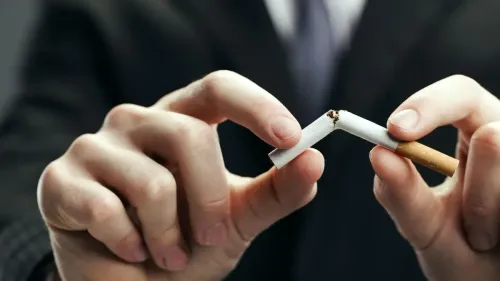
How many times does someone promise themselves that this will be their last cigarette, only to fall back into the habit during moments of anxiety, fatigue, or loneliness? Quitting smoking is not always just a decision: it can be a journey filled with attempts, relapses, and fresh starts.
What if science found new ways to make this path less difficult? Yes, it is possible that cannabidiol (CBD), a cannabis compound, may contribute to this process.
A review led by researchers affiliated with Yale University, published in the journal Neuroscience & Biobehavioral Reviews, analyzed 52 studies and identified promising findings, although larger research is still needed to confirm its efficacy.
Quitting smoking: what did the Yale review find?
Published on October 12, 2026, the study Cannabis Co-Use and Endocannabinoid System Modulation in Tobacco Use Disorder, available on PubMed, gathered evidence on the relationship between cannabis, nicotine dependence, and potential interventions targeting the endocannabinoid system.
The researchers evaluated 52 studies selected from 4,869 identified records. The dataset included observational research, preclinical experiments, and experimental human studies.
Among the results, CBD demonstrated the potential to reduce nicotine consumption and ease withdrawal symptoms. The authors emphasize, however, that the findings still need to be confirmed in larger and more robust clinical trials.
How can CBD help with quitting smoking?
Cannabidiol, known as CBD, is one of the compounds found in cannabis and has been investigated for its potential effects on various physiological processes.
In the context of smoking, scientific interest centers on how CBD may influence nicotine consumption, withdrawal symptoms, and attentional bias toward cigarette-related cues.
When someone attempts to quit tobacco, everyday situations, emotions, and environments can trigger cigarette cravings. Therefore, understanding the mechanisms involved in these urges is one of the key fronts in addiction research.
LEARN MORE: Smoking Cessation with Cannabinoids: Between Neuroregulation and Reclaiming Autonomy
It is important to emphasize that investigating the therapeutic potential of an isolated compound does not equate to recommending self-directed cannabis use. The effects depend on the substance, formulation, dosage, and individual characteristics of each person.
Study shows a 40% reduction in cigarette consumption
One of the key findings highlighted by the review comes from an earlier clinical trial published in 2013, which involved 24 cigarette smokers seeking to quit.
Over the course of a week, participants used a CBD inhaler or a placebo device whenever they felt the urge to smoke.
The group receiving CBD showed an approximate 40% reduction in cigarette consumption during the treatment period. Meanwhile, the placebo group showed no significant change. Part of this reduction was maintained at a follow-up assessment two weeks later.
Despite this outcome, the small sample size and short follow-up period warrant caution. This data does not mean that everyone who uses CBD will experience the same response, nor does it prove that the compound can guarantee long-term smoking cessation.
Another human study, also discussed in the review, observed that a single 800 mg dose of CBD reduced attentional bias toward cigarette-related cues in 30 participants following a period of nicotine abstinence. This finding must also be interpreted within the study’s limitations and does not constitute a dosage recommendation.
Cannabis and smoking: is there a difference between CBD and whole-plant use?
Yes. The review also identified an association between the co-use of cannabis and tobacco and lower odds of quitting cigarettes.
In an analysis of 18 observational studies comprising 229,034 participants, cannabis use was associated with a 25% reduction in the odds of smoking cessation.
This does not demonstrate that cannabis causes difficulties in quitting smoking. Observational studies identify associations, but they do not, on their own, establish a cause-and-effect relationship.
The authors emphasize the importance of distinguishing broad, whole-plant cannabis use from the investigation of specific compounds, such as CBD, in controlled therapeutic settings.
CBD for smoking cessation: what remains to be discovered?
These results open a promising avenue of investigation, but they do not yet establish CBD as a proven treatment for smoking cessation.
Clinical trials with larger sample sizes, longer follow-up periods, and thorough evaluations of safety, dosing, and efficacy are needed.
Anyone wishing to quit smoking can visit a healthcare center or consult a qualified professional to explore available strategies, including clinically proven treatments and behavioral support.
CBD should not replace established therapies without professional guidance. Furthermore, it may cause adverse effects and interact with other medications.
Leaving cigarettes behind does not always happen overnight. For many people, it is a journey that requires compassion, reliable information, and continuous support. Science can help open new doors, but each possibility must be evaluated responsibly, without turning a promising finding into an unverified promise of a cure.