Red and UV-A light can increase CBD yield by up to 44% in indoor hemp cultivation
Study by Yunnan University shows that combining red light in the vegetative phase and UV-A light in flowering increases biomass and raises CBD yield by up to 44% in indoor hemp cultivation

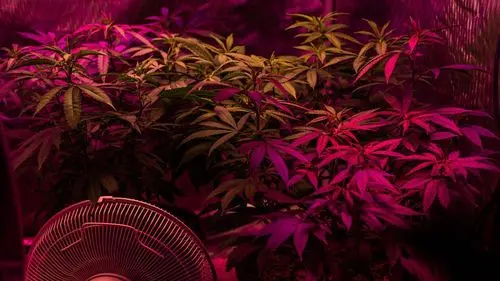
A study conducted by researchers at Yunnan University in China demonstrated that the combined application of red light in the vegetative phase and UV-A light in the flowering phase can significantly increase biomass production and cannabinoid concentration in high-CBD hemp (Cannabis sativa L.) crops. The research was published in the journal Scientific Reports by the Nature group.
The study evaluated four lighting strategies in a controlled environment: continuous white light (control), supplemental red light in the vegetative period, supplemental UV-A light in flowering, and the combination of both interventions by development phase. The plants were grown in tent greenhouses with controlled spectrum, light intensity, and photoperiod.
Red light increases branch number and inflorescence yield
The results indicated that supplementing red light during the vegetative phase increased the number of effective branches by 18%, resulting in a 17.9% increase in inflorescence yield compared to the control. On the other hand, UV-A application during flowering increased CBG content by 52.7% and CBD content by 12.1%.
Combination of spectra increases CBD and CBG yield per plant
The best performance was observed in the combined treatment (red light in growth and UV-A in flowering), which showed the highest yields per plant: 0.53 g of CBG and 4.62 g of CBD — increases of 91.8% and 44.1%, respectively, compared to the control. However, the authors noted that the additional gain in CBD between the supplemented treatments was not statistically significant, suggesting that the effect is not strictly additive.
All treatments maintained the THC content below 0.3%, within the legal limit for industrial hemp. Additionally, there was no significant impact on flowering time or plant height, but greater reproductive biomass was recorded in strategies with spectral supplementation.
According to the researchers, the results reinforce the potential of specific lighting strategies by growth stage to optimize yield and phytochemical quality in LED indoor cultivation systems, strengthening the use of high-CBD hemp for industrial and medicinal purposes.