Report highlights environmental impacts of global drug policy
A new report reveals that the war on drugs has a silent environmental cost: deforestation, pollution, and displaced communities

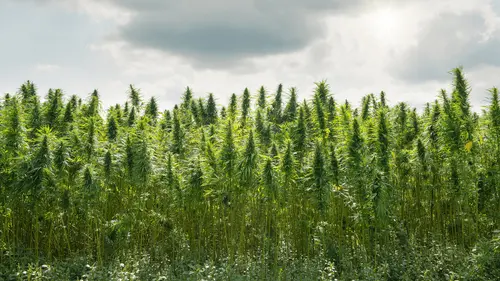
The so-called war on drugs, a decades-long global repression policy, is leaving irreversible marks on the environment. A 2023 report prepared by the International Coalition for Drug Policy Reform and Environmental Justice reveals that strict prohibitions 'fuel' the devastation of critical ecosystems, mainly in tropical forests, high-altitude woodlands, and mining regions.
Read Also:
Medicinal use of cannabis: information is the cure for myths and misinformation
In practice, this repression pushes small farmers to the edges of forests or to remote regions, where they end up producing illegal drugs, coca, opium, cannabis, far from any institutional support.
They invade protected areas, burn vegetation, degrade soil, pollute waters, all to escape scrutiny or direct conflicts with the repressive apparatus. And, even with so many ecological damages, the system rarely acknowledges its own responsibility.
Environmental justice begins when we face prohibitionism
The report points out that global prohibition is a 'missing link' in climate justice, meaning that while combating deforestation and carbon emissions, ignoring the socio-environmental impact of anti-drug policies hinders true progress.
An alternative that stands out: effective and responsible regulation, based on human rights, public health, and sustainability.
This includes controlled legalization, transparent monitoring, and participation of affected populations. Only then will it be possible to break the cycle of destruction: vulnerable farmers forced into clandestinity, organized crime profiting, environment collapsing.
With information from El.Planteo.