The dangers that no one tells you about growing cannabis at home, even with authorization
Even with habeas corpus, medical cannabis patients face persecution and risks; learn how to protect yourself
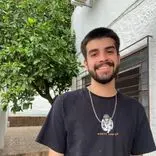
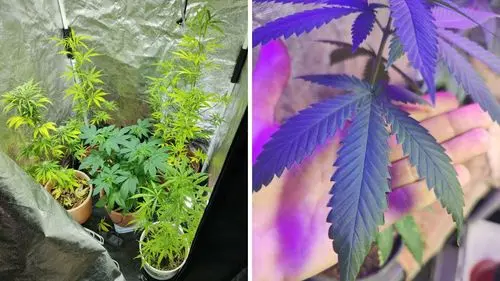
In 2020, during the pandemic, Carolina Artez from Rio Grande do Sul planted her first cannabis seed. A patient for over eight years, she was starting a new phase with marijuana - something formalized months later, with the granting of her Habeas Corpus.
Full of hope with the treatment, she saw one of the most turbulent periods of her life flourish, filled with prejudice and misinformation. The patient who had already undergone eight surgeries, including spinal fusion and even the removal of a saphenous vein, had to face attacks from neighbors.
Due to the smell emitted by the cultivation, neighbors began to persecute her with verbal assaults and defamation. With the support of her lawyer, Carolina approached the police still in 2020, reporting moral and psychological violence.
"I recorded threats, including absurd ones like lynching. I filed police reports. But for a long time, my treatment continued to be treated as a crime," she lamented.
Even with the proven legality of the cultivation, the hostility persisted. Emotionally exhausted, Carolina decided to leave the apartment where she lived — a property owned by her family for 60 years, inherited from her paternal grandparents.
After the move, the attacks continued. "Every time I went there to pick something up or do maintenance, I was the target of insults," she said.
Five years later, Carolina returns home
In May 2025, Carolina returned to live in the apartment. “The truth remains: the apartment is mine. The pain is mine. And the right to treat myself as I need to is also mine,” she states.
Although the prejudice has diminished, according to the patient, there are still manifestations of intolerance. Threats and persecutions are still under investigation, and the police are aware of the legality of the cultivation on the premises. “I continue to do my part, with records, complaints, and evidence. I do not remain silent.”
Home cultivation of cannabis and the challenges of discretion
Carolina's story is not an isolated case. According to Danilo Coelho, founder and CEO of Leds Indoor, many patients who grow medical cannabis at home, especially in urban areas, fear prejudice and seek alternatives to "hide" their cultivation.
Therefore, the products from his company are delivered in neutral packaging, without visible branding. “We know that the stigma still exists and can weigh on patients,” he comments.
Activated charcoal filters are allies in odor control
To ward off the noses of others, patients seek the "activated charcoal filter," one of the best-selling products, according to Coelho. “We use virgin charcoal 1050+ RC 48, which offers high absorption and lasting performance, with a lifespan of up to 2 years,” explains Danilo.
The filters are compatible with the main market exhaust fans and have simple installation. “They are true allies in maintaining peace with neighbors and family members.”
Smell and reports do not justify police entry without a warrant
A common question among patients is about police approaches. According to the ruling of the Supreme Federal Court (RE 603.616/RO), the smell of marijuana or anonymous reports do not justify the forced entry of the police into residences without a judicial warrant or the resident's consent.
“Forced entry into a home without a judicial warrant is only lawful when supported by well-founded reasons indicating a flagrant offense,” emphasizes the thesis approved by the Supreme Court.
A point of alert, as explained by Robson Freire, lawyer and president of the Agreste Medical Association, is the visual exposure of the plants. “If the police officer sees the cultivation from outside the residence, he can claim a flagrant offense and enter legally,” he states.
In addition to keeping the cultivation out of sight, he advises patients with Habeas Corpus to avoid events with many people at home, especially if the guests are involved in investigations.
“What I do not suggest is to post photos of the plants or consumption, not even with an educational purpose. Specific authorization is required to teach on social media,” continues the lawyer.
Pacific coexistence is still the best path
Robson reinforces that the best strategy to avoid problems is still good relations with neighbors. The lawyer suggests private conversations with employees, building managers, and neighbors who are open. But of course, in cases of prejudice, the premise is different.
“There is no point in insisting on dialogue if the other side is intolerant. In these cases, documentation and records are the best legal shield,” he continues.
What if the police knock on your door?
If you receive a police visit, remain calm. The first step, according to Robson, is to request the judicial warrant — whether for search and seizure or arrest. “Ask for identification, name, and badge number. Filming the entire process is also essential.”
The lawyer emphasizes that, even with a warrant, entry must occur during the day. According to Robson, if the police visit is at night, the patient is not obliged to open the door.