The Hemp Car
Bruce Dietzen, former Dell executive, wanted to see cannabis as an ecological base for building custom cars with hemp bodies
By Sofia Missiato
Cannabis or hemp is a plant that historically has multiple applications for humans: a source of textile fiber, for extracting oil from its seeds and obtaining fuel, as a medicinal plant, and as a psychoactive. However, almost all of us automatically associate it with its psychoactive properties, that is, the drug.
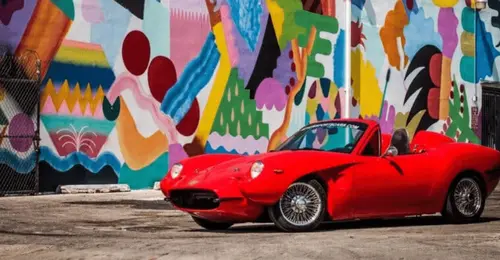
In 2017, Bruce Dietzen took the environment into account when designing his own sports car, the Renew. Dietzen's idea of developing an eco-friendly car is not new. He was inspired by Henry Ford, who in 1941 had already created a prototype vehicle with a bioplastic body that used, among other materials, hemp fibers.
After five years of research, the former Dell executive completed his project
The car features a design reminiscent of classic European cars from the 1960s and runs on gasoline. The big novelty is its body entirely made of hemp fiber, making it a sustainable model that is more resistant than steel and fiberglass.
Hemp
There is a difference in the THC dosage of hemp. Compared to marijuana, the material has a maximum of 0.4% THC, against more than 20 or 30% of the stronger variants of the herb. Although both are more than relatives, since they come from the same plant, the distinction is enough for hemp not to be considered a psychoactive drug.
Cannabis Car: Ecological Advantages
The production process is almost artisanal, which avoids the significant amount of polluting gases emitted during the manufacturing process of a conventional car.
In an interview published on the Autoevolution website, Dietzen states that the car was "about seven years ahead of its time," so the focus now is "to make advanced versions of hemp fabrics for electric vehicle manufacturers to help them alleviate their weight and carbon footprint.
A gasoline car emits 23% of carbon over its life cycle, a fact that comes from the manufacturing process, while electric cars generate 46% of carbon during their manufacturing.
The upholstery, the hood, and everything that is plastic can be replaced with hemp, argues the creator, Dietzen, whose company Renew Sports Cars is responsible for fulfilling orders from individuals and companies that want to invest in ecological energy sources.
The maximum delivery time for the Renew is three months, and the price has been set at a base price of $40,000 (about €36,000).
Other Models
In 2018, the electric car BMW i3 used biocomposite hemp fiber in some parts, such as the door panels. Porsche started 2019 with the launch of the world's first racing car with a body made from hemp fiber.