UFU Research Evaluates Antimicrobial Activity of Cannabidiol
Study showed the potential of the bioactive compound as a therapeutic alternative in combating bacterial infections
By Maria Eduarda Amorim
The Laboratory of Antimicrobial Testing at the Federal University of Uberlândia (Lea/UFU) conducted research to evaluate the antibacterial activity of Cannabidiol (CBD), a bioactive compound extracted from the Cannabis sativa plant, in combating bacteria that cause periodontitis, a chronic inflammatory disease that affects the periodontium and impacts the supporting tissues of the teeth, potentially leading to their loss.
Additionally, the study analyzed whether the use of CBD would be safe for living beings, through tests on a species of worms called Caenorhabditis elegans, which is used in studies because it allows for simple and reliable testing of the toxicity of certain substances before more complex experiments. The results showed the potential of CBD as a therapeutic alternative in combating bacterial infections associated with periodontitis.
Developed as a Scientific Initiation (IC) project, the idea emerged in 2021, through the studies of former Biomedicine undergraduate and current master's student in Applied Immunology and Parasitology at UFU, Anna Lívia Oliveira Santos. The student was taking a course on Natural Products, which addressed medicinal Cannabis, when she became interested in researching the topic. Thus, she contacted Professor Carlos Henrique Gomes Martins from the Institute of Biomedical Sciences to start a research project on the subject.
“At the same time [I was taking the Natural Products course], my cousin, who is a microbiologist and was conducting research with microorganisms, encouraged me to contact Professor Carlos Henrique from UFU's microbiology department to develop a project on natural products in combating bacteria,” Santos recalls about the beginning of the research.
Initially, the research conducted a literature review on the main infectious diseases caused by bacteria, focusing on those that showed increasing resistance to antibiotics. From this, the investigation of the antibacterial activity of CBD in combating the bacteria causing periodontitis began. The project started at the end of 2022, and the experimental part was completed in early 2024.
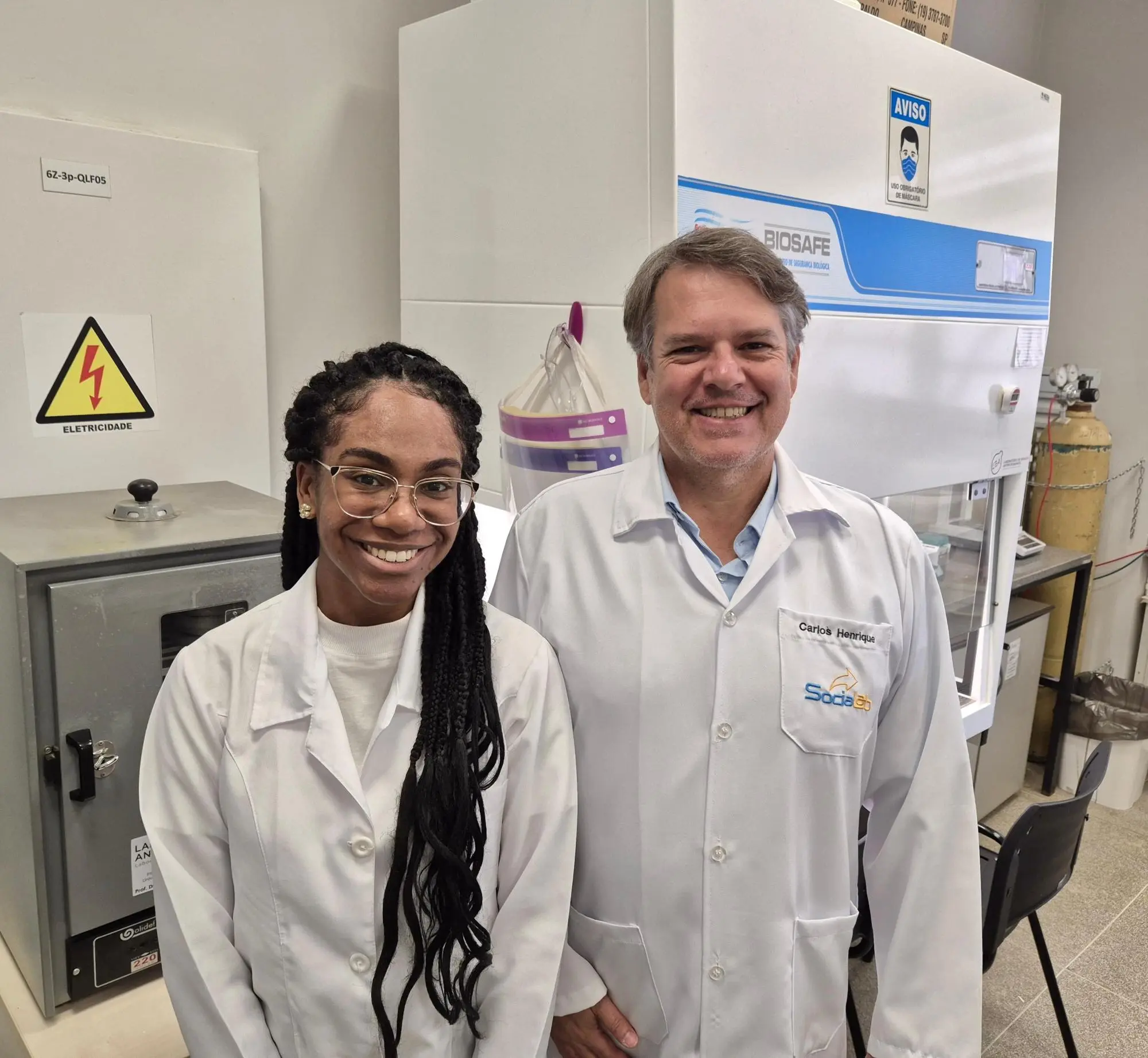
The research team was guided by Martins and consisted of Santos, doctoral students Mariana Brentini Santiago and Nagela Bernadelli Sousa Silva, and IC student Sara Lemes de Souza. The study also received collaboration from Professor Joaquim Maurício Duarte Almeida from the Federal University of São João del-Rei (UFSJ), who provided the CBD used in the study.
“We worked with various microbiological techniques, always seeking to ensure the reproducibility and accuracy of our results. During the research process, there are always some difficulties such as experimental variables, but we managed to overcome these challenges as a team and with the constant support of our advisor,” Santos comments.
The results of the research were published in the Journal of Applied Microbiology in January 2025, a monthly scientific journal with significant influence in the field of applied microbiology. For Santos, the publication validates the work done and allows more people to access and benefit from the discoveries made. It is also important that research conducted with public resources presents its results to the specialized community and the lay public — it is a form of transparency in the use of these resources.
“This study can have a significant impact on both the academic community and society in general. For academia, it opens doors for new research on the use of natural products in combating resistant bacteria, a growing problem in medicine. For society, the study goes beyond the direct benefit of new therapeutic options that are less aggressive and have fewer side effects, offering a safer option for those suffering from periodontal infections. It helps break the stigma surrounding Cannabis, especially in Brazil, where there is still much resistance to this plant,” Santos concludes.
Text originally published on the UFU News Portal