UnB and association establish partnership to advance research on medicinal cannabis
Three-year agreement aims to enhance extraction processes and quality control of therapeutic products in the Federal District

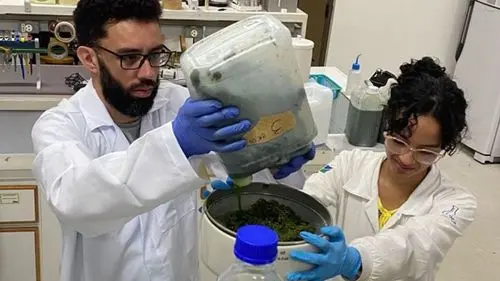
The University of Brasília (UnB) has consolidated an important scientific partnership with the Brazilian Association of Pito do Pango (Abrapango). The central objective is to deepen the study of extraction processes and quality control of therapeutic products based on medicinal cannabis.
This initiative is the result of the efforts of professors Ana Cristi Basile and Fernanda Vasconcelos from the Institute of Chemistry (IQ). The agreement was signed by the Dean's Office of Research and Innovation (DPI) in August and officially celebrated in September. With a duration of three years, the cooperation ensures the continuity of research and opens new avenues for work.
"Our expectation is that this collaboration will strengthen over this period, eventually advancing to an agreement that will allow the development of new products, processes, and technologies," says Fernanda Vasconcelos in a statement from UnB.
Structure of research on medicinal cannabis
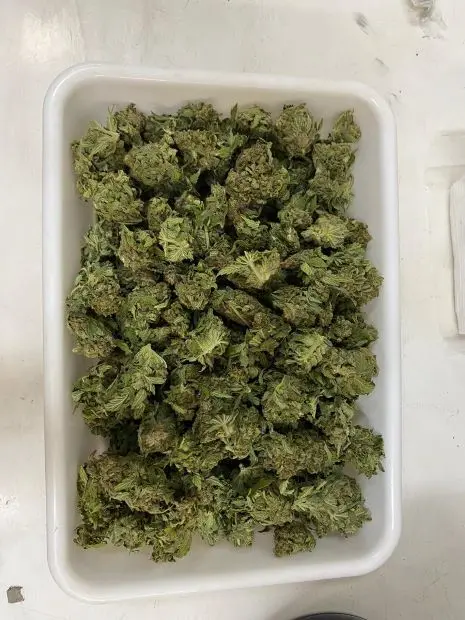
Under the current agreement, Abrapango provides product samples, while UnB offers students, laboratory infrastructure, and technical-scientific support. The professor explains that the partnership goes beyond the laboratory bench.
"We are working together on organizing the second Cann&Quim [Cannabis and Chemistry Symposium] in the Federal District, scheduled for 2026. The cooperation involves not only research but also integrated actions for scientific dissemination," highlights Fernanda.
In the coming years, the goal is to increase the number of students dedicated to the topic of medicinal cannabis. The plan includes deepening the understanding of the adaptation of different seeds to Brazilian soils and establishing partnerships with other associations.
Advances in quality and safety
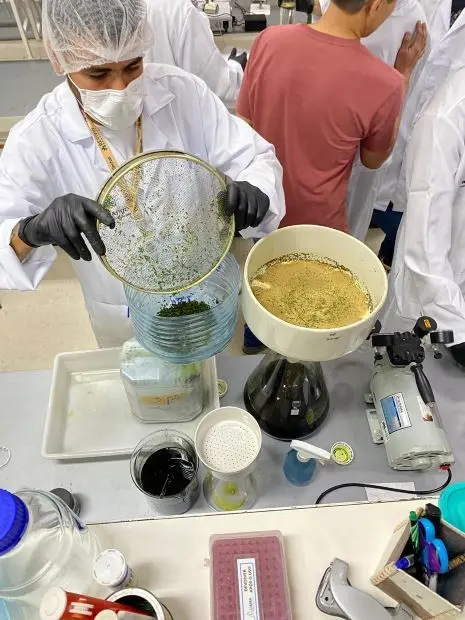
The joint work emerged from contacts with an association in the Federal District that connected Abrapango to the researchers. Fernanda Vasconcelos emphasizes the importance of the partner entity's regularization for the advancement of studies.
"We were very pleased to meet Abrapango, one of the few associations that have a court order authorizing research partnerships with universities," she says. This allowed her and Professor Ana Cristi to decide to advance studies on medicinal cannabis, including analyses of resins in addition to diluted oils.
The partnership aims to improve the quality of the oils produced by conducting analyses of cannabinoids and terpenes. The support includes optimizing seed selection and extraction methods, strengthening the training of new researchers in master's and doctoral programs.
UnB as a reference in medicinal cannabis
The University plays a central role in the scientific advancement of the field in Brazil. According to Fernanda, there is an explicit interest from the Rectory in consolidating UnB as a national reference in medicinal cannabis, engaging with an already existing tradition at the institution.
The professor cites pioneers such as Andréa Galassi from UnB Ceilândia, whose studies indicate that the plant can serve as an exit point for more harmful drugs. Professors Renato Malcher and Sidarta Ribeiro are also mentioned as references in neuroscience and the therapeutic effects of the plant.
"By integrating the new research center, we are pleased to join this group that leads scientific production on medicinal cannabis in Brazil," Fernanda expresses. The expectation is that the center will bring together other universities, consolidating the country's potential as a knowledge producer.
Social and therapeutic impact
From a social perspective, the partnership aims to enable associations to produce quality oils at low cost. This can lead to significant improvements in the health of elderly individuals with Alzheimer's and Parkinson's, children with epilepsy, and patients with chronic pain or anxiety.
The researchers emphasize that the safety of using medicinal cannabis depends on responsibility and monitoring. The greatest risk lies in use without guidance on dosages and drug interactions. Therefore, increasing scientific knowledge and professional training is essential for safe and effective therapeutic use.
Content published on the UNB portal with curation by Sechat.