US Farm Bill and cannabis: understand the changes
The US agricultural law, known as the Farm Bill, is undergoing changes that could redefine the rules for hemp and impact the cannabis market

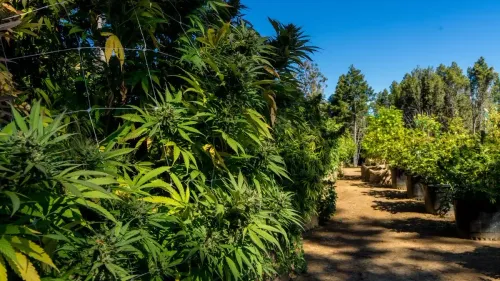
The US Farm Bill has entered a new chapter by amending the federal definition of hemp and establishing broader criteria to determine which products remain within this category.
The amendment was approved in November 2025 and is scheduled to take effect on November 12, 2026. Among the main changes is the replacement of the metric based solely on delta-9 THC with an assessment of total THC, including THCA.
For the cannabis market, this change matters because the legal concept of hemp determines which products can be treated differently from cannabis controlled under US federal law.
It is a debate that originates in agriculture but reaches store shelves, businesses, growers, and consumers alike.
In this article, you will learn:
- What the US Farm Bill is;
- What the Farm Bill means;
- How the legislation changed the definition of hemp;
- What the difference between delta-9 THC and total THC is;
- Why THCA entered the discussion;
- Which products may be affected;
- What changes for the cannabis market;
- When the new rules take effect.
What is the US Farm Bill?
Known as the Farm Bill, this legislation is a comprehensive package of public policies aimed at the rural sector in the United States.
Despite its name, its scope goes far beyond farming. The legislation brings together programs related to agriculture, nutrition, environmental conservation, research, rural development, and support for producers.
For this reason, decisions made within this package can produce ripple effects across different sectors of the economy.
It was precisely within this context that hemp entered the radar of US federal legislation.
History reached a major milestone in 2018, when Congress passed a new Farm Bill that modified the federal definition of hemp and permitted its production under certain parameters.
At that time, the law established that hemp must contain a concentration of up to 0.3% delta-9 THC on a dry weight basis. This change removed hemp, when meeting this definition, from the federal controlled cannabis classification.
It marked the beginning of a new era for the hemp supply chain in the United States.
The Farm Bill and cannabis: where is the connection?
The connection between the Farm Bill and cannabis lies precisely in the legal definition of what is considered hemp.
Although hemp and cannabis belong to the same plant species, US federal legislation created specific criteria to legally distinguish between them.
The issue arose when the market began developing products with different cannabinoids.
The 2018 rule specifically considered the level of delta-9 THC. This paved the way for products that complied with the limit set for that compound but could contain other potentially intoxicating cannabinoids.
Among them were substances such as delta-8 THC and delta-10 THC.
The Congressional Research Service, a research agency of the United States Congress, points out that the interpretation of the 2018 rule contributed to the proliferation of hemp-derived products with intoxicating potential.
LEARN MORE: US 2023 Farm Bill: the slow pace threatening the hemp industry's recovery
The discussion ceased to be purely agricultural. It began to involve public health, enforcement, commerce, and the boundaries of federal legislation itself.
What changes in the US Farm Bill in 2026?
The main change lies in the calculation of THC.
The rule established in 2018 used a threshold of 0.3% delta-9 THC. The new legislation now considers total THC, including THCA, also within the 0.3% limit on a dry weight basis.
In practice, this broadens the scope of compounds taken into account when classifying a product.
Congress passed the amendment within the agricultural appropriations legislation for fiscal year 2026. The measure was signed into law on November 12, 2025, and established a 365-day grace period before taking effect.
Thus, November 12, 2026, will be a pivotal date for the industry.
From that point forward, certain products currently classified as hemp derivatives may no longer meet the federal definition.
Why did THCA enter the equation?
THCA is an acidic precursor of THC found naturally in the plant.
When exposed to heat, it can convert into delta-9 THC. Therefore, considering only the delta-9 THC present at a given moment might not reflect the full THC potential of the analyzed material.
The new rule explicitly includes THCA in the calculation of total THC.
The change also takes into account other THC-related compounds.
According to the Congressional Research Service, the goal is to address the expansion of hemp-derived products that may produce intoxicating effects despite staying within the previous delta-9 THC limit.
Which products may be affected?
The change is not limited to the raw plant cultivated by farmers.
The US Farm Bill legislation establishes new rules for so-called hemp-derived cannabinoid products, including items intended for human or animal consumption through various routes of administration, such as ingestion, inhalation, and topical application.
Among the products that may fall under this scope are:
- foods and beverages;
- oils;
- ingestible products;
- topical products;
- products containing different cannabinoids;
- hemp-derived ingredients and intermediate products.
The new legislation also sets specific exclusions for certain cannabinoids that are synthetically produced or modified outside the plant.
In addition, finished hemp-derived products that exceed certain total THC thresholds may lose their hemp classification under federal law.
One of the thresholds established for finished products is 0.4 milligrams of total THC per container, also accounting for compounds with THC-like effects according to specified regulatory criteria.
Does the new US Farm Bill rule ban hemp?
No. The amendment does not represent a blanket ban on hemp.
On the contrary: the US Farm Bill maintains and clarifies the category of industrial hemp, including plants intended for the production of fiber, stalks, grain, seeds, oils, and other non-cannabinoid materials.
The difference lies in the definition of which consumable and cannabinoid products can continue to be classified as hemp.
This means growers and businesses will need to pay close attention not only to the origin of the raw material, but also to its composition and how the end product is formulated and marketed.
US Farm Bill: what changes for the cannabis market?
The amendment to the US Farm Bill could trigger a major realignment across the US hemp-derived product market.
Companies operating with products containing various cannabinoids will have to evaluate whether their formulations still meet federal criteria once the new definition takes effect.
This may entail:
- product reformulation;
- new laboratory testing;
- labeling revisions;
- supply chain adjustments;
- regulatory compliance;
- inventory and product portfolio assessments.
The legislation also mandates that the FDA publish information regarding cannabinoids known to be naturally produced by the plant and compounds exhibiting effects similar to THC.
Why does this change matter for cannabis?
The history of cannabis in the United States has been shaped by successive legislative changes redefining the boundaries between different categories of the plant.
In 2018, the US Farm Bill set rules for hemp and allowed its production under certain conditions. Now, the legislation shifts once again, expanding the debate to product composition and various cannabinoids. Starting in November 2026, new rules could significantly impact the market and consumers alike.
Source: The Nature Conservancy