What changes after the final ruling on medical cannabis in Rio
AbraRio becomes the second Brazilian association with a final ruling for medical cannabis cultivation and the first in Rio de Janeiro. Read the interview:

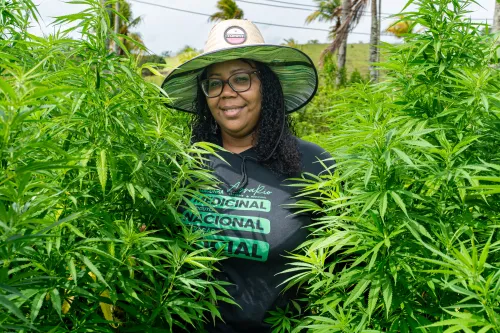
Little by little, Marilene Oliveira is beginning to take in the meaning of a decision that brings an end to a legal battle started years ago. President and founder of the Associação Brasileira de Acesso à Cannabis Medicinal do Estado do Rio de Janeiro (AbraRio), she says she still finds it difficult to put into words what the organization is experiencing at this moment.
“I'm still kind of taking it all in,” she says.
The emotion stems not only from the legal outcome, but from the journey that brought the association to this point. Marilene explains that AbraRio is about to complete six years of existence and that its work was built amidst personal and structural hardships.
“I come from a background of so much struggle, of so much adversity. Being a Black woman from the outskirts, a mother of a child with special needs, everything was built through immense difficulty, but at the same time with so much responsibility, with so much love, and running the association just like a mother would,” she shares.
On September 21, 2026, the Superior Tribunal de Justiça (STJ) certified the final, unappealable decision (trânsito em julgado) in lawsuit AREsp 3.257.100/RJ. With this, the court ruling authorizing AbraRio's activities related to the cultivation of medical cannabis became definitive. On the same date, the case records were remanded to the Tribunal Regional Federal da 2ª Região (TRF-2).
For Marilene, the decision represents a tangible shift in legal certainty for the association.
“Now, with this final, unappealable ruling, with this definitive decision providing complete legal peace of mind, both for our team to work and for our members to have access,” she states.
Second association with a final ruling in Brazil
AbraRio now occupies a distinctive position in the history of collective medical cannabis cultivation in the country.
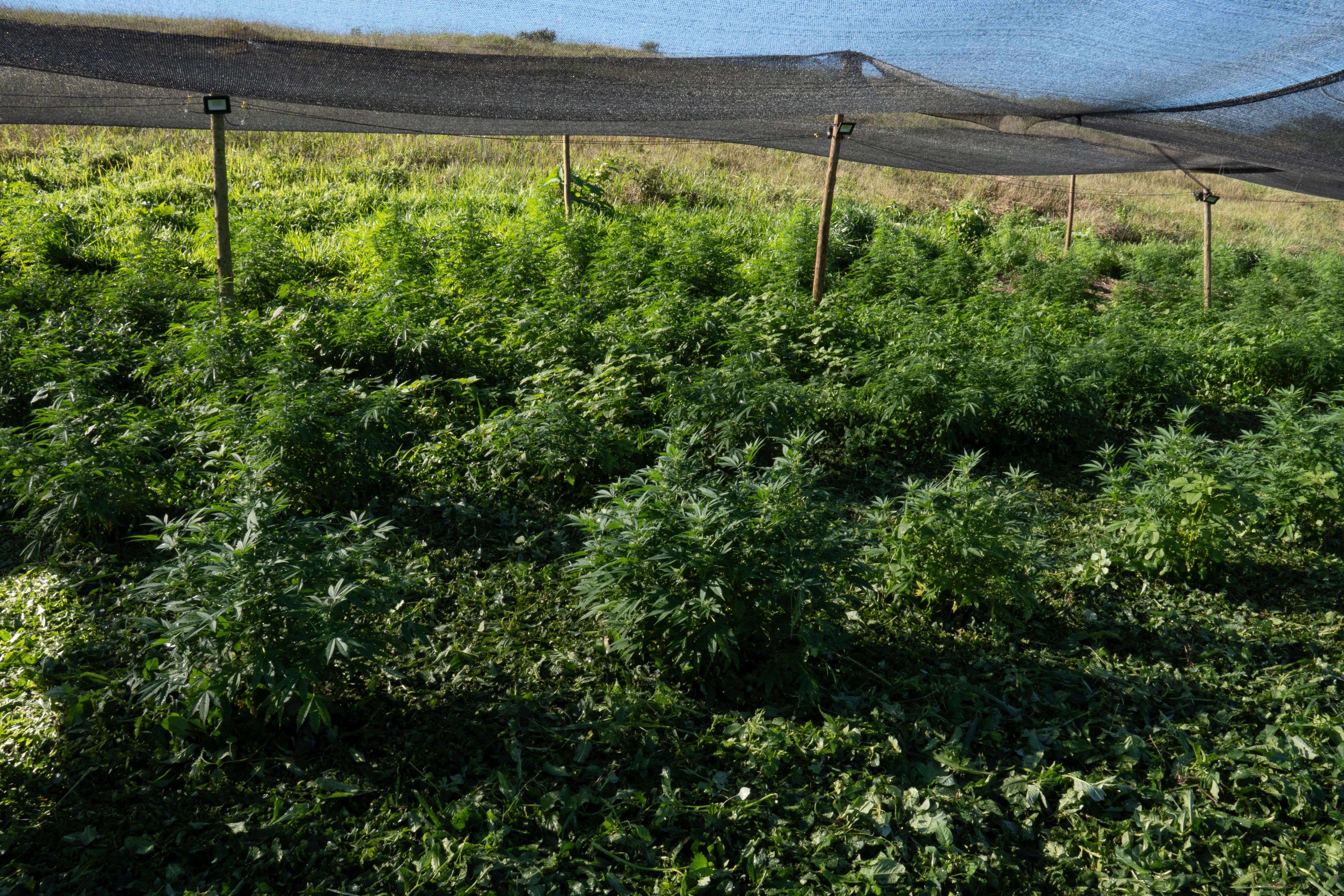
The organization is the second Brazilian association to obtain a final ruling for medical cannabis cultivation and the first in the state of Rio de Janeiro, according to the association itself.
The first was the Associação Brasileira de Apoio Cannabis Esperança (Abrace), from João Pessoa (PB), which obtained judicial authorization in 2017 to cultivate and process cannabis exclusively for medical purposes and provide derivatives to associated patients who demonstrated therapeutic need. The decision was subsequently confirmed in a judgment.
Anvisa also officially recognizes the existence of the court authorization granted to Abrace. In a clarification published in 2021, the agency stated that the association held a court ruling authorizing it to cultivate cannabis for medical purposes and, consequently, produce and distribute therapeutic plant-derived oils to its members.
What changes for AbraRio
The primary effect of the decision becoming final and unappealable is the legal stability of the ruling within that specific proceeding. In other words, the legal dispute has concluded, and the authorization is no longer subject to further appeals in that case.
The ruling enables the association to carry out the activities judicially foreseen, related to research, planting, cultivation, harvesting, processing, transportation, and extraction of cannabis compounds, as well as the distribution of products to its members, within the conditions established in the proceeding.
This does not, however, mean a blanket authorization for any association to cultivate cannabis in Brazil.
The ruling takes effect for AbraRio and must be observed within the limits defined judicially. Nor is it an administrative authorization granted by Anvisa to all associations or companies in the country.
For the members, the impact pointed out by the organization's president lies mainly in the continued access to products manufactured by the association under the conditions authorized by the court.
“It is immensely gratifying now to be able to breathe peacefully and know that nothing was in vain, that neither the tears nor the hardships were in vain,” Marilene says.
From her son's medicine to caring for thousands
The founder's personal journey helps explain why the ruling carries special weight for the association.
Marilene explains that she began her path out of the need to care for her own son. The work subsequently developed by AbraRio extended that experience to other patients.
“With the care of making a medicine that I am producing—my son's medicine—for thousands of other people,” she says.
The phrase summarizes a transformation that transcends the personal realm: a family experience grew into an organization dedicated to medical cannabis access.
Now, according to Marilene, the legal certainty gained from the final ruling can also pave the way for a new institutional chapter.
“And opening doors for us to forge even more partnerships to produce research, generate data, and contribute to this regulation that has been so difficult to actually achieve,” she states.
Research and data generation enter the next phase
The president of AbraRio states that the association aims to expand partnerships to produce research and data related to patient outcomes.
This push can gain significant relevance in a sector where real-world evidence from clinical practice and patient monitoring is increasingly discussed alongside clinical trials and scientific literature.
The court ruling, however, is not equivalent to a scientific validation of the products or treatments offered by the association. The judicial authorization establishes the legal terms for the activities described in the case, while evaluating efficacy, safety, and therapeutic indications remains dependent on the scientific evidence available for each application.
For Marilene, the opportunity to advance on this front brings an added responsibility.
“I think this is historic, isn't it? A Black woman from the outskirts founding a medical cannabis association and, beyond being the only one in Brazil leading a medical cannabis association, today being the second in Brazil with a final ruling for cultivation and the first in the state of Rio de Janeiro.”
“Now it's time to roll up our sleeves”
The celebration, for the president, comes with the clear understanding that the ruling does not conclude the association's mission.
On the contrary.
“This is historic, it's emotional, and it's a huge responsibility because now it's time to roll up our sleeves and work even harder,” she says.
The goal, according to Marilene, is to broaden access for people who rely on the therapy and strengthen the association's efforts.
“So we can provide access to all those people who need it most.”
The final and unappealable ruling, therefore, represents more to AbraRio than the conclusion of a legal lawsuit. It marks the transition from a period of legal dispute to a phase in which the association plans to concentrate its efforts on production, member care, data generation, and building new partnerships.
In Rio de Janeiro, the decision establishes AbraRio as the state's first association to achieve definitive authorization for medical cannabis cultivation. On the national stage, the organization joins Abrace in an exclusive group of associations that have obtained judicial recognition to carry out this type of activity.
The decision, nonetheless, remains tied to the specific case and the conditions set forth by the Court.