What to expect from cannabis regulation in the Lula government
"Without regulation, there is no development," experts argue

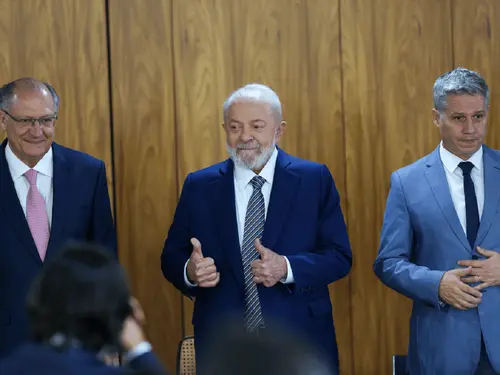

In the Brazilian political scenario, the development of drug policies, particularly regarding cannabis, has been marked by a series of challenges and obstacles even during the Lula government. Since the PT leader reassumed the presidency of Brazil in January 2023, government actions signal a certain support for the creation of a chain for the cultivation of the plant in national territory. In this context, we can highlight the creation of a Working Group, the so-called "Council" formed by various sector agents, to foster the debate. Contrary to these initiatives, Cristiano Zanin, a Supreme Federal Court minister appointed by Lula, voted against the decriminalization of marijuana in the review of the Drug Law. The vote for the decriminalization of marijuana possession for personal use is 5 to 1. The trial was suspended at the request of Minister André Mendonça.

The principle of legality, which governs the Brazilian State, establishes that the public administration can only act based on what is provided for by law. Therefore, the lack of legislation guaranteeing access to cannabis products, outside the integration of the Unified Health System (SUS), leaves the state government without resources to purchase these products, unless a judicial decision obliges them.
Lawyer Murilo Nicolau, with extensive experience in the cannabis field, emphasizes that "when it comes to the Brazilian State, laws and regulations are the starting point for any government action, including granting authorizations and creating taxes on specific products, such as cannabis derivatives."
Nicolau highlights that the legislative inaction that has persisted for a long time forces the Superior Court of Justice to intervene in cases of medicinal self-cultivation. He emphasizes that "without regulation, there will be no development of the cannabis industry in Brazil."
The lack of a clear regulatory framework has not only hindered the production and access to medicinal cannabis but also the development of an effective production chain.
Voices from the Lula government
In an interview with Globo News upon assuming the Ministry of Health in January of this year, Nísia Trindade defended the medicinal use of the plant:

"Medicinal Cannabis is supported by solid scientific evidence and has been used in various countries to treat conditions such as epilepsy and Alzheimer's. I witnessed its effectiveness in relieving seizures in children affected by Congenital Zika Syndrome, providing an improvement in their quality of life and alleviating their suffering and that of their families. We must prioritize evidence and dialogue to overcome prejudices and promote care."
Anvisa Support

"Without this support and clear regulation, Anvisa finds itself limited in its actions," Silvério stated.
The hope for a moment of demystification and progress on this issue remains alive. As Murilo Nicolau concludes, "the moment of rupture may be near," indicating that, despite the obstacles, cannabis regulation in Brazil could become a reality in the future.
Images: Agência Brasil