STF fixou 40 g como limite, mas 55% das condenações por maconha seguem como tráfico
CNJ reavaliou quase 30 mil casos envolvendo cannabis, a penas 13% das condenações foram alteradas; especialistas apontam influência da “palavra do policial” e resistência institucional nos tribunais estaduais


O Conselho Nacional de Justiça (CNJ) divulgou os resultados do 1º Mutirão Processual Penal do Pena Justa, uma iniciativa realizada em parceria com 33 tribunais de todo o país. O Mutirão do CNJ revisou um total de 86 mil processos de diferentes naturezas, resultando na soltura ou revisão de pena de 9 mil pessoas.
Um dos focos centrais do trabalho foi a análise de condenações por porte ou tráfico de maconha nos últimos oito anos. O critério utilizado foi a tese fixada pelo Supremo Tribunal Federal (STF) em julho de 2024, referente ao porte de até 40 gramas ou seis plantas fêmeas.
Ao todo, 29.725 casos foram reanalisados durante o Mutirão do CNJ. Destes, apenas 3.813 condenações (cerca de 13%) foram alteradas imediatamente. Em contrapartida, a condenação por tráfico foi mantida em 54,9% dos processos. Outros 7.434 casos foram encaminhados para manifestação da Defesa e do Ministério Público.
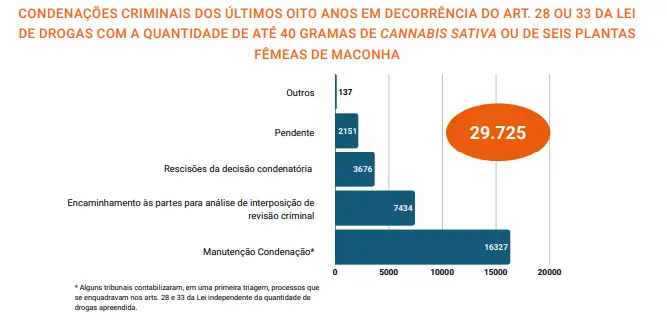
O recorte específico sobre a cannabis revela um cenário desafiador. Os dados mostram que a decisão do STF, que descriminalizou o porte para consumo pessoal, ainda enfrenta barreiras práticas para gerar um impacto massivo no desencarceramento.
Impacto do Mutirão do CNJ esbarra em resistência institucional
Para o advogado Emílio Figueiredo, os números refletem a timidez da decisão da Suprema Corte e a cultura punitivista estadual. Ele avalia que o impacto real observado no Mutirão do CNJ ficou "bem abaixo da expectativa inicial".
“A decisão do STF não enfrentou adequadamente a questão ao fixar critérios objetivos baixos diante do perfil de consumo do usuário brasileiro”, avalia Figueiredo. Ele também aponta uma barreira ideológica na aplicação da lei.
“O Judiciário brasileiro é resistente ao desencarceramento, preferindo manter pessoas presas por pequenas quantidades a estender a decisão do STF e aproveitar o mutirão para revisar mais processos. Os números sugerem apenas uma correção pontual de casos muito gritantes”, completa o advogado.
A barreira da "Palavra do Policial"
O relatório aponta que a manutenção das condenações ocorre, em grande parte, devido a uma ressalva na decisão do STF. A quantidade de droga, por si só, não define o crime, pois a presença de outros elementos de prova pode configurar tráfico.
Para o advogado Murilo Nicolau, é nesse ponto que reside a "armadilha" do sistema penal. Segundo ele, a construção do inquérito policial é frequentemente desenhada para contornar os critérios objetivos avaliados no Mutirão do CNJ.
“O que a gente tem que manter em mente é que a decisão do STF só pode ser aplicada quando não houver indícios de tráfico. E aí entra uma questão muito relevante, o o policial é treinado para enquadrar a pessoa no tráfico e reforçar isso na audiência”, explica Nicolau.
O advogado detalha o uso de relatos padronizados, conhecidos como "kit flagrante", que impedem a revisão das penas. “Muitas vezes, quando o policial vai relatar a prisão, ele usa palavras como 'esconder o rosto da viatura', 'local conhecido por tráfico' ou diz que a pessoa 'já é conhecida'. Eles mencionam dinheiro trocado ou celular", afirma.
Nicolau reforça que essa dinâmica prejudica quem deveria ser beneficiado. “A grande verdade do judiciário hoje é que as pessoas são condenadas com base na palavra do policial e só. Porque quem vai testemunhar a favor de um cara que foi preso por tráfico?".
Desigualdades regionais nos dados
O relatório também escancarou a desigualdade geográfica na aplicação da justiça no Brasil. A avaliação apontou que 83% das alterações de punições realizadas pelo Mutirão do CNJ se concentraram em apenas três estados: Santa Catarina (1.560), São Paulo (1.113) e Minas Gerais (485).
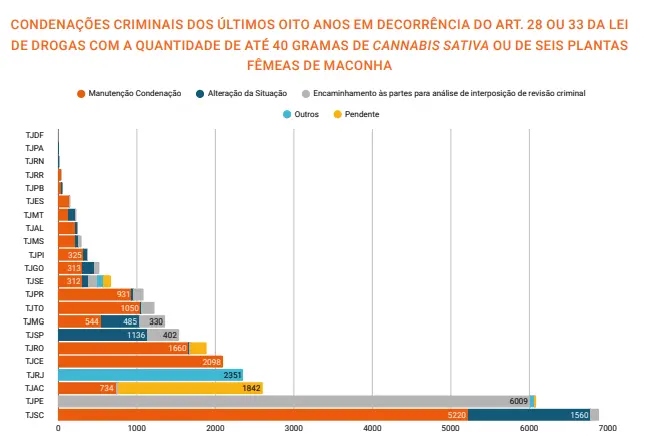
Imagem: Arquivo 1º Mutirão Processual Penal do Pena Justa
No Nordeste, a situação é crítica. O advogado Ítalo Coelho destaca os dados do Ceará como exemplo da persistência da "métrica proibicionista". “O impacto real foi muito pequeno. No Ceará, por exemplo, não teve nenhuma alteração", aponta Coelho. Foram 2.098 casos revisados e se manteve a condenação em todos.
Em Pernambuco, estado que teve o segundo tribunal com maior número de avaliações, 6.009 casos não tiveram desfecho imediato. Eles receberam a classificação de "Encaminhamento às partes para análise de interposição de revisão criminal";
Para Coelho, a interpretação continua subjetiva. “A métrica proibicionista continua presente na hora de analisar, porque a própria decisão diz que a pessoa pode ser considerada traficante com menos de 40 gramas, ou menos de 6 plantas. Ou o contrário: era considerada usuário com muito mais”, finaliza.
Avanços técnicos viabilizaram
Apesar das críticas quanto ao número limitado de solturas, para o CNJ, o processo de revisão em massa demonstra uma evolução técnica do Judiciário. No relatório, o Conselho afirmou que é provável que os tribunais tenham analisado todos os julgados recentes e relevantes sobre a matéria.
Murilo Nicolau concorda que a estrutura tecnológica facilitou a realização do Mutirão do CNJ. “Acredito que eles tenham se debruçado sim, porque a digitalização e a informatização do nosso poder judiciário mudaram completamente o cenário", diz.
"É palpável a diferença na velocidade dos processos de alguns anos para cá. Eu tenho confiança de que, de fato, esse mutirão foi bem feito na parte técnica”, conclui Nicolau.