40 patient associations have habeas corpus for cannabis cultivation in Brazil
This data is from Kaya Mind and refers to associations with individual or collective habeas corpus for cultivation; the country has 147,000 patients served, totaling 259 associations in operation


The associations Tijucannas, from Minas Gerais, and Acalme-CE, from Ceará, recently obtained judicial authorizations allowing them to cultivate cannabis and produce derivatives of the plant for medical treatment. These decisions place the entities in a group of 40 associations that have individual or collective judicial authorization, allowing cultivation on Brazilian soil, according to data released in the Brazilian Yearbook of Medicinal Cannabis 2024 by Kaya Mind.
In 2024, Brazil reached the mark of 259 cannabis associations and three Federations of Cannabis Associations, entities created to organize and gather other associations. Compared to 2023, a year in which at least 67 new associations emerged, the number is nearly 90% higher.
Among the 40 associations that have judicial authorization for cannabis cultivation, most are concentrated in the Southeast region, with 23 authorized entities. The Northeast houses 11 of these associations, while the South has 4, and the Midwest has 2. The North region of Brazil, on the other hand, still has no entity with a permit for cannabis planting.
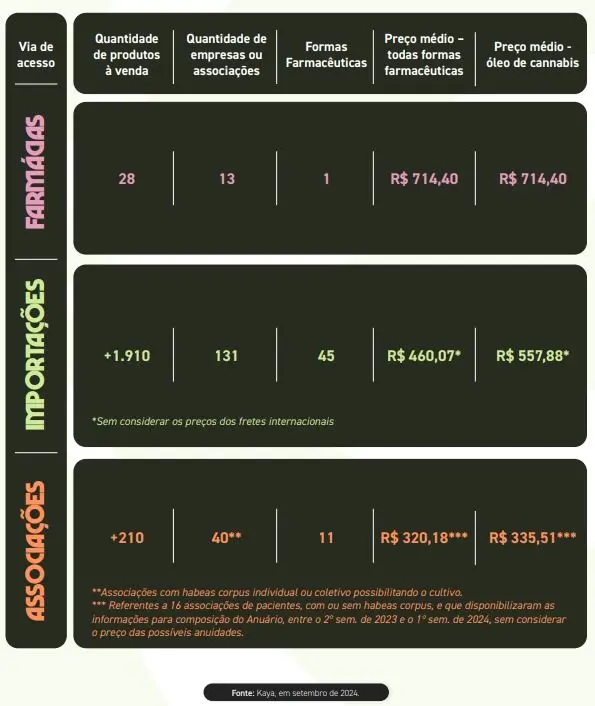
The third main access route to cannabis products in Brazil, associations have 147,000 patients, a 29% increase compared to the previous year. The number of patients represents 21.9% of the total cannabis patients in the country.
Differences between individual and collective judicial authorization
As explained by lawyer Jorge Lautert, in individual judicial authorization, the patient transfers the responsibility for cultivation and manipulation of their medication to an association during the process. The excess produced can be allocated to other patients of the same entity. Typically, associations working under this regime have more than one authorization.
In the collective authorization, the entity makes the request, assuming responsibility for planting, extraction, and production of the medicine that will be allocated to the patients identified in the collective action. The patient only needs to be a member and have a medical prescription, while the association takes care of the entire technical procedure.
Associations seeking cultivation
Based in Rio Grande do Sul, the Medicinal Cannabis Association (ASCAMED) has been waiting for over a year for the granting of a judicial authorization. Recently, the Federal Public Ministry issued a favorable opinion, highlighting the importance of the right to health and criticizing the state's mission in regulating cultivation, which hinders access for many patients.
According to Matheus Hampel, president of ASCAMED, the association uses outdoor cultivation methods and maintains a seedling and clone propagation system in a controlled indoor environment. This ensures the production needed to serve over 800 members.
Lautert, responsible for at least four ongoing judicial authorization processes for associative planting, notes a growth in the number of requests for permits. He emphasizes that the recent decisions developed by the Judiciary are promising signs for the future of associative inquiries in Brazil.