Brazil's Hemp Agricultural Potential Faces Barriers
Experts warn of the urgent need for investments in hemp fiber processing and beneficiation

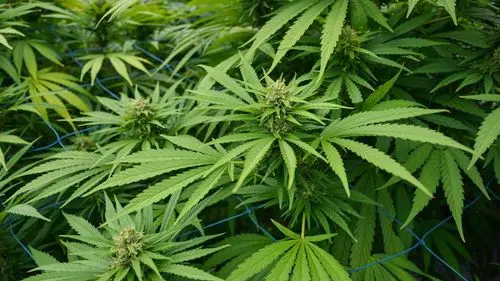
The discrepancy between the agricultural potential of hemp and the installed industrial capacity in the country was the central theme of discussions at the Brazilian Medicinal Cannabis Congress. While recent studies reinforce the role of the plant as a superior cover crop, capable of regenerating soils and sequestering carbon, the sector faces structural challenges.
Secure your spot at the BMCC 2026 here!
Innovation consultant Juliana Tranjan warned that Brazil still lacks the machinery needed to process this wealth on a large scale. During the Business Cannabis module panel, Tranjan was emphatic in diagnosing the national bottleneck for hemp development.
According to her, despite regulatory advances in the medicinal field, the industrial use of the plant faces technological barriers.
"Hemp can be used from root to leaf, flower. We are seeing significant steps being taken in the Brazilian sector, but the situation is still very restrictive. We have more progress in the medicinal field," said the consultant.
Challenges in Hemp Fiber Processing

For hemp to move from just an agricultural promise to a consolidated market product, investment in beneficiation is needed. Unlike manual or simplified harvesting, the plant's fiber requires specific industrial processes.
Decortication is necessary to separate the long fibers from the short ones (hurds). "Regarding hemp, Brazil's major challenge is processing, how to work with the fiber, and how to benefit from this byproduct. It's not just what we can do, but the resources to do it," explained Tranjan.
She further highlighted the lack of infrastructure: "In Brazil, the truth is we don't have it. We need investment to produce on a large scale, to produce nationally, and in the future, to export."
Wasted Agronomic Potential of Hemp
The urgency for investment advocated by Tranjan is justified by the technical data presented by the sector. According to Sechat portal's survey, hemp stands out as an excellent option for the off-season, offering benefits that surpass traditional crops.
In terms of biomass, the plant can produce up to 25 tons of dry matter per hectare. This volume is more than double that of corn, which produces around 10 to 12 tons.
Additionally, its deep root system helps to loosen the soil and retain water. The dense foliage cover of hemp also inhibits weed growth, significantly reducing the need for herbicides.
Market, Regulation, and the Future of Hemp
Another highlight is natural biological control. Hemp cultivation can break the cycle of common pests in Brazilian agriculture, such as stink bugs, reducing insect pressure for the next crop. Without proper industrial processing, however, this fiber-rich biomass ends up underutilized.
The panel also brought complementary perspectives on the regulatory scenario. Lawyer Erik Torquato emphasized the importance of judicialization and Habeas Corpus for home cultivation, classifying them as a response from civil society and healthcare professionals to state inaction.
For Juliana Tranjan, the connection of these points is vital. "The Congress is a place of much information and different ideas. Today the market needs this: connections and exchanges. Certainly, this space will open many doors," she concluded.
5th Edition confirmed for 2026

Established as the main scientific and professional meeting of the sector in Latin America, the event's organization confirmed the holding of the 5th edition of the Brazilian Medicinal Cannabis Congress (BMCC). The event will take place between May 21 and 23, 2026, at the Transamerica Expo Center in São Paulo.
The program will be developed by a Scientific Committee composed of national and international references. The goal is to ensure technical rigor for an audience consisting of doctors, researchers, hemp agribusiness professionals, and public sector representatives. Sales for the 2026 edition are already open through the official website.