Cannabis Cosmetics Face New Regulations in Uruguay
Cannabis cosmetics are now subject to specific rules in Uruguay, with limits on medicinal claims. Understand what changes and learn more!

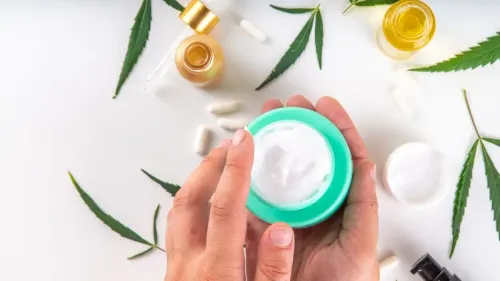
Cannabis Cosmetics - Skincare also involves being informed. In Uruguay, new regulations establish criteria for cosmetics made with cannabis derivatives, including registration, traceability, and labeling requirements. The measure also restricts promises of medicinal benefits, reinforcing the distinction between a cosmetic product and a health treatment.
According to a report published by the outlet Cañamo, Decree 208/026, published in September, classifies these products as Grade 2 cosmetics under Mercosur classification.
In this article, you will find:
- What changes in the regulation of cannabis cosmetics.
- Which plant derivatives are permitted.
- Why medicinal claims are restricted.
- What information must appear on labels.
- What the rule means for consumers and businesses.
Cannabis cosmetics: what changes in Uruguay?
The new standard establishes conditions for registering, manufacturing, importing, and marketing cannabis cosmetics and all formulations containing plant derivatives. The goal is to define sanitary criteria for these products and limit the messaging used to present them to the public.
The decree includes ingredients such as cannabidiol (CBD), natural or synthetic, cannabigerol (CBG), seed oil, and extracts of leaves, roots, and sprouts.
However, the presence of these ingredients on the permitted list does not mean that any formulation is automatically authorized. Companies must meet the sanitary requirements set forth in the regulations.
To apply for registration, applicants must submit information such as:
- Sanitary licensing of the supplier or proof of good manufacturing practices.
- Description of raw material sourcing.
- Identification of the plant variety used.
- Information allowing the origin of ingredients to be traced.
Prior registration is required to import, manufacture, and market products covered by the regulation.
Cannabis cosmetics and medicinal benefits: what are the limits?
A central point of the regulation for cannabis cosmetics is the restriction on therapeutic claims. Labels cannot attribute effects such as pain relief or action on muscle and joint inflammation to cosmetics.
The rule also prohibits stating the concentration of the cannabis-derived ingredient on labeling and restricts the use of images suggesting effects on sleep or relaxation.
In practice, product communication must respect its cosmetic purpose, without leading consumers to believe they are dealing with a medicine.
This distinction is important because the presence of cannabinoids in a formula does not, on its own, prove clinical efficacy in treating diseases or symptoms. Evaluating therapeutic benefits depends on specific scientific evidence and should not be confused with the authorization of an ingredient's use in cosmetics.
What must appear on cosmetic labels?
Beyond restrictions on claims, the decree mandates specific warnings for these products. According to Cáñamo's report, labels must state that the cosmetic is intended exclusively for topical use in adults and has no medicinal purpose.
The regulations also establish warnings for situations in which the product should not be used, including pregnancy and breastfeeding, as well as guidance not to apply the formula to open wounds.
Products intended for mucous membranes, transdermal patches, and formulations with inhalation risks are excluded from the scope described in the regulation.
These requirements make labeling a central part of the relationship between manufacturers and consumers: in addition to identifying ingredients, information must clarify usage limits and avoid misleading interpretations regarding expected effects.
Are these regulations new to Uruguay?
Although the decree establishes a specific regulatory framework, the regulation of cannabis cosmetics does not represent the first recognition of cannabis derivatives in cosmetics in the country.
As contextualized by Cañamo, guidelines from the Uruguayan Ministry of Public Health published in 2022 had already addressed certain plant derivatives and natural or synthetic CBD, as well as establishing requirements for suppliers and usage warnings.
Decree 208/026 formalizes and organizes this regulatory field, establishing obligations for both products and companies operating in this segment.
What do consumers and businesses need to watch for?
For those buying cosmetics with cannabis derivatives, the main advice is to check the stated purpose of the product, warnings, and source information. The association with the plant should not be interpreted as a guarantee of medicinal benefits.
For manufacturers and importers, compliance with registration, traceability, and labeling requirements is critical for legal commercialization in the Uruguayan market.
The new rule also highlights a challenge that accompanies the expansion of cannabis-based products: communicating ingredients and purposes with transparency, without turning research possibilities into health promises.