Cannabis in Nepal: From Divine Blessing to Human Prohibition
Understand how cannabis in Nepal went from a sacred spiritual blessing to facing historical prohibitions driven by political pressure

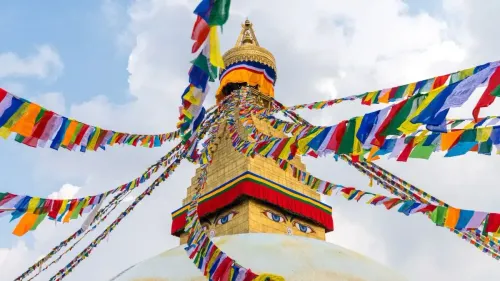
Cannabis in Nepal - There are those who look at the icy mountains of the Himalayas and see only imposing landscapes, but it is in the soul of the people and in sacred rituals that an ancient relationship of love, healing, and devotion rests.
For Hinduism, the plant that blooms freely in the valleys is neither a weed nor a commodity: it is Ganja, a divine gift from Lord Shiva offered to humanity to relieve pain, quiet the noise of the mind, and bring the earthly closer to the spiritual.
To speak of cannabis in Nepal is to enter a territory where the sacred and nature embrace in perfect harmony, reminding us that healing often stems from what the earth gives us in its most genuine and pure form.
In this article, you will see:
The spiritual connection between cannabis and the Maha Shivaratri festival
The historical context: from abundance and freedom to 20th-century prohibition
International influence and United States pressure on the 1976 law
The current scenario and the movement to restore medical and cultural use
The sacred link: Cannabis in Nepal and the Maha Shivaratri festival
The history of cannabis in Nepal is intertwined with the country's very spiritual tapestry. For centuries, consumption of the herb was not associated with stigma or crime, but rather with reverent respect for the deities.
At the epicenter of this devotion is Maha Shivaratri, the "Great Night of Shiva," one of the most important dates on the Hindu calendar.
During the festival, thousands of devotees and ascetics known as Sadhus gather at the historic Pashupatinath Temple, on the banks of the Bagmati River.
For these practitioners, smoking the herb in clay pipes (chiloms) or consuming it in traditional drinks like Bhang is not a recreational act, but a sacrament.
It is believed that the plant helps focus deep meditation, soothe physical ailments, and honor Shiva, who, according to scriptures, used the herb to rejuvenate and reach elevated states of consciousness.
As highlighted in a report by the portal El Planteo: "The cannabis plant has always been closely linked to Nepal, growing wild along the Himalayas and playing a crucial role in traditional Ayurvedic medicine and local religious practices."
Beyond the spiritual realm, traditional botany has always integrated the plant into the daily routine of rural communities. It served multiple practical and therapeutic purposes:
Ayurvedic Medicine: used to treat joint pain, digestive disorders, and anxiety conditions.
Textile and Structural Use: extraction of durable hemp fibers to make clothing, ropes, and fabrics.
Nutrition: use of seeds rich in essential oils and proteins in local cuisine.
LEARN MORE: How industrial hemp is revolutionizing global sustainability
From abundance to restrictions: the historical turning point
Until the mid-20th century, Nepal was recognized worldwide as a haven of tolerance and harmony with nature. During the 1960s and 1970s, the capital, Kathmandu, became a focal point of the famous Hippie Trail.
People from all over the globe traveled to the region in search of spiritual expansion, peace, and simplified access to the properties of the plant, which operated under state licenses and authorized shops.
However, this harmonious relationship was disrupted by external geopolitical factors.
In the 1970s, under heavy pressure from US diplomacy and in the context of the escalating "War on Drugs," the international political landscape began demanding a strict stance from producer and traditional countries.
As analyzed in the article published by El Planteo: "The revocation of licenses for cannabis dealers in 1973 and the subsequent enactment of the Narcotic Drugs Control Act of 1976 were not born out of demand from Nepalese society, but from global political impositions that ignored local culture and economy."
With the passage of the 1976 legislation, the cultivation, sale, and consumption of cannabis in Nepal were formally criminalized.
What was once treated with reverence and public utility became, overnight, categorized as a criminal offense.
Below is a comparative overview of this historical transition:
| Period | Cannabis Status | Social and Cultural Impact |
|---|---|---|
| Prior to 1973 | Free cultivation, traditional medicine, and licensed shops | Community integration, ritual use, and strong tourist attraction |
| Post-1976 (Current) | Legal prohibition, seizures, and criminalization | Stigmatization of ancestral practices and harm to the rural economy |
Economic consequences and looking to the future
Legal prohibition failed to erase nature's presence in the Himalayas. The plant continues to grow wild throughout Nepalese mountains and valleys, highlighting the disconnect between written law and the country's geographical reality.
Maintaining prohibition has sparked intense debates in the local political and academic spheres.
Critics point out that the ban deprived Nepal of significant economic opportunities, especially at a time when the global market for medical cannabis and industrial hemp generates billions of dollars.
LEARN MORE: The growth of the medical cannabis market in Latin America
Current discussions in Nepal revolve around four fundamental pillars:
Cultural Reparation: Respect and protection for Hindu religious rituals that have used the plant for millennia.
Medicinal Potential: Regulated access to cannabinoid-based treatments for the local population.
Sustainable Development: Use of hemp to strengthen subsistence agriculture and the textile industry.
Rational Decriminalization: Reduction of state expenditure on law enforcement and a shift in focus to public health policies.
Currently, parliamentary leaders and activists in Nepal have introduced bills aiming to regulate the cultivation and scientific research of the plant in the country.
It is argued that re-evaluating the legal ban is an essential step toward honoring Nepal's cultural heritage while boosting the national economy through science and sustainability.
Bibliographic References
EL PLANTEO. Maha Shivaratri and Cannabis in Nepal: Why prohibiting a gift from the gods is purely human stupidity. Available at:
https://elplanteo.com/maha-shivaratri-cannabis-nepal/ SHRESTHA, B. Traditional use of Cannabis in Ayurvedic Medicine and Nepalese Culture. Journal of Ethnopharmacology and Himalayan Studies, 2019.
UNITED NATIONS OFFICE ON DRUGS AND CRIME (UNODC). Historical Overview of Drug Control Laws in South Asia, 2021.