Cannabis legalization in the US drives agricultural jobs
Study reveals how cannabis legalization can boost agricultural jobs and transform the labor market in the United States.

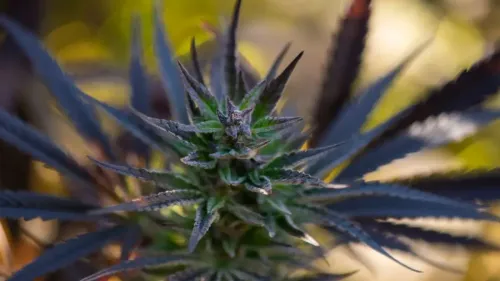
Cannabis legalization is leaving marks that go beyond discussions about health, regulation, and consumption. A study published in the Journal of Population Economics found an association between the adoption of laws permitting recreational use and an increase in agricultural employment in the United States.
The findings help shed light on a transformation that often takes place away from the spotlight: when a previously prohibited activity becomes part of a regulated supply chain, new doors can open, from cultivation to retail, as well as transportation, processing, and services.
In this article, you will see:
- What the new study revealed about jobs;
- How legalization influences the agricultural sector;
- What happened in the US states analyzed;
- Why the results do not solely mean jobs directly tied to cannabis;
- What previous research had already found about the labor market;
- The limitations and next paths for this type of research.
What did the study find about cannabis legalization?
The paper analyzed the effects of recreational legalization laws on employment and wages in the United States. The article was published in 2025, in volume 38 of the Journal of Population Economics.
To reach their findings, the researchers used national data and various econometric strategies. The primary analysis considered information from the Current Population Survey between 2002 and 2020, as well as other databases related to consumption, health, and the labor market.
The most interesting conclusion for the agricultural sector emerged precisely in employment.
According to the authors, the adoption of recreational use laws was associated with an increase in agricultural employment, a finding consistent with the opening of a new legal market.
The study also found little evidence that legalization led to significant adverse effects on labor market outcomes for the majority of working-age adults.
It is a finding that warrants attention because it shifts the focus of the conversation. Rather than looking solely at consumption, the research also examines what happens when a new economic supply chain begins to operate formally.
A new market also creates demand for workers
The logic is relatively simple.
With the opening of regulated markets, businesses, cultivation facilities, and economic activities emerge that require labor. In the case of agriculture, this can involve several stages:
- crop preparation and management;
- cultivation and harvesting;
- processing;
- storage;
- transportation;
- facility management;
- administrative and commercial activities.
Cannabis legalization can therefore produce effects that go beyond the number of workers directly employed by companies in the sector.
LEARN MORE: Regulation of cannabis cultivation in Brazil is urgent and beneficial
The study itself highlights that creating a legal market can increase demand for agricultural workers. The researchers interpret the observed growth as consistent with the launch of a new licit market.
Cannabis legalization and agricultural jobs
One of the research's distinguishing features is not limiting the analysis to jobs directly tied to the industry.
The authors investigated labor market outcomes across different demographic groups and sectors, seeking to understand whether regulatory change could prompt broader economic shifts.
In the case of agriculture, the findings were noteworthy because they indicated employment growth following the passage of recreational use laws.
This finding aligns with previous research, although studies are not unanimous regarding the intensity or nature of this impact.
Another study, published in 2022 in the Journal of Cannabis Research, for instance, analyzed Colorado and Washington—two of the first US states to legalize recreational use—and found an increase in the number of establishments and workers in agricultural categories associated with cannabis production.
In Washington, researchers observed an increase of approximately 500 establishments in the greenhouse, nursery, and floriculture production category between legalization and the peak recorded in 2015. The category used in the analysis included cannabis-producing businesses.
The study, however, offered an important caveat: the increase in the number of workers was not accompanied by robust evidence of growth in weekly wages per worker.
In other words, more jobs do not necessarily mean higher wages.
This distinction is crucial for assessing the landscape with nuance.
Does the labor market change with regulation?
The answer appears to be more complex than a simple “yes” or “no.”
When a new economic activity begins operating legally, it can attract investments, workers, and businesses. At the same time, it may compete for labor with established sectors.
It was precisely this concern that motivated part of the earlier research.
Jiang and Miller, authors of the study published in the Journal of Cannabis Research, investigated whether opening recreational markets might put pressure on wages for agricultural and retail workers. The analysis focused on Colorado and Washington between 2000 and 2019.
The researchers found little evidence of significant changes in weekly wages per worker. The conclusion was that opening cannabis markets did not appear to harm established agricultural and retail sectors through the labor market.
Meanwhile, the study by Dave, Liang, Muratori, and Sabia expands this discussion by utilizing national data and evaluating various population groups.
The main takeaway, therefore, is not that cannabis legalization automatically creates jobs anywhere or under any circumstance. What the data suggests is that opening a legal market may be associated with new job opportunities, particularly in agricultural activities related to the expansion of this supply chain.
LEARN MORE: Cannabis legalization can strengthen the economy, study says
Not every job is directly tied to cannabis
There is another important point for anyone tracking the economic transformation brought about by regulation.
A supply chain does not end on the farm.
The growth of a sector can generate indirect demand in areas such as logistics, technology, administrative services, equipment, construction, commerce, and transportation.
A study published in Applied Economics in 2025 estimated that approximately 68,000 cannabis-related jobs had emerged in California, Colorado, Oregon, and Washington by 2020. The researchers also estimated an annual payroll of nearly $6 billion across these four states.
These figures help illustrate the scale an emerging industry can reach when operating within a regulatory framework.
Even so, it is important to distinguish between jobs directly tied to cannabis production and sales and those that emerge as an indirect result of economic activity.
Cannabis legalization does not yield the same results in every state
Another necessary precaution is to avoid generalizations.
The United States features varying regulatory models. Rules regarding cultivation, commercialization, licensing, taxation, and the participation of small producers differ from state to state.
In California, for example, research indicates that compliance costs and administrative barriers can hinder small farmers from entering the regulated market. A study published in the Journal of Rural Studies identified compliance costs and administrative burdens as significant obstacles for producers.
This means that while cannabis legalization can create economic opportunities, the way those opportunities are distributed depends on the established rules.
Overly complex regulation may favor larger companies, whereas policies designed to lower barriers can broaden the participation of small-scale producers.
Public policy design, therefore, matters just as much as the decision to legalize.
What does the study mean for the future?
The results do not close the discussion. On the contrary, they raise new questions.
Among them is the need to understand how different regulatory models influence job creation, wages, and the distribution of economic benefits.
It will also be important to track longer periods. Available research primarily analyzes the initial years of legal market formation, when businesses, workers, and consumers are still adapting to new rules.
The landscape may also change as markets mature.
The US experience shows that cannabis legalization is not merely a legal change. It can reorganize supply chains, alter labor demand, and transform regions that begin hosting new economic activities.
At the same time, scientific findings urge caution: job growth does not automatically mean wage gains, balanced regional development, or equal distribution of profits.
In the countryside, where every harvest carries the labor of many hands, this transformation takes on a special significance. A plant that for decades was associated with illegality has begun, in certain places, to occupy a formal economic niche—complete with regulations, workers, businesses, and new questions about what lies ahead.
And perhaps that is precisely the most compelling part of the story: watching how a change in the law can gradually reshape what happens on the ground in agriculture.