Cannabis research advances following Anvisa regulation
Cannabis research becomes a priority at UFSM following Anvisa regulation authorizing cultivation for scientific purposes in Brazil. Check it out!

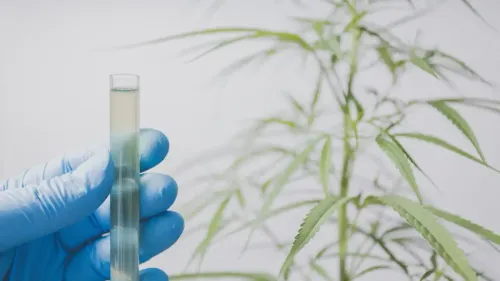
Cannabis research - There are moments when science stops walking quietly to open up new possibilities for transformation. In laboratories, greenhouses, and universities, seeds cultivated with methodology and responsibility can represent the beginning of discoveries capable of impacting health, innovation, and knowledge.
It is in this context that the Universidade Federal de Santa Maria (UFSM) begins to outline a new chapter in cannabis research in Brazil, driven by the regulatory framework published by the Agência Nacional de Vigilância Sanitária (Anvisa), which now regulates plant cultivation for exclusively scientific and technological purposes.
The initiative positions the university among public institutions seeking to expand the production of knowledge on Cannabis sativa with traceability, control, and scientific rigor.
Published in the Diário Oficial da União in February 2026, Board Resolution (RDC) No. 1,012/2026 establishes, for the first time, specific rules for the cultivation of Cannabis sativa intended exclusively for scientific and technological research.
According to the UFSM website, the regulation creates a safer legal environment for universities and research institutes to conduct studies across different fields of knowledge.
At UFSM, the first moves are already underway. According to information released by the university, the objective is to structure a research chain capable of meeting Anvisa's requirements and strengthening the institution's role in a field considered strategic for Brazilian science.
Cannabis research advances with new regulation
As explained by Professor Dilson Bisognin, from the Departamento de Fitotecnia of the Centro de Ciências Rurais (CCR), in an interview with the website of the Universidade Federal de Santa Maria (UFSM), obtaining the Special Authorization (AE) from Anvisa will be the first step toward starting cultivation for research purposes.
Before that, the university must adapt its infrastructure to meet the requirements set by the regulations, including physical security protocols, monitoring systems, and access control to cultivation areas.
"Cultivation authorization is the starting point for the entire research chain. Without access to raw materials produced under scientific and regulatory rigor, it is impossible to develop everything from agronomic and pharmaceutical studies to clinical research, technological innovation, and knowledge transfer to society," stated Professor Dilson Bisognin to the website of the Universidade Federal de Santa Maria (UFSM).
According to the professor, the new regulatory framework offers the necessary conditions for public institutions to develop research with traceability, quality, and control, expanding the possibilities for scientific innovation.
UFSM prepares infrastructure to strengthen cannabis research
According to the university website, one of the first planned actions will be the complete retrofitting of a greenhouse and other research facilities. With Anvisa authorization and adequate infrastructure, the institution intends to develop an integrated innovation chain involving different stages of the scientific process.
Among the planned lines of action are plant breeding, clonal propagation, standardized biomass production, the development of extraction technologies, and the validation of analytical methods capable of accurately characterizing compounds present in Cannabis sativa.
Although unfertilized female inflorescences concentrate a higher amount of cannabinoids and terpenes of pharmaceutical interest, the university also plans to explore other parts of the plant.
According to UFSM, leaves, stems, and roots could in the future be used in the development of new technologies, industrial processes, and biotechnological applications.
Another challenge highlighted by the university concerns the standardization of raw materials used in research.
As Professor Dilson Bisognin explained to the UFSM website, natural differences in the concentration of compounds such as tetrahydrocannabinol (THC), cannabidiol (CBD), cannabigerol (CBG), and terpenes can compromise the reproducibility of scientific studies.
In this scenario, producing genetically defined clones should allow for obtaining plants with a more stable and predictable chemical composition, reducing variations between different cultivations and increasing the reliability of results obtained in preclinical and clinical research.
In addition to genetic standardization, the initiative includes studies aimed at adapting cultivation to the climatic conditions of Rio Grande do Sul.
Temperature, photoperiod, and environmental factors can directly influence the plant's chemical profile, making it necessary to develop specific agronomic practices to ensure the quality and stability of the biomass produced.
Seminar will bring together experts to discuss the future of scientific cannabis
As part of this process, UFSM's Centro de Ciências Rurais and Departamento de Fitotecnia will host on August 13 the seminar "Challenges and opportunities of cannabis cultivation for research", coordinated by Professor Dilson Bisognin.
According to the university website, the meeting aims to deepen discussions on the requirements of the new regulation and promote institutional, scientific, and technological debate surrounding the cultivation and medicinal use of cannabis in Mercosur.
The schedule includes lectures on the new regulatory framework, panels on UFSM's multidisciplinary potential in scientific research, debates on advancements developed in Argentina, Uruguay, and Paraguay, as well as discussions on the business ecosystem and the role of patient associations.
Concurrently, the Cannabis Innovation and Technology Exhibition (Mostra de Inovação e Tecnologia em Cannabis) will take place, gathering technology companies, service providers, industries, and patient associations.
According to the university, the initiative seeks to stimulate networking among different industry stakeholders and expand dialogue on scientific and technological development related to Cannabis sativa.
With the entry into force of RDC No. 1,012/2026, public universities now have a specific regulatory framework to expand cannabis research. At UFSM, the expectation is that the new structure will strengthen scientific production, encourage innovation, and contribute to the advancement of knowledge about a plant that increasingly occupies space in research developed in Brazil.