Cannabis tea: study reveals real effect on well-being
New study evaluates the impact of Cannabis sativa tea infusion on patient well-being. Understand how cannabis tea acts on body balance

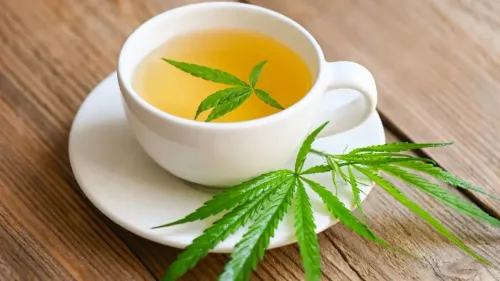
Between the delicate vapor rising from the cup and the silent ritual of self-care, cannabis tea emerges as an invitation to slow down.
Far beyond a simple beverage, the plant infusion carries the promise of restoring to the body the balance lost in a heavy routine, turning small moments into true breaths of relief and comfort for the mind.
In this article, you will see:
What science says about Cannabis sativa tea infusion.
How the study evaluated participants' well-being.
Key findings and perceptions of improved quality of life.
The difference between standalone use and medical oversight.
The role of the endocannabinoid system in active compound absorption.
The search for natural and therapeutic alternatives to relieve daily tension has led an increasing number of people to warmly appreciate the virtues of medicinal plants.
In this scenario, cannabis tea gains prominence not only for its ancestral consumption tradition, but now also under the careful scrutiny of contemporary science.
A quasi-experimental study published in the scientific journal Journal of Health Science and Medical Research (JHSMR) shed light on this practice by investigating the efficacy of Cannabis sativa tea infusion on the perception of well-being among individuals interested in cannabinoid therapies.
The researchers sought to understand whether the habit of consuming the plant as a tea would bring noticeable changes to volunteers' daily lives, evaluating emotional and physical factors, as well as the overall feeling of energy.
"Evaluating individual perception of well-being is fundamental to understanding how traditional administration routes, such as infusions, can complement the patient's therapeutic journey in an accessible and humanized way," highlight the authors in the Journal of Health Science and Medical Research publication.
How does cannabis tea affect the feeling of well-being?
To understand the impact of the beverage, one must look at the complex biological web within us.
When we consume the plant as an infusion, the active compounds interact directly with our endocannabinoid system, a network of receptors spread throughout the body responsible for regulating vital functions such as sleep, mood, pain, and stress response.
LEARN MORE: Understand the difference between CBD and THC in the body
Unlike standardized oils and extracts, preparation in hot water undergoes specific chemical processes.
During boiling, partial decarboxylation of acidic cannabinoids (such as THCA and CBDA) occurs, transforming them into their active forms, although the fat solubility of these compounds requires attention during preparation.
The study followed individuals who had already shown interest in natural treatments. During the observation period, participants reported their daily impressions through validated well-being scales.
Relief from daily tension: most reports pointed to an immediate feeling of physical and mental relaxation after consumption.
Sleep harmonization: patients reported falling asleep more easily and experiencing fewer interruptions at night.
Emotional comfort: reduction in mild anxiety spikes linked to work stress and daily routine.
The study results on medical cannabis tea
The data collected by the JHSMR study showed a statistically significant improvement in participants' global well-being scores.
The tea infusion intervention proved capable of providing a continuous feeling of relief and comfort throughout the weeks of follow-up.
The analysis revealed that the preparation ritual, combined with the plant's herbal properties, acts holistically.
The study highlights that well-being is not merely the absence of symptoms, but the active presence of a sense of fulfillment and balance.
Improved overall energy: volunteers highlighted increased energy and motivation to perform daily tasks.
Reduction of physical discomfort: relief from mild, episodic pain, such as tension headaches and digestive discomfort.
Positive perception of treatment: high adherence among participants to the infusion format due to the method's simplicity and familiarity.
Preparation precautions and the need for medical guidance
Despite the promising results, experts warn that preparing cannabis tea requires technical knowledge to ensure efficacy and safety.
Since cannabinoids are not soluble in pure water, adding a fat source (such as whole milk, coconut oil, or butter) is essential for proper extraction of active compounds.
LEARN MORE: How fat aids in cannabinoid absorption by the digestive system
In addition, self-medication is never the recommended path. Each body responds uniquely to plant compounds, and factors such as dosage, raw material source, and drug interactions must be carefully evaluated by a trained healthcare professional.
"The use of medicinal teas and infusions should be viewed as an integrative ally, always backed by individualized clinical follow-up to ensure that the patient achieves maximum efficacy with total safety," reinforces the medical team responsible for analyzing the article.
The study reinforces that when the plant is used responsibly, respectfully, and with scientific support, it stops being a taboo and becomes a bridge reconnecting individuals with their own well-being.
Bibliographic References
Journal of Health Science and Medical Research (JHSMR). Efficacy of Cannabis sativa tea infusion on the sense of well-being of individuals interested in medical cannabis treatments: A quasi-experimental study. Available at:
https://jhsmr.org/index.php/jhsmr/article/view/1393 Russo, E. B. (2011). Taming THC: potential cannabis synergy and phytocannabinoid-terpenoid entourage effects. British Journal of Pharmacology, 163(7), 1344-1364.
World Health Organization (WHO). Cannabidiol (CBD) Critical Review Report. Expert Committee on Drug Dependence, 2018.