COP30: Researcher highlights industrial hemp as a sustainable and economical solution for the future of the planet
In Belém do Pará, Thiago Zilio, vice president of ICT Cannabis Brasil, advocates for hemp as an ally of sustainability and regenerative economy at COP30


Among the voices coming together in Belém do Pará to discuss the future of the planet, one of them spoke about roots. On the second day of COP 30, researcher Thiago Zilio, founder and vice president of the Institute of Science and Technology Cannabis Brazil (ICTC Brazil), spoke live with Portal Sechat about industrial hemp, a plant capable of cleaning soils, generating income, and inspiring a new pact between humanity and nature. A green thread of hope that intertwines with the urgency of our time.
Zilio brings to the world climate conference an agenda that, despite being ancient, is still new to Brazil: the recognition of hemp as a strategic tool for sustainability, innovation, and regenerative economy. In an event discussing the future, he proposes a return to the land, a reunion with what is essential.
A plant, a thousand possibilities
During the chat, live streamed on Sechat's Instagram, Zilio stated that "hemp is not just another agricultural crop, it is an ecosystem of possibilities and investing in hemp is investing in the future".
More than 30,000 products can be derived from it: fibers that build houses, biocomposites that power cars, nutrient-rich foods, and fabrics that clothe the world with environmental consciousness. It is the kind of plant that seems to have been designed by nature to remind us that progress and care can walk hand in hand.
Reconnecting with the land
Hemp is also a natural healer. Its phytoremediation ability allows it to clean the soil, absorbing heavy metals and bringing life back to what seemed lost. It is a plant that breathes along with the planet, sequesters carbon, and helps rebalance what haste and excessive profit have worn down.
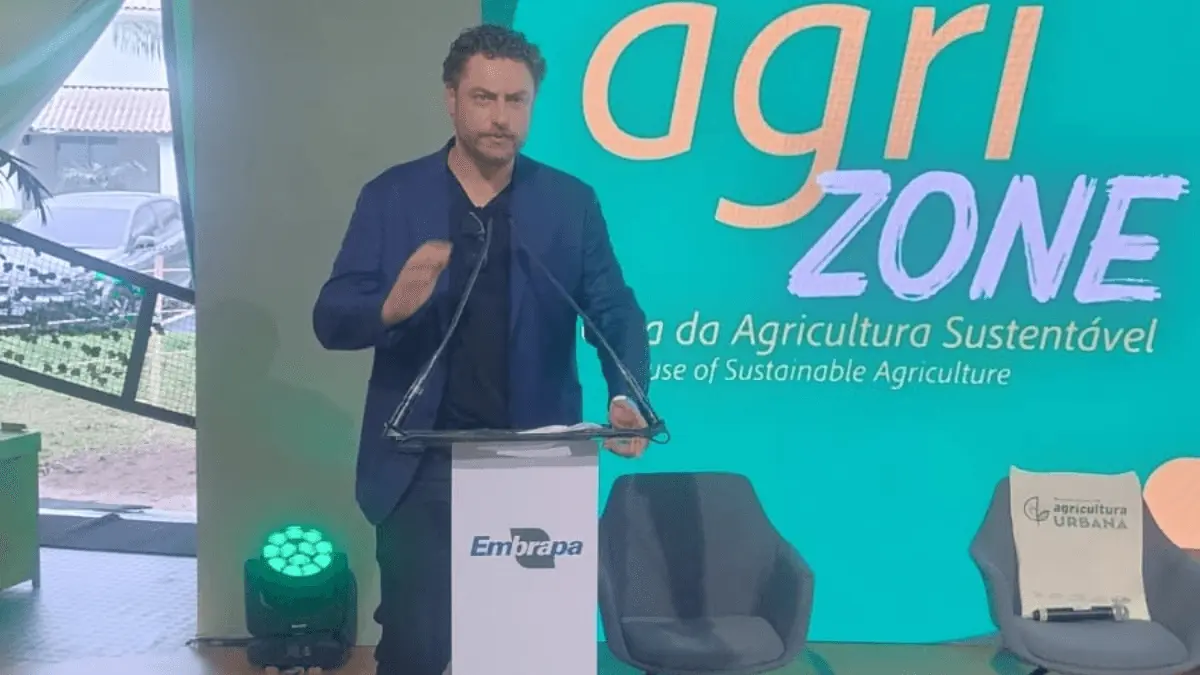
Speaking at COP 30, Zilio emphasizes that hemp can be a concrete ally in addressing climate change, a crop that does not compete, but cooperates with the environment. “Hemp represents Brazil's opportunity to align production and sustainability. It is a plant that gives back what it takes, that heals what has been hurt,” he highlights.
A future cultivated in green
In Brazil, where green is more than a color, it is identity, allowing hemp to flourish is a political and emotional choice. It is betting on a fairer economy, on clean production, and on a future that does not need to choose between development and preservation.
Science has already shown the way. The raw material is ready. It only remains for social and political perspectives to shed the stigma that still surrounds the topic.