Government discusses regulation of cannabis and promises interministerial agenda
Minister Guilherme Boulos meets sector to discuss working group and inclusion of associations in new medicinal cannabis legislation

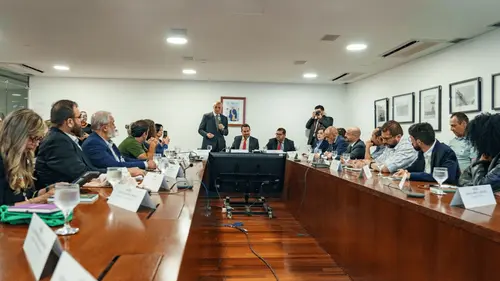
The Minister of the Secretary-General of the Presidency, Guilherme Boulos, met with sector representatives on Tuesday (06) at the Planalto Palace. The main objective of the meeting was to discuss the regulation of cannabis and the distribution of the plant in national territory. The discussions focused primarily on public policies aimed at therapeutic use.
As a result, a promise was made to establish an interministerial agenda to broaden the discussion. The measure aims to integrate different government departments in building a safe and accessible model.
According to the minister's office, the associations formally requested the creation of an interministerial working group. Boulos believes that, considering the regulation deadline set for March 31, 2026, the best strategy is to hold a focused working meeting.
The ministry requested the associations to submit an official proposal by early February. The document should include a list of the entities that should participate in this meeting. "Boulos committed to speaking with the minister of each department," said the ministry's advisory.
Social actors demand inclusion in medicinal cannabis
The discussion included representatives from the Ministries of Agriculture, Livestock, and Supply (Mapa) and Agrarian Development (MDA). The group was led by São Paulo state deputy, Eduardo Suplicy (PT).
Associative leaders and university researchers demanded the formal inclusion of patient associations in the future cannabis regulation text. Pedro Sabaciauskis, founder of the Santa Cannabis Association, emphasized the need to legitimize the entities that already provide the oil.
“Associations are a social and cultural heritage of Brazil. They need to be heard, valued, and recognized,” Sabaciauskis said during the meeting.
Legal uncertainty and the future of regulation
For the entities present, the meeting signals an unprecedented openness in dialogue with the government. However, the category remains cautious about the practical effectiveness of the measures discussed.
Jair Pereira Barbosa Jr., representative of the Federation of Therapeutic Cannabis Associations (FACT), described the moment as historic. “I believe that organized civil society has never been so close to the presidential cabinet. There is a great expectation that things will really progress and not just remain as proposals,” he said.
Despite the optimism, Barbosa Jr. highlighted the legal vulnerability affecting the medicinal cannabis sector. He emphasized the urgency of concrete advancements due to ongoing regulatory deadlines.
“We hope that the interministerial meeting takes place as quickly as possible. Associations today live in great legal uncertainty, at risk, including those that already have some kind of judicial decision, such as habeas corpus,” added the FACT representative.
Criticisms of Anvisa regarding cannabis regulation
The lack of dialogue on the part of the National Health Surveillance Agency (Anvisa), a central entity in the regulation processes, was a point of tension raised by the experts. Dr. Eliane Nunes, general director of the Brazilian Society for Cannabis Studies (SBEC), expressed concern about the current scenario.
The doctor warned of the proximity of the deadline for Anvisa to present new definitions without having consulted the sector. “There are less than two months left for Anvisa to decide, but it has not consulted many associations. How can it do something for us, without us?” she questioned.
In September 2025, Anvisa met online with association representatives. The meeting took place before the request for a new deadline, later accepted by the Superior Court of Justice (STJ).
Nunes also advocated for the removal of the plant from the list of prohibited substances to facilitate research and treatment. “We have fought so hard to get here. The SBEC is available for training, guidance, and orientation so that research and patient care continue in the associations,” she concluded.