Hemp: Research Reveals Surprising Benefit for Dogs
Worried about your pet? New hemp research followed 24 dogs for 3 months and revealed how the plant's seeds help the canine microbiome.

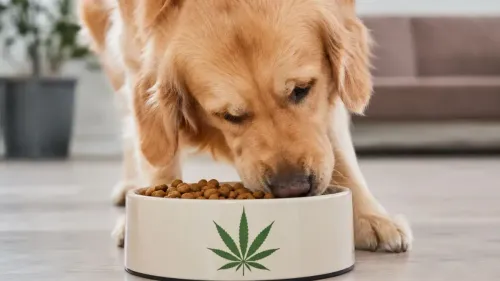
Hemp is the focus of research published in the scientific journal Veterinary Sciences that followed 24 dogs for three months and showed that hemp seed byproducts and oil modulate the canine intestinal flora in distinct ways — without compromising the stability of the microbial ecosystem.
A scientific study was conducted by researchers from Kasetsart University in Thailand to investigate the benefits of hemp on dog health. The research provided new evidence on the effects of industrial hemp (Cannabis sativa L.) on the intestinal health of dogs. The work was published on May 29, 2026, in the journal Veterinary Sciences. In total, 24 healthy dogs were followed for 90 days. The goal was to assess how different hemp seed formulations affect fecal microbiota. This set of microorganisms inhabits the gastrointestinal tract. It plays a central role in the immunity and metabolism of animals.
What the study evaluated
The 24 dogs were all adults and healthy, weighing between 15 kg and 20 kg. They were randomly divided into three groups of eight animals:
- Control group (FC): basal diet, with no addition of hemp.
- Hemp byproduct group (FB): diet with 11% hemp seed byproduct. This is a fiber-rich cake incorporated into the formulation of the feed.
- Hemp oil group (FO): diet with a coating of 2% hemp seed oil. The oil was applied by spray during the cooling of the feed.
All animals received a nutritionally balanced basal diet. The protein content was similar among the groups, ranging from 26% to 27%. Fecal samples were collected on days 0, 30, and 90. They were analyzed by genetic sequencing (16S rRNA). This technique identifies and quantifies the families and genera of bacteria present in the intestine.
Hemp oil increased bacterial diversity
One of the central findings was this: the group that received hemp oil (FO) had the most significant increase in bacterial species richness. The Chao1 index measures this richness. It jumped from 1,374.38 on day 0 to 1,879.36 on day 90 in this group. This was a greater increase than in the control and byproduct groups.
The Shannon index assesses diversity and balance of the microbial community. It also grew more in the FO group, from 2.69 to 3.31 over the 90 days. The Simpson index did not change significantly between the groups, remaining between 0.09 and 0.15 throughout the period.
According to the researchers, this effect may be linked to the high content of polyunsaturated fatty acids in hemp oil. These fatty acids may open new metabolic niches, supporting less dominant bacterial populations. However, the study notes that the exact composition of fatty acids in the diets was not quantified, limiting definitive conclusions about the exact mechanism.
Hemp byproduct favored fiber-fermenting bacteria
The oil stood out for increasing diversity, while the hemp byproduct (FB) had a different effect. It is richer in insoluble fiber and promoted the growth of bacteria from the phylum Actinobacteriota. The highlight was the genus Collinsella, which reached the highest relative abundance among the three groups: 17.5%.
Collinsella is a carbohydrate-fermenting genus. Science associates it with the conversion of dietary fibers into short-chain fatty acids (SCFAs), which provide metabolic benefits. The FB group also showed more stability in the composition of certain bacteria over the 90 days, including Collinsella, HT002, Slackia, and Peptoclostridium. Differential abundance analysis (DESeq2) confirmed this pattern.
Meanwhile, the hemp oil (FO) had a different profile, increasing the abundance of the family Lactobacillaceae. The highlight was the genus Ligilactobacillus, which produces lactic acid and has well-documented probiotic properties associated with supporting the integrity of the intestinal barrier.
No negative impact on the health of the animals
None of the 24 dogs experienced diarrhea during the study. There were no significant changes in fecal scores. Body weight remained stable, and hematological and biochemical blood parameters also remained within normal ranges. For the authors, this reinforces a hypothesis: the two hemp formulations can be safely used in canine feeding as functional ingredients.
The beta diversity analysis measures the variation in microbial composition between samples. It provided another relevant finding. In all groups, there was convergence of microbial communities over time. Variation among individuals decreased by day 90, indicating that the intestinal ecosystem moved toward a new equilibrium.
The researchers also identified a core of 19 bacterial genera present in all analyzed samples, suggesting a relatively stable "central" microbiota in the canine species that persists even in the face of different dietary interventions.
Limitations acknowledged by the authors
The study itself lists important limitations. The sample size was eight dogs per group, calculated only for the primary outcome: alpha diversity. It was not designed for the differential abundance analysis of hundreds of bacterial taxa. Therefore, findings at this level should be viewed as exploratory, generating hypotheses but not confirmatory results.
There is another point of concern. The hemp formulations differed from the control diet in more than one aspect. It was not just the presence of the ingredient; the macronutrient composition also changed, in fiber and fat. Thus, the authors make a caveat: changes in the microbiota cannot be attributed solely to hemp. Nutritional variations also played a role.
Finally, there is a technical limitation. The 16S rRNA sequencing shows microbial composition but does not provide direct functional information. It does not measure, for example, the actual production of short-chain fatty acids or assess inflammatory markers, which would require complementary methods.
Conclusion of the researchers
The authors reach a central conclusion. Supplementation with hemp seed byproduct and oil modulates the canine fecal microbiota, but it does so specifically for each formulation. The fiber-rich byproduct favors fermenting bacteria like Collinsella, while the oil stimulates greater overall bacterial richness and supports the growth of beneficial lactobacilli.
In both cases, one point remained: the ecological stability of the intestine was preserved, indicating a potential for the safe use of hemp in dog nutrition. Nevertheless, the authors make a final caveat. Future studies with nutritionally equated diets are needed to help confirm the specific mechanisms behind these effects.
Technical details of the study
- Original title: Longitudinal Assessment of the Canine Fecal Microbiota in Response to Dietary Hempseed By-Product and Oil: A 90-Day Nutritional Intervention Study
- Authors: Jutamat Klinsoda, Sasithorn Limsuwan, Witchayaporn Sornard, Pattarawadee Thamsatit, and Natthasit Tansakul
- Institution: Faculty of Veterinary Medicine, Kasetsart University, Bangkok, Thailand
- Publication: Veterinary Sciences, 2026, 13(6), 534
- DOI / link to the study:here.