Medical Cannabis Use Gains New Rules in Illinois
Medical cannabis use gains new possibilities in Illinois, which now recognizes two conditions for treatment access with a doctor's recommendation.

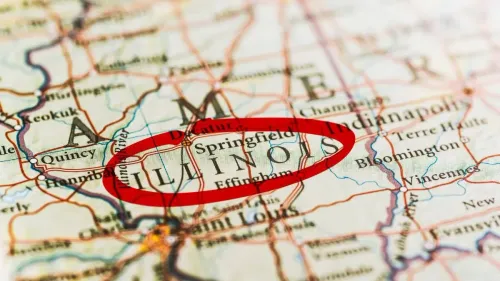
When an illness takes up too much room in daily life, any possibility of care can represent a glimmer of relief. In Illinois, in the United States, that door has just opened a bit wider: two new conditions were added to the list allowing legal access and the use of medical cannabis, subject to a doctor's recommendation. The change expands the number of qualifying conditions in the state to 58.
Which conditions now qualify for medical cannabis use?
The Illinois Department of Public Health (IDPH) announced on August 25 the addition of two new conditions to the state's medical cannabis program: sickle cell disease and polyglandular metabolic ovarian syndrome (PMOS), when accompanied by chronic pain.
In practice, patients living with these conditions who seek the use of medical cannabis can qualify for legal access to medical cannabis, provided they have a doctor's recommendation.
The decision was approved by IDPH Director Dr. Sameer Vohra following an evaluation by the Medical Cannabis Advisory Board, the board responsible for reviewing petitions to add new qualifying conditions to the program.
With these two new categories, Illinois now has 58 qualifying conditions for its medical cannabis program.
The change draws attention because it is not merely a bureaucratic revision on a state list. For those living with a debilitating illness, being recognized within public policy can mean access, clinical follow-up, and a new therapeutic possibility to be discussed with healthcare professionals.
What did the Department of Public Health say?
Commenting on the decision, Vohra emphasized the need to review petitions based on updated evidence and expert opinion. “Medical cannabis can provide relief for people living with certain debilitating conditions.”
The director stated that medical cannabis can offer relief to individuals living with certain debilitating conditions.
According to him, IDPH carefully reviews petitions before making decisions and seeks to ensure safe and appropriate access for patients.
The statement is important because it reinforces a vital point when it comes to healthcare: including a disease in an access program does not mean cannabis is indicated for all patients or that it works the same way for everyone.
The decision opens a pathway within the healthcare system, but individualized clinical evaluation remains indispensable.
Medical cannabis use and sickle cell disease
Sickle cell disease is a genetic condition that can cause abnormal red blood cells and pain crises, along with other clinical complications.
By including the disease among qualifying conditions, Illinois expands the number of patients who can formally discuss with their doctors the possibility of using medical cannabis as part of a care strategy.
It is important, however, to distinguish between two matters: having legal authorization to access treatment and having a clinical indication to use it.
The new rule primarily addresses the former. The therapeutic decision remains tied to medical assessment, considering clinical history, concurrent medications, symptoms, risks, and potential benefits.
This level of caution is especially relevant in chronic conditions, where treatment usually involves multimodal approaches and long-term follow-up.
For patients with sickle cell disease, therefore, the regulatory change should not be seen as a guarantee of efficacy, but rather as an expanded opportunity to access a therapeutic alternative that can be evaluated on an individual basis.
Medical cannabis use for chronic pain and PMOS
The second new condition is polyglandular metabolic ovarian syndrome (PMOS) accompanied by chronic pain.
This addition places pain at the core of the new rule. That is because the authorization does not apply simply to a PMOS diagnosis, but specifically to the presence of chronic pain associated with the condition.
The measure also illustrates how state medical cannabis programs can set specific criteria for particular illnesses and symptoms.
Rather than treating cannabis as a universal remedy, Illinois policy creates an entry point conditioned on diagnosis, established criteria, and medical recommendation.
For patients, this means the pathway continues to go through professional medical care.
- Diagnosis of the condition;
- Individual clinical evaluation;
- Review of symptoms and patient history;
- Doctor's recommendation, when deemed appropriate;
- Access under the state program's rules.
These steps help prevent the misconception that adding a condition to a regulatory list automatically equates to a prescription.
LEARN MORE: Medical cannabis and chronic pain: what research has investigated
What changes in Illinois' cannabis program?
The update comes amid broader shifts in Illinois' cannabis policy.
According to Marijuana Moment, the expansion of qualifying conditions comes shortly after the Illinois Department of Financial and Professional Regulation (IDFPR) issued a new form allowing adult-use dispensaries to apply for authorization to also sell medical cannabis.
This option is part of broader legislation, known as SB 3222, passed by the state legislature and signed by Governor JB Pritzker in June.
The new legislation allows adult-use dispensaries with an active license in good standing to opt into a license to serve medical program patients.
According to guidance cited by Marijuana Moment, the license permits these establishments to sell cannabis to registered patients while applying the tax rate intended for medical use.
The change could expand the infrastructure available to patients who rely on the program, particularly as more conditions join the state list.
What does the new rule mean for patients?
For those living with a chronic condition, a regulatory change can seem abstract until the moment it turns a theoretical option into an alternative that can be discussed during a medical appointment.
That is precisely where the debate on medical cannabis use takes on a more human dimension.
It is not just about legislation, dispensaries, or lists of conditions. It is about people living every day with pain, limitations, and treatments that do not always yield the expected results.
Expanding the program can allow more patients to talk with their doctors about incorporating cannabis-based products into their therapeutic plans.
However, that conversation must take place responsibly.
Cannabis can cause side effects and drug interactions, and treatment response varies from person to person. Therefore, products, dosages, potencies, and routes of administration should not be chosen solely based on anecdotes found online.
Information is the first step. Clinical decision-making is the second.
Why does Illinois' decision deserve attention?
The expansion of qualifying conditions marks another chapter in the evolution of medical cannabis policies in the United States.
In Illinois, the change combines two developments: on one hand, more conditions now qualify for program access; on the other, the state is updating rules to facilitate dispensary participation in the medical market.
For patients with sickle cell disease or PMOS associated with chronic pain, the update can mean a concrete opportunity to discuss with healthcare providers an alternative that previously was not covered under state regulations.
It is a change that begins on a list, moves through a medical consultation, and can reach the daily lives of those who have long been seeking ways to live with less pain.
Thus, perhaps the main takeaway lies right at this intersection of public policy and patient care: another door has opened, but walking through it remains a decision that requires information, ongoing medical supervision, and responsibility.
Source: content originally published on Marijuana Moment.