Psychedelic Motherhood: Amanda, Ancestry, and the Future
From Garanhuns to the world, Amanda Pietra discusses psychedelic motherhood and female strength, joining the Hijas del Sur collective for a livestream. Check it out

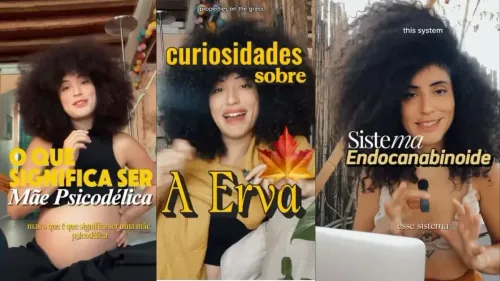
There are women who arrive to occupy a space. And there are those who, upon arriving, begin opening paths. Amanda Pietra seems to belong to the second group, especially when it comes to psychedelic motherhood.
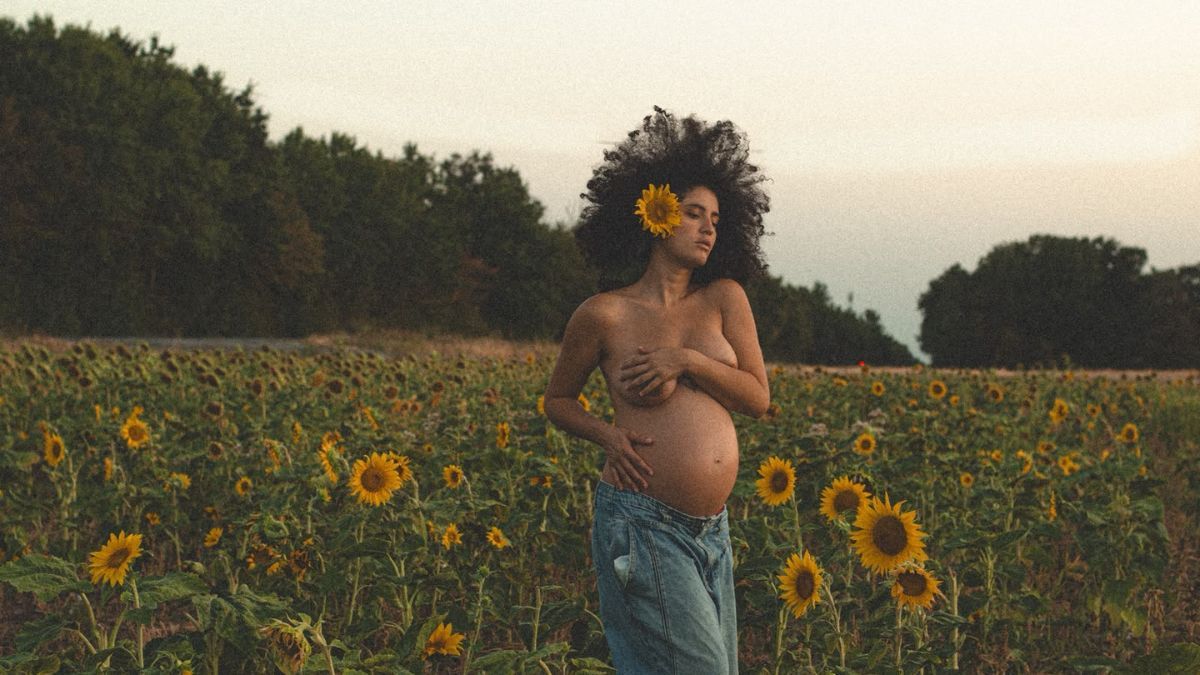
At 29 years old, the Pernambuco native from Garanhuns carries a journey that cannot be easily confined to a single definition. A photographer, backpacker for 7 years, content creator, mother-in-the-making, and restless researcher of so-called ancestral medicines, she turned her own quest into a way to converse with thousands of people.
Today, her content navigates topics that still provoke questions, prejudice, and curiosity: cannabis, ayahuasca, mushrooms, psychedelics, spirituality, female sexuality, and the relationships between body, nature, and knowledge. It is truly all of that!
Psychedelic motherhood on the phone screen and the transformation in the life of the northeastern woman from Pernambuco's Agreste
That is how videos with questions like “What does it mean to be a psychedelic mother?” and content like “Curiosities about the herb” found a place on social media and helped Amanda build a community that already brings together more than 90,000 followers across her two profiles. She has a backup account in case she loses one.
Yet perhaps the most interesting story is not in the numbers, but rather in the path that came before them.
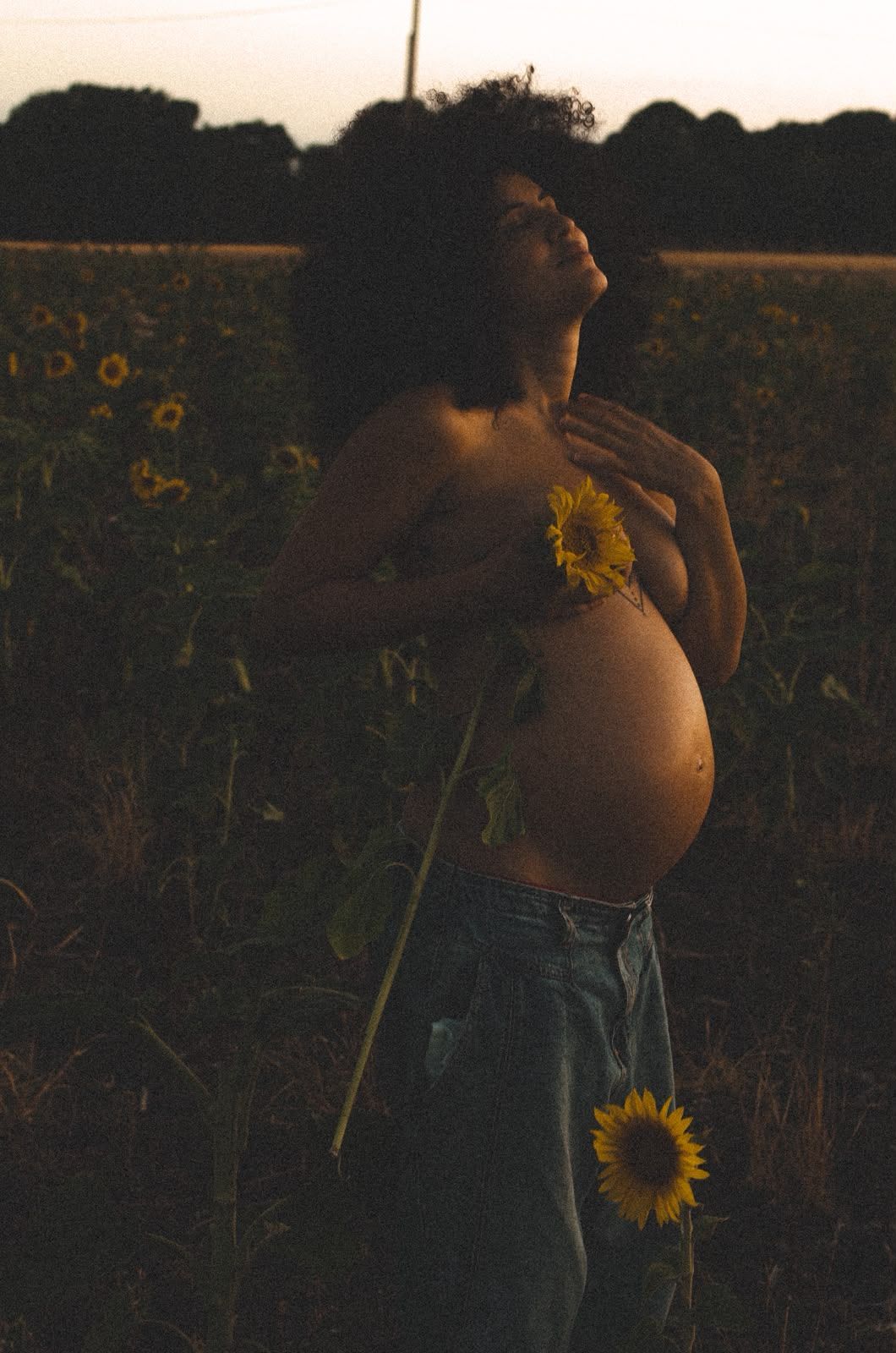
Today, living in France and eight months pregnant, she is going through a new experience: motherhood. But not just any motherhood. On her social media, she has been talking about what she calls psychedelic motherhood, a concept that brings together her experiences, studies, and the questions that arise with the arrival of a new being.
In this article you will see:
- The meaning of psychedelic motherhood
- The transition from photography to content about medical cannabis
- The simplification of psychedelics and medicinal plants
- The relationship between cannabis, psychedelics, and belonging
- The cannabis oil market and ancestral commercialization
- Technology, ancestry, and the future of knowledge
- Returns, roots, and female strength in plants
Northeastern identity, Brazil as the Garden of Eden, and the conversation circle
What does the combination of psychedelic motherhood mean?
“When I heard about this, the first thing I thought was: mother and psychedelia are two very delicate words,” she told Sechat exclusively while explaining the meaning of psychedelic motherhood, an expression that gained traction in her content and that, for her, was born precisely from the encounter between two worlds surrounded by judgment.
On one side, psychedelics, which still carry a fair amount of prejudice and misinformation. On the other, the figure of the mother, an archetype that Amanda considers “very crystallized” and “rigid.”
During pregnancy, she realized that a woman's body ceases to be viewed as exclusively hers. “People touch your belly, they tell you what you should or shouldn't do. Your body stops being yours,” she stated.
Motherhood as a complement to internal study that exercises life's natural gift
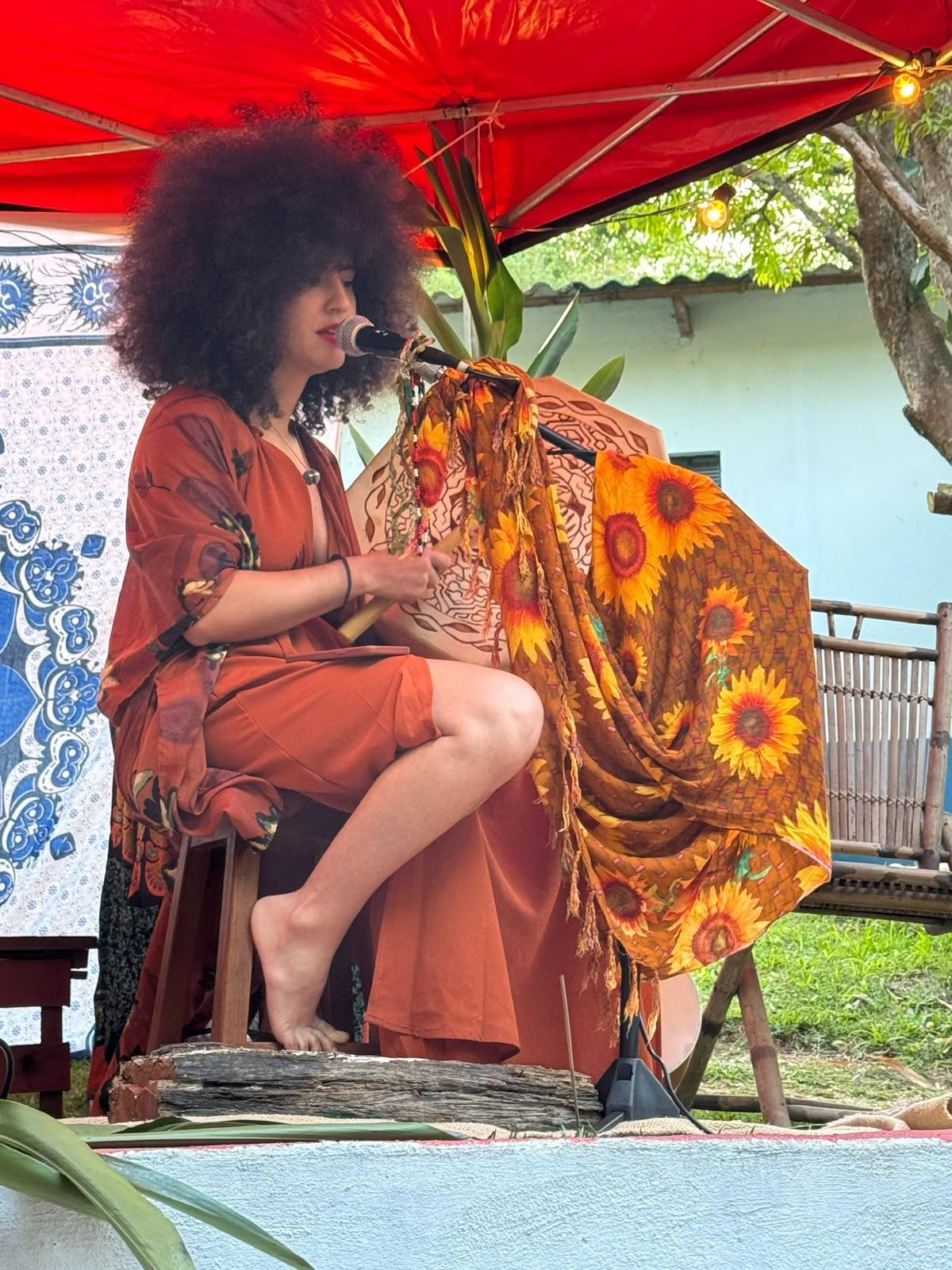
For Amanda, combining these two words, psychedelic motherhood, is precisely a way to challenge these preconceived ideas. She did not want pregnancy to mean letting go of the woman who existed before it.
“I think it's about understanding that a mother doesn't stop being a woman. Everything I am, everything I've lived, everything that exists prior to the title of mother will continue to exist,” she emphasized.
It is at this point that her personal experience turns into a broader discussion. For her, psychedelic motherhood means:
Maintaining autonomy: recognizing that a woman continues to have a history, spirituality, desires, knowledge, and choices after becoming a mother.
Integrating dimensions: understanding that all these prior experiences continue to actively participate in building motherhood.
Overcoming prejudice: it is not simply about associating psychedelic motherhood with substance consumption, but about reclaiming the right to exist in full.
Psychedelic motherhood and the gaps of prejudice
She believes that the debate on motherhood, pregnancy, the postpartum period, and psychedelics is still crossed by knowledge gaps and that women's accounts can help formulate new questions.
“I think it's also about this, what I've been seeing in the comments of my latest video: they are mothers' accounts,” she pointed out.
She knows women who went through experiences related to Santo Daime (the doctrine in which she is initiated) during motherhood and children who are now adults.
For Amanda, these stories do not replace science, but they can help broaden the dialogue. The goal is to move from “you can't” to “how does it work?”.
LEARN MORE: Understand the benefits of Medical Cannabis for women's integrative health
How did a photographer become a content creator on psychedelic motherhood and ancestral medicines?
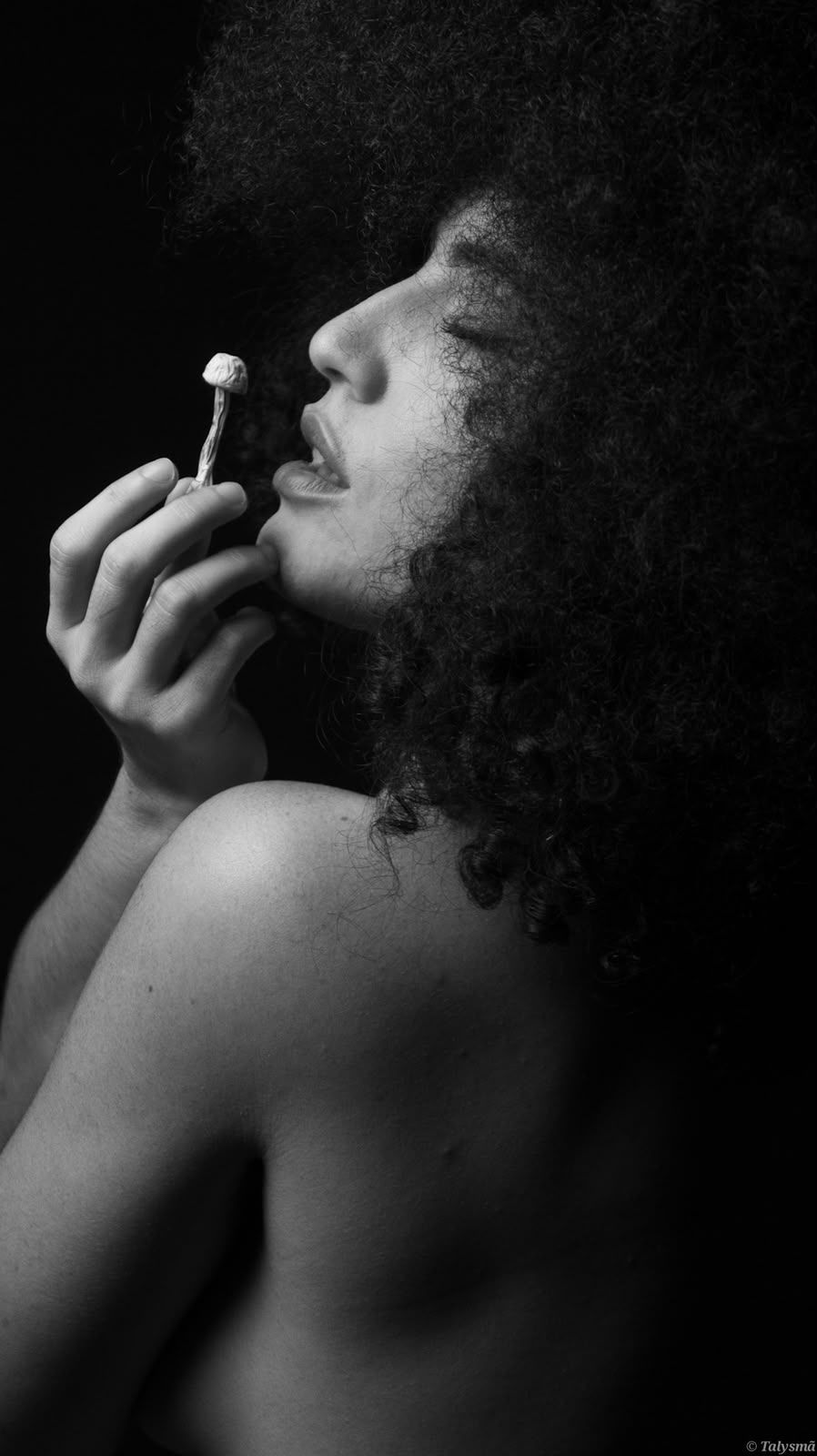
Before the videos on psychedelic motherhood, there was photography. Amanda was already documenting stories and developing projects related to women and rituals. One of them, “Elas em Elos,” was even published by El País. It was through these encounters that the camera began to take on another role.
In a partnership with the female wellness brand XapaXana, Amanda began speaking openly about the use of medical cannabis, female sexuality, and her own experiences with different earth medicines.
Then came the travels:
Journeys: she visited countries like Peru, Uruguay, parts of Europe, and Indigenous communities.
Experiences: memorable encounters with women and local traditions.
Language: a direct record of what she was experiencing and trying to understand.
The content emerged as an extension of this search. “Learning in order to teach became, in practice, my working method to connect people,” she revealed.
Amanda researches, talks, observes, and then tries to translate all of it into simple, accessible language on the phone screen.
Why talk about psychedelics in a simple way?
Because, for Amanda, information can also be a way of opening doors. She explains that she began producing videos out of her own concerns: pregnancy, spirituality, personal experiences, and the prejudice that still surrounds psychedelic substances.
Her goal is to bring different forms of knowledge into the same conversation:
Lived experience: individual sensation and first-person account.
Scientific studies: evidence and research that support the topic.
Ancestral knowledge: the wisdom of traditional peoples.
The internet as empirical knowledge for social transformation
The content creator on psychedelic motherhood seeks to simplify scientific concepts without turning complex topics into ready-made answers.
It is this combination that appears in the content that gained traction on social media.
The question ceases to be merely “what is this substance?” and becomes: what can history, culture, and the relationship with nature also teach about it?
Amanda explains that each video stems from a personal inquiry and the desire to establish a dialogue between her experience and what science has already managed to investigate.
What do cannabis and psychedelics have to teach about belonging?
This is perhaps one of the most prominent questions in Amanda's discourse. For her, one of the greatest contemporary issues lies in the feeling that humanity has drifted away from nature. In her view, certain experiences can serve as reminders of belonging.
In her narrative, it is not merely about consuming a substance or demystifying the term psychedelic motherhood. It is about understanding the context, the community, the ritual, and the meaning that a given experience holds for different peoples.
During her travels, Amanda encountered communities where these practices were integrated into daily life:
Homes, diets, songs, dances, and rituals were part of a collective experience.
Knowledge was not disconnected from daily life or social living.
“There is a huge difference between understanding a living plant within an entire culture and reducing it merely to an isolated molecule in a laboratory,” she commented when questioning the transformation of these practices into decontextualized commercial products.
What happens when ancestral medicines and cannabis oil become products?
In our interview, Amanda questions what she calls the “whitewashing of medicines."
She observes that certain substances historically associated with marginalization receive a new image when they enter other social spaces.
In her view, the regulation of cannabis oil and the development of this market are clear examples of this shift in language and perception. The same, she believes, could happen with psychedelics.
"A traditional, community-based, and ancestral experience can gain sophisticated packaging, a new vocabulary, and a price tag inaccessible to most of the population. We must continually ask ourselves: who has access to knowledge and treatment when traditional medicine turns into a market?”, she asked.
For Amanda, this process of excessive commercialization risks alienating plants from their origins and from the peoples who have preserved this knowledge for centuries.
Does the future of psychedelic motherhood need to be technological?
“Not necessarily. During pregnancy, I started noticing how an excess of technology can, in certain situations, distance childbirth from its most natural and instinctive dimension,” she reflected, comparing the discussion on psychedelics with the experience of giving birth.
This perception also made her reflect on ancestral medicines. In her view, an ayahuasca ceremony within a community does not simply represent the ingestion of a substance. There is a history, a culture, a ritual, and a collective way of interpreting that experience.
It is at this point that Amanda defends the importance of looking back before defining the future, especially when it comes to psychedelic motherhood. Not to reject science, but to avoid forgetting the knowledge that existed before it arrived.
Why do ancestry and female strength matter so much to Amanda Pietra?
Perhaps because her own story is made of returns. Over seven years of traveling, Amanda shares that she got to know different cultures and learned languages: Portuguese, English, Spanish, some German, and now French. Each language, for her, also represents a possibility to access other people and other forms of knowledge.
Yet the further away she traveled, the closer she seemed to get to her own roots.
In Peru, she found Latin American references.
In Europe, she realized how much certain practices presented as novelties actually originated among the peoples of Latin America.
Traveling far away, in that sense, also ended up being a way of returning home.
And where do female strength or psychedelic motherhood fit into this story? In the plant itself.
Amanda establishes a symbolic connection between plants and women:
Bodies and knowledge: the prejudices built around certain plants bear similarities to those historically placed upon female bodies — regulated, classified, controlled, and alienated from their own knowledge.
The family of archetypes: “To me, ayahuasca is the grandmother, San Pedro and tobacco are the grandfathers, rapé is the father, mushrooms are the children, and Santa Maria [cannabis] holds the welcoming place of the mother,” she reflects.
More than a classification, it is a way to organize her own spiritual relationship with these experiences. A symbolic family to which she returns whenever she needs to understand something about herself.
What does it mean to be a Northeastern Brazilian woman, and what is the future of psychedelic motherhood?
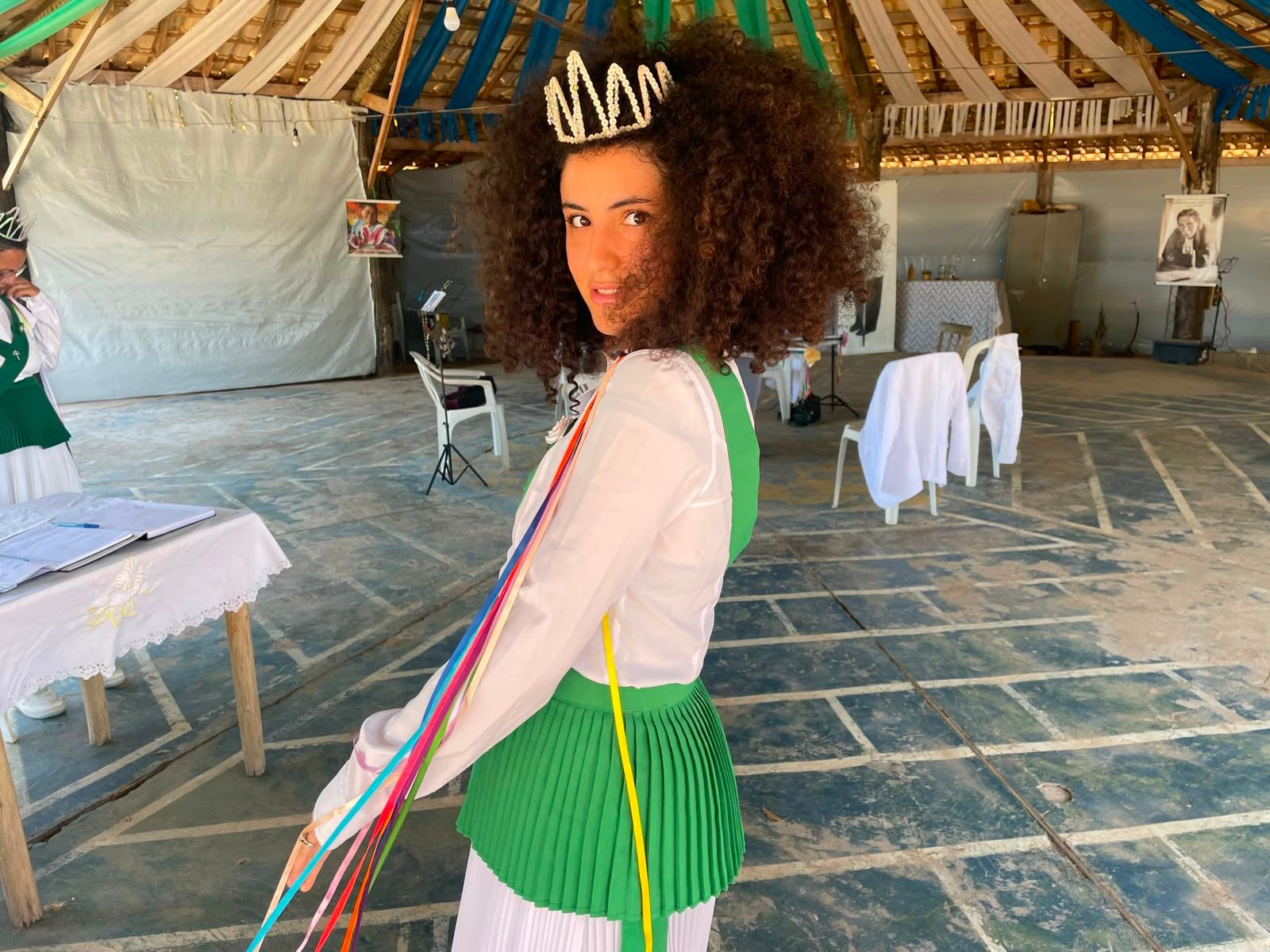
For Amanda, identities do not need to be kept separate. “Being from Pernambuco, northeastern, a woman, a traveler, psychedelic, and now a mother is all part of the very same process of existence.”
She shares that she has had her intelligence questioned simply for being a northeastern woman.
In France, she also began to perceive how being Brazilian and an immigrant can position one's body in a different place within society.
The experience reinforced an understanding: "the struggle is also about the right to exist without having to hide one's origins, beliefs, and experiences."
Brazil as a “Garden of Eden”
That is how she symbolically views the Brazilian mixture.
Amanda speaks of a country shaped by the encounter, and also the violence, of different peoples, cultures, and traditions.
"Indigenous peoples, Africans, Europeans, Asians, Arabs, and so many other groups helped form this deeply plural territory."
For her, this blend helps explain why Brazil developed such unique relationships with spirituality, mediumship, nature, and ayahuasca.
"Brazil would be a kind of Garden of Eden: a place where different cultures were placed side by side and created new ways of existing. That is also why, when I left the country, I understood better who I am. Distance acts as a mirror," points out the creator of psychedelic motherhood.
What does psychedelic motherhood teach about femininity?
Perhaps the main answer lies in Amanda herself. She does not speak of femininity as something delicate, pre-packaged, or obedient.
Her journey portrays a woman who travels, challenges norms, discusses sexuality, researches controversial topics, traverses cultures, and is now preparing to give birth far from the country where she was born.
There is strength in this choice, but there is also warmth within the psychedelic motherhood explored by Amanda. When she speaks of plants as family archetypes, she also talks about finding internal places of belonging.
And perhaps this is one of the most beautiful images in her narrative: the woman who spent years traveling the world to, little by little, find within herself the places to which she can return.
Special invitation: conversation circle with the Hijas del Sur collective
Psychedelic motherhood does not close the conversation. On the contrary: it opens an even more beautiful and necessary space for listening.
To delve deeper into this debate about "love that cultivates and transforms," the Hijas del Sur collective is hosting an unmissable, intimate livestream welcoming Amanda Pietra.
The conversation circle will take place on August 28th, online on the collective's Instagram, addressing the paths of psychedelic motherhood, bringing together women, researchers, and enthusiasts to share knowledge, support, and reflections on female strength in the world of cannabis and ancestral medicines.
Now, with a new life on the way and an ever-growing community following her steps, Amanda shares, almost didactically, on any topic like psychedelic motherhood and reaffirms the commitment to learn in order to teach.
Perhaps that is her greatest strength: not having all the answers, but continuing to ask questions and having the courage to share the discoveries along the way.