Sustainable cannabis can remove up to 100% of metals from water
Sustainable cannabis can help remove up to 100% of lead and copper from wastewater. Understand what the study reveals and learn about the discovery's limitations.

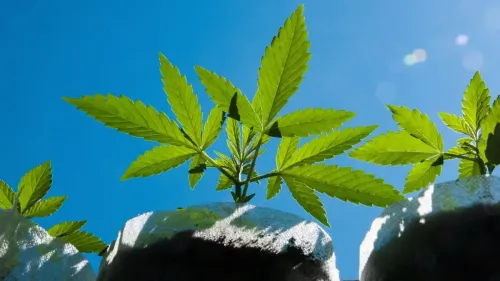
On a planet feeling the effects of global warming, facing extreme weather events, and seeking ways to protect its natural resources, every sustainable discovery opens a window of hope. A study published in the scientific journal Water, Air, & Soil Pollution indicates that cannabis flowers can help remove up to 100% of lead and copper ions from contaminated wastewater samples. The result puts sustainable cannabis on the research horizon for more accessible solutions to water protection.
In this article, you will see:
- How sustainable cannabis can help decontaminate water
- What researchers discovered about lead and copper
- Why sodium bicarbonate made a difference in the results
- What the next challenges are for applying the technology on a large scale
Sustainable cannabis: how can the plant help clean water?
Sustainable cannabis has been sparking scientific interest due to possibilities that go beyond its medicinal applications. In this study, researchers investigated the potential of Cannabis sativa L. flowers as biosorbents—materials capable of retaining contaminant substances on their surface.
The research, published on October 12, 2026, evaluated the plant material's ability to remove two metals present in wastewater: lead and copper. These contaminants can be associated with industrial activities, such as mining, electroplating, and metal processing, and pose environmental risks when they reach water resources.
The proposal is to explore a plant-based material as a potential alternative to conventional adsorbents. In a scenario of growing pressure on ecosystems and concern over the availability of clean water, solutions of this type can contribute to expanding wastewater treatment possibilities.
It is important to remember, however, that the research does not prove that cannabis, on its own, solves water pollution. It investigates a specific application, which still depends on further validation.
Study on sustainable cannabis achieves up to 100% removal
The researchers compared three types of material: unmodified cannabis flowers, glycine-treated flowers, and sodium bicarbonate-modified flowers.
The results varied according to the material's preparation. In the wastewater samples analyzed, the removal efficiencies were:
- Unmodified cannabis: from 74% to 88%.
- Glycine-modified cannabis: from 80% to 100%.
- Sodium bicarbonate-modified cannabis: from 96% to 100%.
The percentages correspond to the removal of the copper and lead ions evaluated in the experiment. Therefore, the 100% rate does not mean that the water was completely purified of all contaminants or automatically made safe for human consumption.
The version treated with sodium bicarbonate showed the best performance among the tested materials, according to the authors.
LEARN MORE: Cannabis Sativa and the Environment
How do cannabis flowers retain lead and copper?
The process studied is called biosorption. In it, certain components on the surface of a material retain substances present in a liquid.
To conduct the tests, the researchers prepared the plant material, ground the flowers, and evaluated their interaction with the metal ions. They also used analytical techniques to investigate the physical and chemical characteristics of the biosorbents.
Under conditions considered optimal by the authors, the experiments were carried out at pH 7, a temperature of 25 °C, and a contact time of ten minutes. The study used 10 milligrams of the adsorbent material in water samples with controlled metal concentrations.
The treatment with sodium bicarbonate also altered the surface characteristics of the material, enhancing its adsorption capacity.
Another relevant finding was the ability to regenerate and reuse the biosorbents for at least three cycles. This aspect deserves attention because material reuse can influence the economic and environmental feasibility of a treatment technology.
Can sustainable cannabis be an alternative for industry?
The possibility of using a plant-based material to retain heavy metals paves the way for new research in environmental technologies. According to the authors, cannabis flowers show potential as an affordable and environmentally friendly alternative compared to certain conventional adsorbents.
Still, there is a significant gap between achieving good results in a laboratory and implementing a process in treatment plants or industrial facilities.
The researchers point to the need to evaluate industrial-scale application. Among the challenges are verifying performance across different types of effluents, the costs of material preparation and regeneration, and the safe disposal of contaminated waste after adsorption.
The presence of retained metals requires caution: the used material cannot be discarded indiscriminately, risking returning contaminants to the environment.
It will also be necessary to assess the process's efficiency when faced with complex mixtures of pollutants and determine what additional steps are needed for the treated water to meet applicable quality standards.
What does the discovery represent for a sustainable future?
According to the publication by The Marijuana Herald, sustainable cannabis gains another scientific research front by being studied as a possible resource for water decontamination. The research does not prove a ready-made solution for the water crisis, but it presents promising results for the development of plant-based materials.
In a world that needs to reduce environmental impacts and protect resources essential to life, investigating alternatives, gauging their limits, and testing their practical application is an important part of building a more sustainable future.
The discovery reinforces that a plant's potential can be investigated across different fields of science. The next step will be to understand whether the performance observed in the laboratory can translate into a safe, economically viable technology capable of contributing to wastewater treatment.