Trump marks 1 year of government with historic shift in medicinal cannabis
President advances in the medicinal agenda and targets elderly electorate with CBD in Medicare, but signs law that threatens hemp market

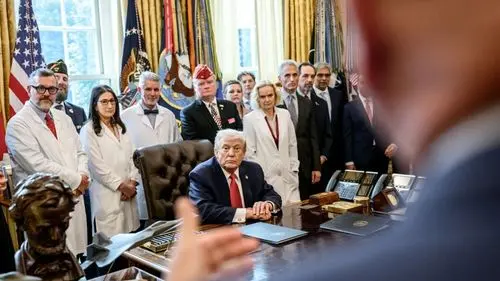
The President of the United States, Donald Trump, completed on Tuesday (20) the first year of his return to the White House. The period is marked by a significant agenda of contrasts for the cannabis sector.
In 12 months, the Republican administration made the biggest change in the country's drug policy in five decades. The government signed an executive order to reclassify the plant as a substance of lower risk.
Simultaneously, it imposed severe restrictions through the Agricultural Law. These measures could extinguish the market for hemp-derived products, such as Delta-8, creating a complex scenario for the industry.
Cannabis reclassification and pharmaceutical impact
The most anticipated decision by the sector took place in December 2025. Trump signed Executive Order 14370, instructing the Department of Justice and the DEA to expedite the transfer of cannabis.
The substance will move from Schedule I (drugs with no medicinal value, such as heroin) to Schedule III (with accepted medical use). The measure opens doors for the pharmaceutical industry and eases the tax burden on licensed state companies, although it does not legalize federal recreational use.
"I am pleased to announce that I will sign an Executive Order to reschedule marijuana with legitimate medical uses," declared Trump in the Oval Office. "This reclassification order will make it much easier to conduct marijuana-related medical research and will have a tremendously positive impact."
Hemp restrictions and the future of recreational cannabis
The unregulated adult use market suffered a decisive setback. In November, by renewing the Agricultural Law (Farm Bill), Trump signed provisions that change the legal definition of hemp, impacting access to alternative recreational cannabis.
The new rule closes the so-called "2018 loophole," which allowed the sale of psychoactive products derived from hemp in common locations. Now, the legislation imposes a limit of 0.3% of "total THC" and sets a cap of 0.4 milligrams of THC per package.
This effectively criminalizes gummies and flowers freely sold in states where recreational cannabis is still prohibited. Industry associations estimate that the measure puts at risk a market valued at $28 billion.
For analysts, the scenario is clear: the federal government embraces the plant as a regulated pharmaceutical input. In contrast, it declares war on recreational products that operated on the margins of federal oversight.
Research on medicinal cannabis and support for the elderly
In addition to the reclassification, the White House launched the initiative "Increasing Research on Medicinal Marijuana and Cannabidiol". The text provides for a pilot program for Medicare to evaluate reimbursement for cannabidiol (CBD) products.
The strategy aims to serve the elderly, a key Republican voter base, expanding therapeutic access to cannabis. In a video released on social media, which boosted sector stocks, Trump defended the measure.
"It's time to educate doctors about the endocannabinoid system, provide coverage for CBD, and give millions of seniors the support they deserve," said the president.