Types of Cannabis sativa: differences between sativa, indica, ruderalis, and hybrids
Discover how cannabis genetics, cannabinoids, and plant characteristics influence its medicinal and industrial uses. Understand the differences!

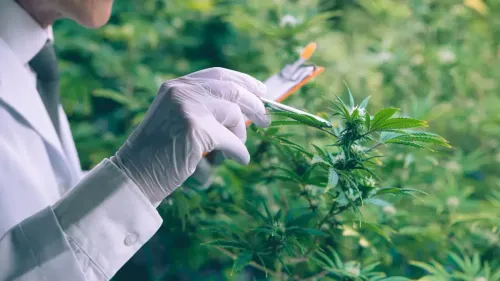
Cannabis is a plant of great genetic and chemical diversity, with applications ranging from medicinal research to the production of fibers, food, and industrial raw materials. But what differentiates its subspecies and varieties? The answer involves more than leaf appearance: genetics, cannabinoids, cultivation conditions, and agronomic characteristics help determine its properties and potential uses.
What are the main diversities of cannabis?
The botanical classification of cannabis remains a subject of scientific debate. Historically, the plant was described as Cannabis sativa, Cannabis indica, and Cannabis ruderalis. However, taxonomic and genomic studies indicate that these categories do not always correspond to distinct species.
A review published in 2023 in the journal Genome, titled Genomics-based taxonomy to clarify cannabis classification, highlights evidence supporting the classification of the genus as a single, highly diverse species. Other researchers work with divisions into subspecies, varieties, and cultivars.
In practice, three names frequently appear:
- Cannabis sativa: botanical designation widely used for the species. Certain varieties are selected for the production of fibers, seeds, and compounds of medicinal interest.
- Cannabis indica: name historically associated with plants showing specific morphological characteristics. Its use has also become popular in the market to identify commercial varieties.
- Cannabis ruderalis: designation related to populations adapted to specific environmental conditions. Some exhibit flowering that is less dependent on the photoperiod and have been used in crossbreeding.
These descriptions should not be interpreted as absolute rules. Genetic diversity and hybridization make classification more complex than the popular division into three types.
Medicinal cannabis: what is the influence of cannabinoids?
In medicinal research, the chemical composition of the plant is often more informative than the name assigned to the variety.
Cannabinoids are compounds produced by cannabis that interact with different biological systems. Among the most studied are:
- CBD (cannabidiol): does not produce the typical intoxicating effects of THC and has specific therapeutic applications investigated and recognized in certain contexts.
- THC (tetrahydrocannabinol): is primarily responsible for the psychoactive effects associated with the plant and also has specific therapeutic applications.
- CBG (cannabigerol): is investigated for its potential pharmacological activities, although more clinical evidence is still needed to establish various applications.
In addition to these, the plant contains terpenes and flavonoids, substances that contribute to its chemical profile and aromatic characteristics.
A review published in Frontiers in Plant Science highlights the diversity of compounds present in cannabis and the scientific interest in their pharmacological and industrial applications.
It is important, however, to separate potential from proof: laboratory results do not necessarily translate to clinical efficacy in humans.
LEARN MORE: How cannabis compounds transform brain care and mental health
Sativa and indica: are the medicinal effects different?
The idea that sativa varieties are always stimulating and indica are always relaxing has become widespread, but it does not constitute a reliable scientific rule.
The composition of cannabinoids and terpenes can vary considerably among plants marketed under the same name. Genetic factors, environmental conditions, cultivation, and processing also influence the final chemical profile.
Therefore, identifying a variety does not alone allow predicting its therapeutic or adverse effects. To evaluate products intended for medicinal use, composition, standardization, quality, dose, and available evidence for each indication are what matter.
The choice of treatment with medical cannabis should be made under professional guidance, taking into account individual needs, potential drug interactions, and applicable health regulations.
Industrial hemp: what are the uses of cannabis?
The diversity of cannabis also opens up possibilities for applications that do not depend on medicinal use. Varieties selected for industrial purposes can provide fibers, seeds, and biomass for different supply chains.
Among the applications are:
- Textiles: fibers used in the manufacture of fabrics, ropes, and other materials.
- Construction: materials based on fibers and woody core parts of the plant, including composites and insulation products.
- Food: seeds and derivatives used in food products, in accordance with applicable regulations.
- Cosmetics: plant-derived ingredients used in specific formulations.
- Biomaterials: research into composites, packaging, and alternatives to conventional raw materials.
Industrial hemp is typically associated with cultivars selected to feature low THC levels and agronomic traits suited to manufacturing purposes. Legal limits vary by jurisdiction, and industrial classification does not eliminate the need for regulatory oversight.
A review published in 2026 on industrial and therapeutic applications of hemp highlights the relevance of fibers, biomass, and plant compounds across different economic sectors.
LEARN MORE: CBD and THC: differences, therapeutic uses, and legal landscape in Brazil
What does science still need to clarify?
Despite advances in genetic and chemical research, cannabis continues to present challenges in classification, standardization, and clinical evaluation.
Genetic characterization can help identify varieties with greater accuracy. In turn, chemical analyses make it possible to quantify cannabinoids and other compounds, contributing to quality control and study reproducibility.
The next step is to expand the evidence regarding the relationship between chemical composition, clinical effects, and safety, without attributing therapeutic benefits to a plant solely based on its commercial name.
Understanding cannabis diversity means looking beyond the labels. It means recognizing a complex plant whose characteristics can contribute to healthcare research and material development, provided its uses are assessed with scientific rigor and responsibility.
Sources and bibliographic references
- Lapierre, M. et al. Genomics-based taxonomy to clarify cannabis classification. Genome, 2023. View on PubMed.
- Cannabis: a multifaceted plant with endless potentials. 2023. View on PubMed.
- Cannabis sativa: The Plant of the Thousand and One Molecules. Frontiers in Plant Science, 2016. Read the study.
- Industrial and Therapeutic Applications of Hemp: A Review. 2026. View the article.