Minister Carlos Fávaro may define the federal government's position on industrial hemp
The Ministry of Agriculture is finalizing a technical note related to the bill currently in the Senate

Published on 11/22/2024
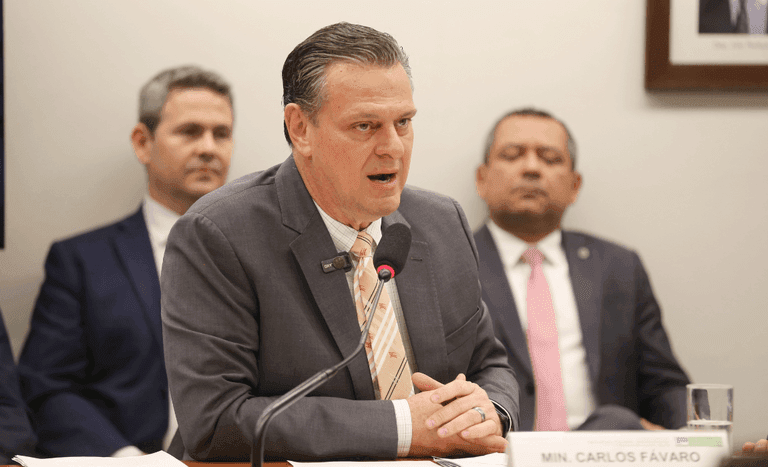
Minister Carlos Fávaro MAPA | Photo: Carlos Silva/MAPA
The Legal Framework for Cannabis continues to advance with new developments. The Ministry of Agriculture and Livestock (MAPA) is finalizing a technical note related to Bill 5511/2023, which proposes regulations for the cultivation and exploitation of medicinal cannabis and industrial hemp.
Additionally, last Tuesday (19), the ruling from the Superior Court of Justice (STJ) was published, which set a six-month deadline for the National Health Surveillance Agency (Anvisa) and the Union to issue regulations on the subject.
Favorable Positioning and Advances at MAPA
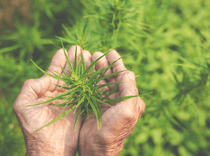
The technical note from MAPA reflects a favorable position towards industrial hemp, with contributions from various areas of the ministry and institutions such as the Brazilian Agricultural Research Corporation (Embrapa), which maintains a dedicated study group on the plant. Hemp, a variety of Cannabis sativa with a tetrahydrocannabinol (THC) content of less than 0.3%, does not have psychoactive effects and is widely used in various industrial sectors outside Brazil.
Ana Paula Porfírio, head of the Social Participation and Diversity Advisory at MAPA, confirms that the technical note is consolidated and awaiting final approval from Minister Carlos Fávaro. “The document only addresses aspects related to the ministry's competencies,” explains Porfírio.
The bill, authored by Senator Mara Gabrilli, has been stalled in the Agriculture and Agrarian Reform Commission for over a year, awaiting the appointment of a rapporteur by Senator Alan Rick. “Even so, we are advancing our part,” says Ana Paula.
The senator believes that MAPA's favorable positioning strengthens dialogue with Congress and contributes to the progress of the Bill. “The topic gains more visibility and credibility with the positive signal from the Ministry and the technical data from Embrapa,” states Gabrilli.
The absence of specific regulation is pointed out by Porfírio as the main barrier to the advancement of hemp in Brazil. “Without clear regulation, products derived from the plant remain classified as 'prohibited,' which limits their priority for public sector research,” she highlights.
“Today, under the law, all cannabis subspecies are on the same level. It is necessary to define, clarify, and separate. This is MAPA's role, to act as the responsible entity for the country's crops and to assist society in this demand that is no longer recent,” said Ana Paula during an exclusive interview for the Sechat Portal, conducted in September.
MAPA is studying different applications of hemp, such as the production of medicines, animal feed, and products for the textile industry. “Our initial priority would be the production of fibers for fabrics. The international demand for this type of material is very high,” says Porfírio.