Ancient Egypt used cannabis for medicinal purposes for millennia

By Sechat Editorial
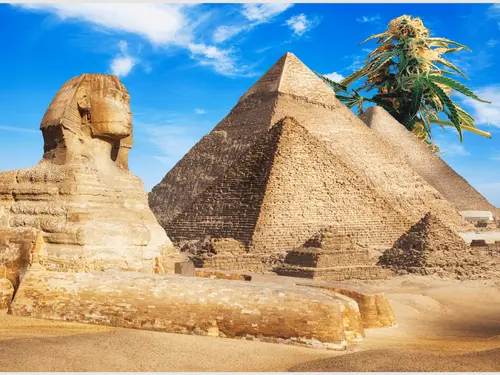
The medicinal use of cannabis is not a novelty brought by modernity. Traces of the plant have been found in Egyptian artifacts dating back over 4,000 years, revealing that this ancient civilization was already familiar with its therapeutic properties.
The molecule responsible for the psychoactive effects of cannabis, tetrahydrocannabinol (THC), in addition to its anti-inflammatory and muscle relaxant properties, has been applied in contemporary medicine. However, the history of medicinal cannabis use dates back to ancient times, as evidenced by findings in Ancient Egypt.

These evidences can be found in burial chambers, where plant residues were discovered, leading researchers to believe that the Egyptians used cannabis during burial rituals. Even the same mummies, like the famous pharaoh Ramses the Great, were found with traces of THC.
Furthermore, artistic representations of the goddess of writing, Seshat, depict the deity with a six-pointed leaf over her head. Although it is not possible to definitively state that this crown represented the cannabis plant, historians suggest this possibility.
Egyptian medical practices were meticulously documented in papyri, describing various uses of the plant. The word "Shemshemet" seems to have been used to refer to cannabis at the time, and several writings describe recipes and their medicinal purposes.
You may also like to read:
Intensive learning: Sechat Academy course addresses the clinical use of cannabis products
Argentina revolutionizes market by legalizing cannabis for food, cosmetics, and health

For example, the medical papyri of Ramesseum mention a treatment that could have been used to treat eye problems, such as glaucoma. The recipe instructed grinding cannabis, followed by an overnight marination in dew. In the morning, the mixture was used to wash the eyes.
Another papyrus, known as the Ebers papyrus, contained a recipe involving the introduction of a cannabis-based mixture into the vagina, likely for the treatment of cramps or endometriosis.
The Berlin papyrus, dated from a more recent period, suggests the use of cannabis in the treatment of fever and inflammation. Additionally, the Chester Beatty papyrus indicates the plant as an option for treating colorectal diseases.
These findings highlight the importance of cannabis in the medical practices of one of the most powerful dynasties in history. By reclaiming this knowledge, we dispel superstitions surrounding this plant, highlighting its benefits for humanity.
An ancient teaching, present in the "sarcophagus texts," a collection of funerary spells dating back over four thousand years, proclaims: "Seshat opens the door of heaven for you." These teachings have endured for millennia, demonstrating the wealth of knowledge passed down by ancient cultures, often obscured by the dominant influence of the clergy.
Studies on the historical use of cannabis in Ancient Egypt reinforce its importance for ancient and modern societies, while also revealing the need to value and understand the cultural legacy that has been transmitted to us through the ages.