Anvisa proposes strict rules for cannabis cultivation for research purposes in Brazil
New resolution allows planting by universities and pharmaceutical industries, requiring maximum security systems and total traceability of the plant

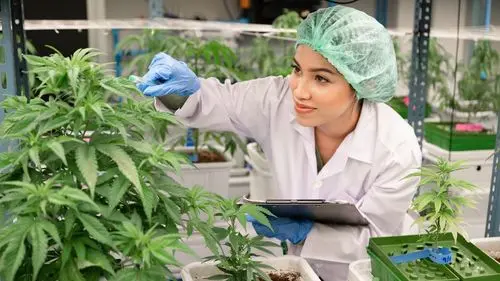
The National Health Surveillance Agency (Anvisa) presented a draft of the Collegiate Board Resolution (RDC) with technical requirements for the cultivation of cannabis sativa L. The measure, which is expected to be voted on this Wednesday (28), aims exclusively at scientific purposes and is part of the Agency's package of regulatory updates.
The goal is to unlock national production of knowledge and inputs for research. With this, public and private institutions will be able to carry out planting in Brazilian soil, as long as they follow strict sanitary and security controls.
The draft establishes that authorization will not be open to any interested party. The text restricts permission for cannabis cultivation to four types of legal entities:
- Public Scientific, Technological, and Innovation Institutions (ICTs);
- Higher education or technical institutions recognized by the Ministry of Education (MEC);
- State defense or drug enforcement agencies;
- Pharmaceutical industries with Special Authorization (AE) to manufacture medicines or inputs.
This delimitation aims to foster academic and industrial development. Drug factories will be able to cultivate for researching new products, with direct commercialization of the plant or research results prohibited.
Institutional licensing for cannabis cultivation
According to Marcos Chiquitelli Neto, professor at Unesp and coordinator of the Cannabis Development Center (NuDeCann), the entity-focused model is a success. He emphasizes that authorization by institution, rather than by project, facilitates internal organization.
“Another extremely positive aspect is that special research authorization requests will be made by the institution. This requires the entity to effectively organize with the researchers working within that university or center,” evaluates Chiquitelli.
According to the researcher, this format demands that entities be ready for inspections at any time. This ensures the necessary flow for the cannabis cultivation process for study purposes to progress.
Maximum security in cannabis cultivation areas
The central point of the proposal is security. To obtain Special Authorization (AE), institutions must demonstrate total shielding of the planting areas. The standard requires physical barriers against unauthorized access and uninterrupted video monitoring.
In addition, access to cannabis cultivation areas will be controlled by electronic systems, such as biometrics. The registration of employees' entry and exit must be strict to mitigate risks of deviations and plant dissemination in the environment.
However, Renato de Freitas, professor at the Ribeirão Preto School of Medicine (FMRP/USP), warns about the feasibility of these requirements:
"By requiring security standards equivalent to those of the pharmaceutical industry, there is a risk that only very few institutions will be able to meet the requirements. For the measure to be truly enabling, it will be essential to consider criteria proportional to the reality of university laboratories."
Traceability and transportation in cannabis cultivation
Anvisa will require absolute control over the plant's life cycle through a "Specific Registration Book". Traceability must cover from the acquisition of seeds, usually imported, to the final disposal of waste.
All material generated in the research must be rendered unusable within the establishment itself. The methods used must make the material unrecognizable, preventing any spread of cannabis cultivation.
Despite the rigor, the draft provides flexibility for the circulation of inputs among researchers. Chiquitelli points out that “there are no restrictions on the transportation or donation of material for other research, and this is very interesting”.
Advancements and challenges of national cannabis cultivation
The proposal represents progress for national science, reducing dependence on imported inputs. By allowing the cultivation of cannabis "in vitro" or in greenhouses, Anvisa paves the way for proprietary technologies and local clinical data.
For Professor Renato de Freitas, this autonomy is vital. "Scientific research on cannabis is strategic for the country, as it enables the development of safer therapies and reduces dependence on imported inputs. The draft represents an important regulatory milestone by providing predictability and legal certainty to universities."
Chiquitelli also views the draft favorably, highlighting the lack of restrictions on THC levels. “It seems that what we have at hand does not restrict the use of plants with THC levels higher than 0.3%. This is a very positive aspect,” he states.
However, there are challenges regarding national genetics. The requirement for importing dissemination material may overlook the development of native plants already carried out in the country by associations.
“There is an aspect that needs improvement, related to the restriction of national genetics. All research must be conducted with imported material, hindering initial progress,” reflects the professor.
Chiquitelli advocates for greater integration, where associations can collaborate in scientific cannabis cultivation. He suggests a two-way street, where these entities would be linked to research centers for simultaneous production.