Cannabis Legalization Could Yield Billions for the US
Cannabis legalization in the US could generate $57.9 billion in federal revenue over ten years, according to a Yale University study. Learn more!

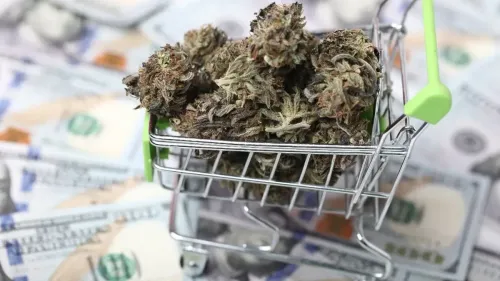
In the United States, the legalization of cannabis has once again gained traction from an economic perspective: a study by The Budget Lab at Yale University estimates that potential federal legalization could generate $57.9 billion in revenue for the government over ten years.
The projection considers legalization for both medical and adult use, accompanied by a specific federal excise tax on cannabis products.
In an even broader scenario, where all states also legalize the activity, revenues could reach $111.3 billion over the same period.
Published in August 2026, the study highlights a unique aspect of the American market: cannabis already moves billions of dollars, yet remains caught in a regulatory puzzle where state and federal laws do not always align.
This context helps explain why cannabis legalization is no longer just a drug policy discussion. It also involves taxation, jobs, businesses, the consumer market, and the size of the informal economy.
According to Yale, the legal adult-use market in the United States generated around $25 billion in 2024. Without significant legislative changes, that market is estimated to reach nearly $40 billion by 2035.
The medical segment represents a smaller, but still significant, share: approximately 20% of the activity, with sales estimated between $5 billion and $8 billion annually during the analyzed period.
How would the cannabis tax work?
Under the scenario developed by researchers, the federal government would levy a tax based on the amount of THC present in products. The rate evaluated would be $0.00625 per milligram of THC.
In practice, this would equate to approximately $1.31 in tax per gram, based on the average price used in the study. The tax would represent roughly a 15% increase over post-tax prices.
Choosing THC as the benchmark follows a logic similar to the taxation of products like alcohol and tobacco, where levies can be tied to the quantity or concentration of the active substance.
However, there is an important caveat: the researchers themselves caution that these figures should not be viewed as an exact forecast. The degree of uncertainty is considered high precisely because a large portion of this market still operates in a complex regulatory gray area.
LEARN MORE: Cannabis in the US: DEA prepares new historic decision
Cannabis legalization could formalize the market
One of the most compelling findings of the report lies precisely in what is not immediately visible on dispensary shelves: the illicit economy.
The study estimates that total cannabis-related economic activity, encompassing both legal and illicit markets, reaches roughly $100 billion. Even so, about 75% of this activity remains outside the formal market.
Cannabis legalization could, therefore, encourage a migration of businesses, workers, and consumers into a regulated and taxed environment.
Today, state-authorized businesses face hurdles stemming from federal law. Among them are challenges accessing standard banking services and tax limitations imposed by Section 280E.
This provision prevents businesses trafficking in certain controlled substances from deducting standard business expenses typically allowed for other enterprises.
For cannabis operators, this means costs like rent, payroll, utilities, marketing, and insurance cannot be deducted in the same way when calculating federal tax liability.
With potential federal cannabis legalization, this barrier would be removed. According to Yale, this shift could incentivize many businesses to transition permanently into the formal economy.
Jobs also enter the equation
The economic impact would not be confined to government coffers.
The Cannabis Jobs Report, cited by The Budget Lab, estimated that more than 440,000 workers were employed in 2024 by state-legal cannabis businesses where the market is permitted.
Federal reform could expand the formalization of these jobs, generating additional revenues through individual income taxes and payroll contributions.
The study also references an estimate from the Tax Foundation indicating that individual and payroll taxes could account for approximately $1.5 billion annually in federal revenue from a legalized industry.
Nevertheless, Yale does not include this figure directly in its core projection, as doing so would require estimating how many currently informal workers would transition into the formal market and what portion of their income would be reported.
LEARN MORE: The US Farm Bill and cannabis; understand
The illicit market remains a challenge
There is, however, another side to this calculation.
While taxation can generate substantial revenue for the government, high taxes can also drive up the price of legal products, keeping the illicit market attractive to consumers.
This is one of the central dilemmas highlighted by the study: cannabis legalization can bring commerce into the formal economy, but an excessively heavy tax burden may encourage illicit operations to persist.
In the United States, the landscape is particularly intricate because medical cannabis has already been legalized, in some form, in 47 states and the District of Columbia. Adult-use cannabis has been approved in 24 states and the District of Columbia.
Yet, federal law maintains its own regime, creating substantial obstacles for operators doing business legally under state statutes.
It is precisely within the gap between current reality and potential reform that the Yale study situates its projections.
Cannabis legalization, therefore, represents more than just a potential source of public revenue. It could also reshape an existing industry that continues to grapple with banking, tax, and regulatory barriers.
Ultimately, the $57.9 billion figure is more than an eye-catching headline. It offers a way to measure the scale of an economy that is already well underway.
Yet The Budget Lab emphasizes an important caveat: this is a projection based on hypothetical scenarios, not a guaranteed revenue forecast. The actual outcome would depend on factors such as state adoption, consumer behavior, tax levels, and, crucially, how much of today's illicit activity transitions into the legal market.