Cannabis roots: the plant's forgotten medical potential
Beneath the soil lies a healing secret. Understand what science says about the medicinal power of cannabis roots and their future in healthcare

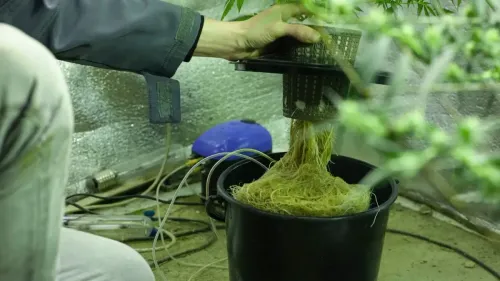
Cannabis roots — Looking at medicine from the earth is often an exercise in listening and patience. For a long time, we turned our eyes only to what blooms above the surface, the eye-catching beauty of the leaves and trichomes filled with well-known cannabinoids. But life, in its deepest wisdom, holds silent secrets where direct light cannot reach.
Beneath the soil, amidst subtle entanglements and moist earth, cannabis roots anchor not only the life of the plant, but also a vast and forgotten ecosystem of healing.
Retrieving this ancestral memory through the rigorous lens of science is like retying an ancient knot between tradition and the future, reminding us that care often begins in what cannot be seen.
In this article you will see:
The scientific rediscovery of the plant's underground ecosystem.
Unique chemical composition: why roots don't get you "high".
Anti-inflammatory and analgesic action according to the latest studies.
Historical recovery: from ancient use to modern medicine.
How current research can transform the plant's full utilization.
The scientific recovery of cannabis roots' potential
While the global market and medical research have focused their attention almost exclusively on THC and CBD-rich flowers and leaves, science is now shedding light on what lies underground.
An extensive scientific review published in the prestigious journal Journal of Cannabis Research (Springer) reveals that the underground part of the plant possesses promising bioactivity that has remained underexplored by modern medicine.
Historically, the therapeutic use of the plant's base is not new. Ancient Chinese, Roman, and medieval medical texts had already documented the use of root preparations to treat pain, fever, gout, and severe inflammation.
However, prohibition and the prioritization of isolating classic cannabinoids in the 20th century ended up relegating this legacy to the background.
"Despite the historical and modern focus on compounds present in flowers and leaves, roots contain a unique phytochemical profile that deserves rigorous investigation for contemporary pharmacological applications," point out the authors of the review published in the Journal of Cannabis Research.
LEARN MORE: Understand the difference between phytocannabinoids, terpenes, and flavonoids
Unique phytochemistry: what makes cannabis roots so special?
The main reason for renewed interest in the plant's underground material lies in its unique chemical composition. Unlike aerial parts, the root contains negligible concentrations of psychoactive cannabinoids such as THC or even non-psychoactive CBD.
In contrast, it is extremely rich in other secondary metabolites with high biological potential:
Triterpenoids (Friedelin and Epifriedelanol): compounds known for their potent anti-inflammatory, liver-protective, and antioxidant properties.
Alkaloids (Cannabisativine and Ananthamine): complex plant molecules with analgesic and neuromodulatory effects.
Sterols (Sitosterol and Campesterol): substances that assist in cellular integrity and fighting chronic inflammatory processes.
Phenolic compounds and choline: essential nutrients and phytochemicals that support cellular and metabolic health.
The absence of psychoactive effects makes the application of these substances extremely safe for patients of all ages, eliminating regulatory barriers and adverse effects on the central nervous system.
Therapeutic benefits and the future of phytotherapy with cannabis roots
The detailed analysis conducted by the researchers highlights that the synergistic action of these compounds, the so-called phytochemical entourage effect, provides crucial support in combating various health conditions.
The analgesic and anti-inflammatory properties of substances extracted from cannabis roots have demonstrated promising efficacy in preclinical models for treating:
Chronic joint pain and arthritis.
Dermatological inflammatory processes (such as burns and wounds).
Inflammatory disorders of the gastrointestinal tract.
Fever and discomfort associated with infections.
As highlighted in coverage by Marijuana Moment, the cannabis industry often discards tons of root biomass after harvesting the flowers.
Repurposing this material represents not only a medical advancement, but also a sustainable opportunity for the global bioeconomy.
"The full utilization of the plant, including biomass that is currently treated as agricultural waste, can pave the way for more affordable and sustainable medicines, aligned with green chemistry," highlights the report by Marijuana Moment.
Practical applications and challenges for modern medicine
Although historical data and laboratory tests are encouraging, the transition to human clinical trials still faces structural bottlenecks.
For root extracts to reach pharmacies and clinics in the form of ointments, creams, or supplements, the scientific community points to the need for standardization in cultivation and extraction processes.
Main challenges to overcome:
Cultivation standardization: the soil needs to be free of heavy metals, as roots are bioaccumulators.
Clean extraction methods: development of techniques that preserve triterpenoids without solvent contamination.
Clinical validation: conducting controlled trials to determine exact dosages for each pathology.
The journey of knowledge about the plant reminds us that healing is a process of constant rediscovery. By looking at the soil with due respect and scientific rigor, contemporary medicine gains a powerful new ally in relieving human suffering.
Bibliographic References
Phytochemistry, bioactivity and medicinal use of Cannabis sativa roots: a comprehensive review. Journal of Cannabis Research / Springer, 2026. Available at:
https://link.springer.com/article/10.1186/s42238-026-00470-4 The Roots Of Marijuana Plants Have Underexplored Medical Potential, Scientific Review Finds. Marijuana Moment, 2026. Available at:
https://www.marijuanamoment.net/the-roots-of-marijuana-plants-have-underexplored-medical-potential-scientific-review-finds/