CBD helps reduce alcohol consumption and encourages healthier habits, studies show
Study indicates that cannabidiol (CBD) reduces compulsive behaviors without causing sedation or impairing mobility

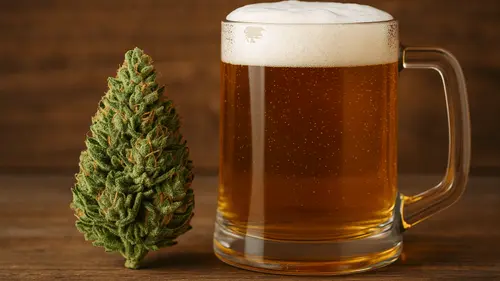
For a long time, relief that many sought in a drink was the only known route to silence anxiety, pain, exhaustion. But what if the answer to problematic alcohol consumption lies in a plant that also grows to calm, treat, and transform?
That's exactly what a new Australian study suggested: cannabidiol (CBD), the non-intoxicating substance from cannabis, can help reduce compulsive cravings for alcohol, without compromising other bodily functions.
The results, published in the British Journal of Pharmacology, were clear: CBD consistently and dose-dependently reduced voluntary alcohol consumption in male and female mice. "The acute efficacy of CBD persisted for several months, was maintained during subchronic administration, and was not associated with locomotor impairments," the study points out.
The study was conducted by scientists from the University of Sydney, who used the "dark mouse drinking" model, an experiment type that simulates excessive drinking in rats, to understand human consumption patterns.
Neither euphoria, nor sedation: just balance
Most impressively, the effect of CBD did not cause sedation or impair the animals' mobility, dispelling the idea that the cannabinoid merely "distracts" or "numbs" the body. What scientists observed was a genuine reduction in compulsion.
Although the mechanisms behind this modulation are still being studied, researchers suggest that CBD acts in a complex manner, involving multiple receptors in the nervous system, such as the "S" neuropeptide receptor, which is linked to anxiety and stress.
"CBD emerges as a promising new pharmacotherapy for problematic alcohol use," the authors state.
This research adds to a growing body of studies pointing to a clear trend: cannabis is replacing alcohol in the routines of thousands of people. A YouGov survey revealed that over half of cannabis consumers have reduced their alcohol consumption or stopped completely. Another important finding: young adults are nearly three times more likely to use marijuana daily than alcohol.
Furthermore, a study published in Molecular Psychiatry showed that a single dose of 800 mg of CBD can help control alcohol cravings in individuals with Alcohol Use Disorder (AUD). Another analysis, funded by the US federal government, found that individuals who used marijuana before drinking consumed less alcohol and reported less desire to continue drinking.
Cannabis, the new relief?
Among young people, this substitution is already a reality. Three out of four young adults in the United States reported substituting alcohol with cannabis at least once a week, according to a report from Bloomberg Intelligence (BI). Companies in the sector, especially those operating in states where cannabis is legal, have already noticed the shift and are adjusting their strategies to cater to this new consumer profile.
BI also predicts that this substitution will continue to grow, directly threatening the alcohol industry. The reason? The perception that cannabis is less harmful than alcohol, opioids, and even traditional cigarettes, as revealed by surveys from Gallup and the American Psychiatric Association.
When change comes from within
Gradually, self-care choices are changing. And with them, the paths of science are also changing. Researchers at the University of Sydney do not yet know precisely how CBD modulates alcohol-related behavior, but the early signs are promising.
Read also - Less hangover, more cannabis: new consumer habit worries beverage sector
Meanwhile, stories multiply: of those who swapped the nightly drink for a CBD oil, of those who understood that anxiety needed nurturing, not numbing. These are individual journeys, but when combined, they signal a collective transformation: a new perspective on what is addiction, what is pleasure, and what can truly be healing.
With information from Marijuana Moment.