Does Cannabis Cultivation Really Depend on Climate? Learn More
From the Arctic to the tropics, discover how climate, latitude, and genetics influence cannabis cultivation and why Iceland is testing the plant's limits

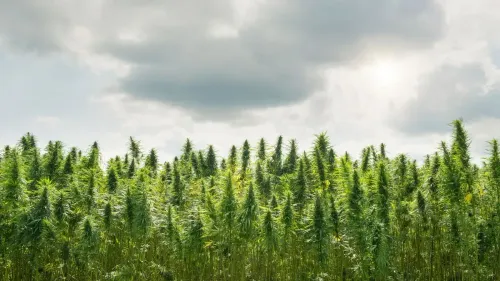
Cannabis cultivation - Sometimes, growing a plant also means learning to listen to the place where it grows. In the far north of Iceland, researchers and growers are doing just that: testing how far hemp can thrive when the cold arrives early and summer seems never-ending.
The experiment brings a larger question to the fore: to what extent does cannabis cultivation depend on climate and region?
Icelandic company High Latitude Hemp grew 400 plants at approximately 66 degrees north latitude during the summer of 2026. The goal was to identify varieties capable of completing their life cycle before the first frosts. The plants began developing in a protected environment, were moved into the field on June 1, and were harvested in early September.
There are no published results yet that establish the agronomic yield of the experiment. Therefore, the initiative should be understood as an adaptation trial, rather than proof that commercial cannabis or hemp cultivation is already viable in subarctic regions.
Cannabis cultivation faces the photoperiod challenge
One of the main hurdles faced in Iceland is not just the temperature.
During the summer, regions near the Arctic experience extremely long daylight hours. For photoperiod-sensitive plants, this characteristic can alter when flowering occurs.
In other words, light alone is not enough to grow. Day length can also act as a biological signal determining when the plant shifts phases.
Scientific research shows that temperature and day length can influence growth, flowering, and cannabinoid production, and that different varieties respond differently to environmental conditions.
LEARN MORE: Anvisa launches guide for cannabis cultivation in Brazil
Cannabis across different latitudes
The story gets even more interesting when looking beyond Iceland to other regions.
In tropical and subtropical areas, for instance, the challenge can be practically the opposite. Higher temperatures and specific light conditions also interfere with plant development.
A study published in the journal Industrial Crops and Products evaluated varieties of Cannabis sativa under different temperatures, photoperiods, and nitrogen levels. Researchers observed distinct responses across genotypes, including flowering time and biomass production.
This means that a variety performing well at a given latitude will not necessarily behave the same way when moved to another environment.
Genetics is a key factor in cannabis cultivation
This is precisely where genetic adaptation comes into play.
In Iceland, the Hemp at 66°N project, supported by the Icelandic Food Fund with 2.4 million Icelandic krónur, seeks to develop plant material adapted to local conditions, including potential applications in food, personal care, and construction materials.
The rationale is not simply moving a plant from one region to another. It is identifying or breeding traits that make sense for that specific environment.
Factors that may be considered include:
- crop cycle duration;
- response to light;
- cold or heat tolerance;
- water availability;
- resistance to environmental stresses;
- biomass production capacity;
- genetic traits linked to cannabinoids.
Research conducted in New Mexico also reinforces this relationship between genetics and environment. Field trials indicated early flowering responses in some industrial varieties grown at lower latitudes and inconsistent performance of CBD-rich varieties in outdoor systems.
From the Arctic to the tropics: there is no single way to grow
The Icelandic experience helps debunk the idea that there is a one-size-fits-all formula for growing cannabis.
In colder regions, a short growing window can be an issue. In tropical environments, temperature, humidity, light, and genetic response may demand different strategies.
In the Mediterranean, for example, hemp research highlights the importance of choosing the right sowing time due to the relationship between plant development and photoperiod.
Meanwhile, in tropical and subtropical regions, studies indicate that temperature and day length can influence both growth and the cannabinoid profile of specific varieties.
For this reason, discussing cannabis cultivation is also discussing terroir and territory.
Latitude, altitude, temperature, water, soil, light, and genetics form an invisible map that can determine how the plant develops.
What does the Iceland experiment really show?
For now, not that cannabis can be grown commercially anywhere.
What the project reveals is something far more compelling: agriculture is working to adapt the plant to the territory, rather than simply adapting the territory to the plant.
In Iceland, this means seeking varieties capable of flowering before the cold sets in. In other regions, it may mean selecting genetics that respond better to heat, day length, or humidity levels.
In the future, this type of research may broaden understanding of where and how different varieties of Cannabis sativa can thrive.
The plant, after all, does not grow in a uniform world. And perhaps the future of cultivation lies precisely in understanding these differences.
Sources and references
- Cáñamo. Islandia prueba cáñamo adaptado a los veranos del Ártico, 2026.
- De Prato, L. et al. The cannabinoid profile and growth of hemp (Cannabis sativa L.) is influenced by tropical daylengths and temperatures, genotype and nitrogen nutrition. Industrial Crops and Products, 2022.
- Rheay, H. T. et al. Field observations: Photoperiod response and yield of hemp at various latitudes throughout New Mexico. Agrosystems, Geosciences & Environment, 2025.
- Sowing time and prediction of flowering of different hemp (Cannabis sativa L.) genotypes in southern Europe. Industrial Crops and Products.