Does CBD Reduce the Effectiveness of Birth Control? Find Out
CBD and birth control raise questions about potential interactions. Understand what science knows and see the recommended precautions.

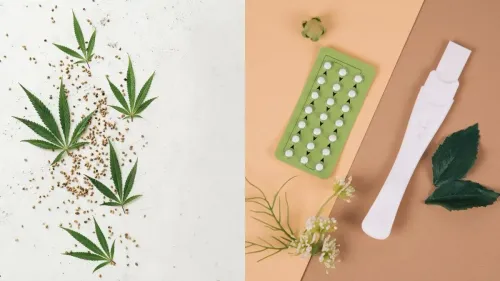
There are questions that emerge quietly, almost as a whisper, yet carry significant concern: Can CBD and birth control be used together? Does cannabidiol diminish protection against pregnancy? To date, science cannot definitively answer yes. However, there are valid reasons why this combination should be evaluated with caution.
In this article, you will learn:
- Whether CBD can reduce the effectiveness of birth control
- How cannabidiol can interact with medications
- What happens with birth control pills, IUDs, and implants
- Why vomiting and diarrhea warrant attention
- When to seek medical guidance
CBD and birth control: is there an interaction?
The most important takeaway is: there is insufficient clinical evidence to claim that CBD reduces the effectiveness of hormonal contraceptives.
This does not mean the combination should be ignored. Cannabidiol can interfere with liver enzymes responsible for metabolizing various medications, including enzymes of the cytochrome P450 system, such as CYP3A4 and CYP2C19.
A review published in 2025 analyzed 136 studies on interactions involving CBD and identified 271 potential interactions. However, only a small portion of the research assessed the clinical relevance of these interactions.
This is precisely where the difference lies between a pharmacological possibility and a proven outcome.
Can CBD interact with medications? Yes.
Has CBD been proven to cause birth control failure? There is not yet enough evidence to say that.
LEARN MORE: Women's health: cannabis improves pain and sleep in endometriosis
How can CBD interfere with medications?
The body relies on liver enzymes to metabolize many substances. When CBD interferes with these pathways, it can alter the concentration of certain medications available in the body.
Studies indicate cannabidiol's potential to interfere with various CYP enzymes, but the effects may vary depending on the medication, dosage, frequency of use, and individual characteristics.
Therefore, it is inappropriate to turn a theoretical possibility into a definitive conclusion regarding all contraceptives.
What about the birth control pill?
Pills can contain different hormones and formulations. Additionally, there are combined methods and progestin-only options.
Thus, simply stating that "CBD interferes with birth control" leaves out an essential piece of information: which birth control method is being used?
It is also important to consider other medications and cannabis products the individual may be using.
Can CBD cause diarrhea and affect the pill?
Here lies another point that warrants attention.
Cannabidiol can be associated with gastrointestinal side effects, including diarrhea. For those taking oral contraceptives, significant or prolonged episodes of vomiting and diarrhea can raise concerns regarding pill absorption.
The CDC provides specific guidance for episodes of vomiting or diarrhea during oral contraceptive use, precisely because such occurrences can compromise absorption under certain circumstances.
For this reason, if symptoms persist, it is important to review the birth control package insert and seek guidance from a healthcare provider.
LEARN MORE: Cannabis and hormonal health: why does a woman's body respond differently?
What about CBD with an IUD or implant?
Specific clinical studies are still lacking to conclude that CBD reduces the effectiveness of all hormonal contraceptive methods.
In the case of the copper IUD, the situation is different because the method does not rely on hormones for its contraceptive action.
Meanwhile, hormonal IUDs, implants, and injectable contraceptives possess distinct pharmacokinetics. Therefore, a potential interaction observed with a specific medication should not be automatically extrapolated to all these methods.
Ultimately, does CBD reduce birth control effectiveness?

Physician Marianna Coimbra Arzamendia, a general practitioner focusing on mental health, chronic pain, sleep quality, and medical cannabis, explains that CBD and other cannabinoids can interact with hormonal contraceptives through enzymes responsible for drug metabolism, such as those in the cytochrome P450 system and the UGT family.
These interactions raise the possibility of changes in hormone levels and contraceptive efficacy. "However, there is not yet enough clinical evidence to state that CBD reduces the effectiveness of oral contraceptives or directly increases the risk of pregnancy," the physician emphasizes.
According to Marianna, the effects of these potential interactions can vary depending on the formulation used, dosage, and individual characteristics. Therefore, individuals who use CBD or other medical cannabis formulations and also take contraceptives should inform their physician to assess possible interactions and the potential need for backup contraceptive methods. "Discontinuing or altering either treatment on one's own is not recommended," the specialist advises.
Can I stop taking birth control while using CBD?
Do not do this on your own if you rely on it to prevent pregnancy or to manage another health condition.
Discontinuing birth control can compromise your contraceptive protection and also cause changes in your menstrual cycle.
Likewise, do not discontinue a prescribed cannabidiol treatment simply because you encountered a generic interaction list on the internet.
The safest approach is to evaluate the specific combination with a doctor.
If you use both CBD and birth control, it is not recommended to stop either on your own.
Before making any changes, inform your healthcare provider about:
- the brand name and active ingredients of your contraceptive;
- which cannabis product is being used;
- the concentration of CBD and, if applicable, THC;
- the dosage and frequency of use;
- other medications currently being taken;
- any episodes of vomiting or diarrhea.
Ultimately, taking care of one's health also means knowing how to live with what science has already established and respecting what it is still investigating. Between "there is no risk" and "it will cancel out the effect," lies an essential space: that of responsible information.
Sources and references
- Vikura. “Canabidiol e anticoncepcional: CBD corta o efeito?”
- PubMed. Evidence of Potential Drug Interactions Between Cannabidiol and Other Drugs: A Scoping Review to Guide Pharmaceutical Care (2025).
- PubMed. The Influence of CBD and THC on Hepatic Enzymes of the Human Cytochrome P450 Complex Family: A Systematic Literature Review (2025).
- CDC. U.S. Selected Practice Recommendations for Contraceptive Use, 2024.
Does CBD reduce the effectiveness of birth control?
There is no clinical scientific evidence. Science has not proven that CBD reduces the effectiveness of hormonal birth control or increases the risk of pregnancy. However, cannabidiol can alter liver enzymes (CYP450) responsible for metabolizing hormones, and in the event of diarrhea or vomiting caused by CBD, the absorption of oral contraceptive pills may be compromised. Therefore, consult a healthcare provider before altering or discontinuing any treatment.