Fávaro highlights innovation and sees opportunity in industrial hemp
Minister of Agriculture advocates for agroindustrial diversification and signals support for a model with hemp without THC and CBD

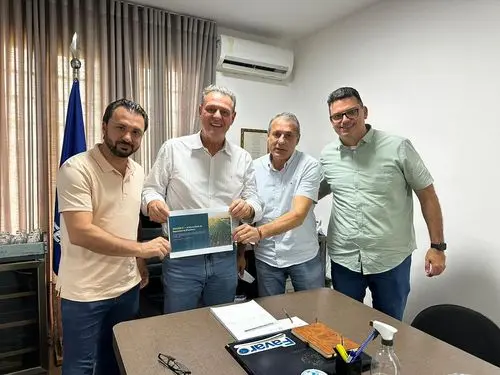
The Minister of Agriculture, Carlos Fávaro, stated that Brazil can advance in agroindustrial diversification through innovative solutions, including the development of industrial hemp. The statement was made during a meeting with representatives from the public and private sectors, who presented proposals to structure a productive chain based on a new cultivation model without THC and CBD.
Read also:
5th Cannabis Fair breaks record for registered participants and reflects the advancement of the Brazilian market
"Brazil has a great opportunity in agroindustrial diversification, especially with innovative solutions. Well-structured initiatives, with an integrated productive and industrial base, have the potential to gain space and contribute to the sector's development," said Carlos Fávaro.
Zero THC and zero CBD
The meeting brought together political and business leaders to discuss the introduction of a genetically edited hemp cultivar that does not express THC or CBD, a characteristic that can simplify the regulatory environment and expand production possibilities in the country.
The proposal presented involves an integrated agroindustrial model, in which different parts of the plant are destined for various applications, including industrial, pharmaceutical, and cosmetic uses. The company Rochedo Assets participated in the discussions and holds the license to use the cultivar Badger G, a technology developed in the United States and already undergoing regulatory processes in that country.
According to the participants, the adoption of varieties without psychoactive cannabinoids can reduce legal and operational risks, as well as facilitate oversight. Another highlighted point was the environmental potential of cultivation, associated with soil regeneration and productive diversification in agricultural regions.
Innovation and economic development
During the meeting, the minister reiterated the government's interest in initiatives that combine innovation and economic development:
"I am fully interested in helping this process happen. Diversification is a great opportunity, and Mato Grosso has come to the forefront precisely because it is open to innovation."
The proposal also includes the installation of industrial units near cultivation areas, focusing on the full utilization of biomass. The state of Mato Grosso, especially the municipality of Sorriso, was identified as one of the regions with the greatest potential for implementing the model.
Still in its early stages in Brazil, industrial hemp is already widely explored in other countries, with applications ranging from the textile industry to construction. For experts, regulatory advancement and the definition of productive models adapted to the Brazilian reality will be crucial for the sector's consolidation in the coming years.