Hemp as an agent in soil regeneration and decontamination
5 million seeds were launched in vegetation affected by floods in Rio Grande do Sul; hemp could help in the reconstruction process

During the National Forest Protection Day, 5 million seeds were launched in vegetation affected by floods in Rio Grande do Sul. Replanting in slopes and hills aims to recover vegetation and soil damaged during the climate crisis. The initiative included about 28 species such as angico, jabuticabeira, maricá, and timbaúva.
The action, which took place in Santa Clara do Sul, Marques de Souza, and Pouso Novo, brought together the Federal Highway Police (PRF), the Brazilian Institute of the Environment and Renewable Natural Resources (Ibama), the State Department of the Environment (Sema), local governments, and universities.
The hemp seeds were not selected to be part of the initiative. However, “they could certainly be used for soil regeneration,” commented agronomist and president of the Latin American Industrial Hemp Association (LAIHA), Lorenzo Rolim.
Hemp properties
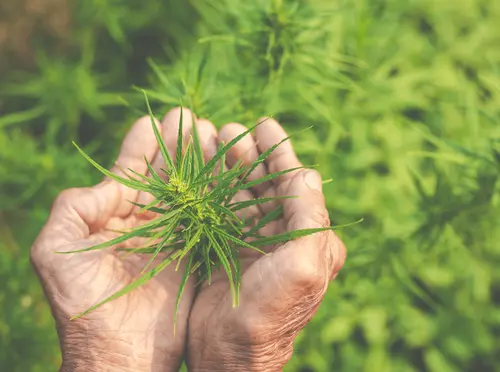
“Hemp helps in the absorption of heavy metals from the soil - which may have leaked during the floods,” Rolim explains when talking about the regenerative properties of the plant, capable of removing lead, arsenic, zinc, cadmium, and others.
In addition, due to the root system - responsible for the connection between plants and soil - hemp can improve soil structure. The deep roots of cannabis can extract water from deep within the soil.
Between May 1st and 7th alone, the Guaíba River received a volume of 14.2 trillion liters of water, according to the Hydraulic Research Institute (IPH) of the Federal University of Rio Grande do Sul (UFRGS).
Agricultural soil
The floods also affected soils used for agriculture in Rio Grande do Sul. According to a survey by Emater-RS (Technical Assistance and Rural Extension Company), at least 2.7 million hectares of land experienced fertility losses or water erosion throughout the state.
For Rolim, just like other plants, hemp can participate in the crop rotation process, an alternation between plant species in the same agricultural area. “If the producer plants soybeans in the summer, hemp comes in the winter,” he explains. According to the agronomist, this process brings benefits such as improving soil physical quality, reducing the number of pests - weeds and insects - and the previously mentioned absorption of heavy metals.
Use in other countries
Years after the worst nuclear accident in history occurred in 1986 at the Chernobyl plant in Ukraine, large areas around the abandoned city were covered with hemp plants to decontaminate the soil. The action took advantage of cannabis' ability to perform phytoremediation, a method that uses plants to degrade, extract, or immobilize contaminants from soil and water.
The initiative to use hemp to remove toxic elements from the soil in the exclusion zone came from the American biotechnology company Phytotech, in partnership with the Ukrainian Academy of Agricultural Sciences. The experiment showed that hemp can extract about 1% of the cesium from the soil, a positive result as the technique could be combined with others to aid in the area's recovery.
This year, in 2024, Portugal presented a proposal to address contamination by chemical residues in Praia de Vitória, in the Azores region. For decades, the area has been contaminated with high levels of heavy metals, resulting in a major environmental crisis.
“It's time to embrace cannabis as an ally in environmental recovery and sustainable development in Portugal,” commented Graça Castanho, president of the International Cannabis Confraternity in Portugal, the institution that presented this proposal.