UFV inaugurates Brazil's first active cannabis germplasm bank
UFV aims to reach 500 varieties to promote genetic crosses that enhance the plant's commercial and medicinal use. Learn more on Sechat!

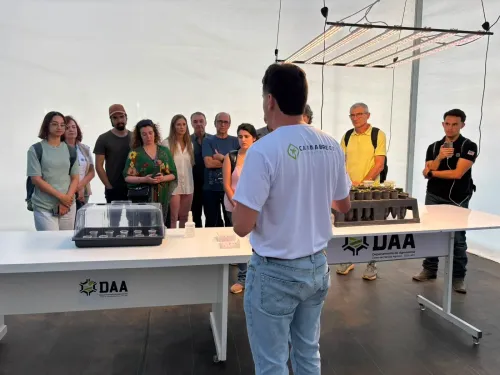
The Universidade Federal de Viçosa (UFV) inaugurated on Tuesday (18) the first Active Germplasm Bank of Cannabis sativa L. (BAGC/UFV) at a public university in Brazil. The plant holds immense potential for the production of pharmaceuticals, fibers, construction materials, and the recovery of degraded soils, potentially becoming a new agricultural commodity. To achieve this, it requires interdisciplinary science, which UFV is also well-equipped to provide.
A germplasm bank serves as a guardian of the immense genetic diversity a plant can hold. Plants are collected from various locations worldwide, identified, cataloged, and properly stored. Afterward, they are made available to the scientific community to perform genetic crosses aimed at selecting desirable traits from different plants to develop new varieties adapted, for instance, to specific soils, climates, or targeted applications, such as drug manufacturing.
The Universidade Federal de Viçosa is one of Brazil's foremost references in agricultural sciences and houses germplasm banks of immense scientific and historical significance, such as its Vegetable Germplasm Bank, considered the oldest in the country (1966).
The legal framework
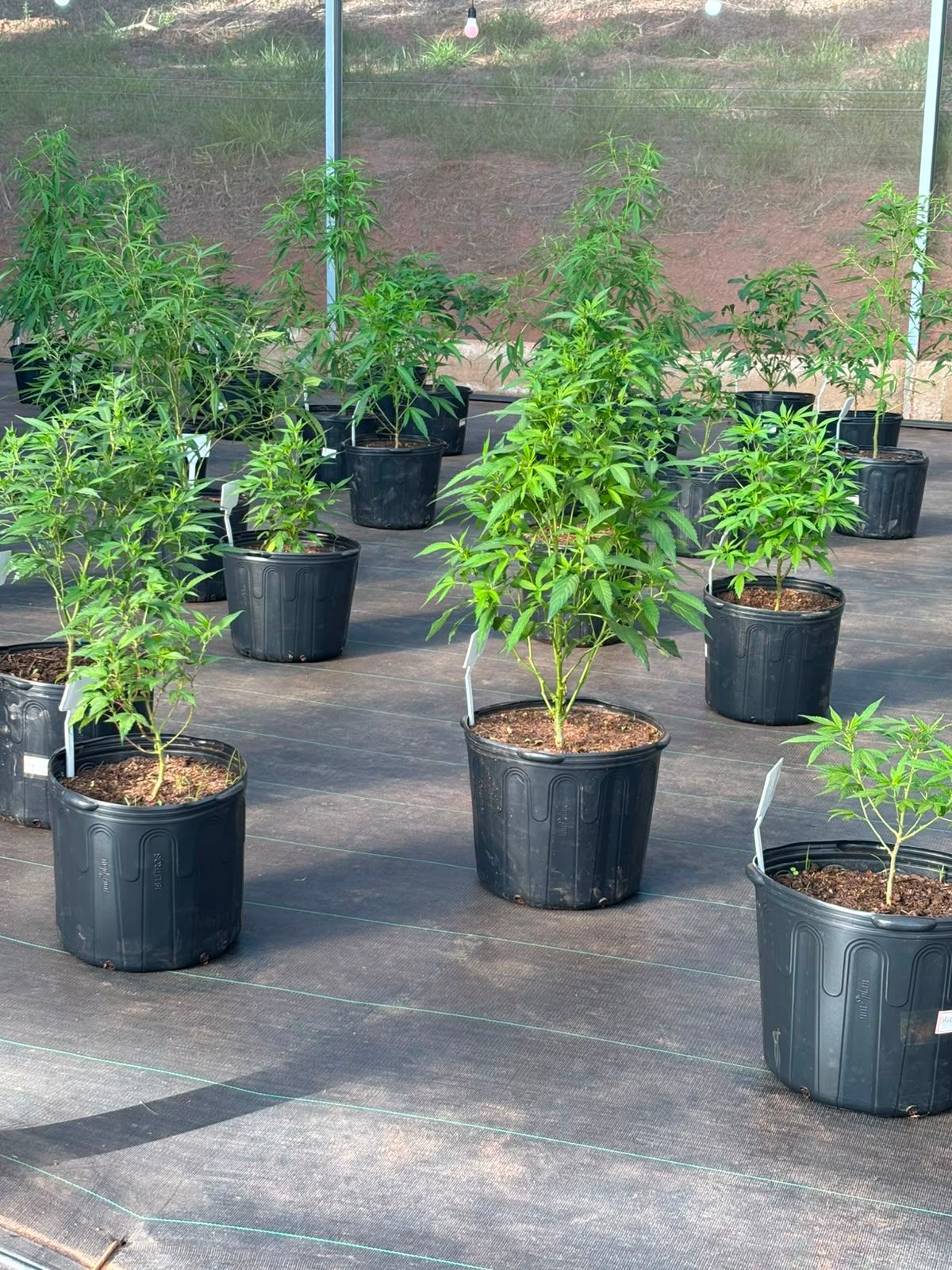
This expertise with genetic banks, alongside the experience of Agronomy professor Derly Henriques da Silva as curator of the Vegetable Germplasm Bank for over 20 years, enabled UFV to secure judicial authorization that, in 2024, legally allowed the establishment of an area of nearly one hectare to house the seeds in the location known as Vale da Agronomia, at the heart of the Viçosa campus.
Because the plant can produce psychoactive effects, the facility is secured with surveillance equipment and constantly monitored by the University Security team. Financial support was provided through an agreement with the company Cannabreed Technology Brasil Ltda.
The potential of Cannabis
According to Derly Henriques, Cannabis is a commercially promising plant. With its deep root system, it protects the soil and can be grown in degraded areas. Biomass production also aids in the sequestration of CO2, a greenhouse gas.
Its rapid growth cycle, producing flowers in about five months, allows for intercropping with other crops, such as during soybean off-seasons. The stems and leaves can be utilized to produce hemp, a fiber used in the manufacturing of clothing and even construction materials.
The seeds are rich in proteins and oils, offering potential applications in the food and pharmaceutical industries. It is within the flowers that the psychoactive cannabinoids are found, drawing the attention of the pharmaceutical industry for the production of medicines already marketed worldwide, as well as new formulations that may be developed.
“It all starts with understanding plant diversity and the distinct potential they offer for various applications,” says the professor.
Research
Currently, the Active Germplasm Bank of Cannabis sativa already houses 68 varieties from Brazilian biodiversity. The goal is to reach 500 by also collecting and classifying varieties from other countries.
Leveraging this material, UFV is already conducting 24 agronomic trials evaluating their adaptability potential—for example, in soils contaminated by heavy metals, such as areas impacted by mining waste.
In this trial, the goal is for the plant to absorb these heavy metals from the soil while generating biomass that could replace traditional fibers in the textile, paper, and bioplastics industries.
Other ongoing studies are evaluating the chemical composition of the varieties stored in the seed bank.
“Today we already have active research in agronomy, biochemistry, and plant pathology, but there is immense potential across diverse fields of knowledge where the University holds deep expertise,” states Derly Henriques.
The professor also envisions that the Germplasm Bank could attract and inspire the creation of tech-based startups with innovative products developed in the Viçosa region.
Source/content: Press Office