Anvisa approves resolutions to regulate cannabis cultivation in Brazil
Agency defines a modular strategy for cannabis cultivation, establishing distinct rules for patient associations, research, and industry

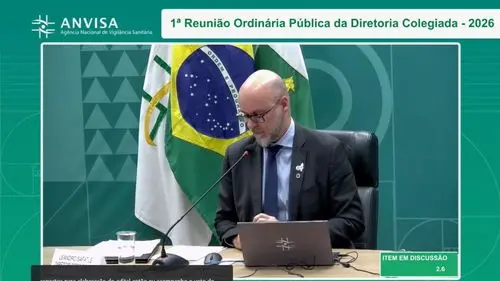
The Collegiate Board of the National Health Surveillance Agency (Anvisa) approved the resolution proposal for the regulation of cannabis cultivation in the country. The measure aims to comply with the determination of the Superior Court of Justice (STJ) and divides the regulatory framework into three specific fronts: associative, research, and industrial.
The agency opted for a gradual and modular approach to establish planting norms in national territory. This morning, the agency completed the review process of RDC 327 and approved new regulations for cannabis.
Regarding cultivation, according to the reporting director, Thiago Campos, the division into different regulatory instruments is necessary to adapt oversight to the specificities of each sector.
"It was decided to regulate the cultivation of cannabis intended for the production of plant material for medicinal and pharmaceutical purposes and the cultivation aimed at scientific research in distinct regulatory instruments," Campos stated.
For the reporter, this technical distinction allows for calibrating sanitary requirements and control mechanisms. The goal is to ensure safety in proportion to risk, avoiding excessive barriers incompatible with the intended purpose.
Regulatory Sandbox for associative cannabis cultivation
One of the main innovations approved is the creation of a "Regulatory Sandbox", an experimental environment aimed exclusively at non-profit associative production. The model allows associations to cultivate cannabis under Anvisa's supervision, focusing on generating evidence about quality and safety.
The text prohibits commercial, industrial, or advertising activities for this group. Substitute director Marcelo Mario Matos Moreira, who voted in favor, highlighted the relevance of entities that already operate in the country and provide products to thousands of patients.
Moreira emphasized the importance of considering the reality of these associations. Many operate in contexts of socioeconomic vulnerability and serve people who cannot acquire therapeutic alternatives in the formal market.
Participation in the Sandbox will not be automatic; entities must have been established for at least two years and will undergo a public call. "The option for the sandbox does not represent a reduction in sanitary standards, but a deliberate strategy for regulatory learning," pointed out director Daniela Marreco.
Rules for the industrial sector and scientific research
For the industry, Anvisa established guidelines for planting varieties with a tetrahydrocannabinol (THC) content of 0.3% or less. Companies must obtain a Special Authorization (AE) for cannabis cultivation, with sales restricted to licensed legal entities, such as manufacturers of inputs.
The proposal prohibits the export of the plant in natura and the import of seeds for resale. The president director, Leandro Safatle, explained that the feasibility depends on updating Ordinance 344, removing low-THC cannabis from the list of prohibited substances.
In the scientific realm, the regulation aims to unlock national knowledge production, allowing public and private institutions to conduct planting under sanitary control. Daniela Marreco highlighted the economic potential of cannabis cultivation in Brazil, citing the country's agricultural vocation to reduce dependence on imports.
Divergences and oversight of cannabis cultivation
During the vote, there were divergences regarding the duration of the experimental environment. Director Daniel Pereira proposed limiting the duration of Sandbox projects to three years and suggested quantitative limits for authorizations, but the proposal was not accepted by the other directors.
To ensure oversight of all stages of the process, the creation of an interministerial committee was announced. The group will consist of representatives from Anvisa and the Ministries of Justice, Health, and Agriculture and Livestock, ensuring control over cannabis cultivation in the country.