Anvisa presents rules for commercial cultivation of cannabis maintaining low THC content for the pharmaceutical industry
Proposal authorizes companies to cultivate plants with up to 0.3% THC exclusively for the production of medicinal inputs, but experts warn of the technical unfeasibility of the limit in a tropical climate

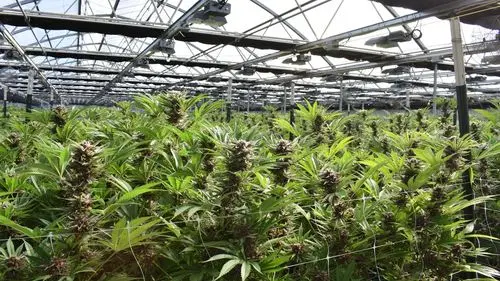
The Collegiate Board of the National Health Surveillance Agency (Anvisa) deliberates this Wednesday (28) on the regulation of commercial cultivation of Cannabis sativa L. in Brazil.
The proposal for a Collegiate Board Resolution (RDC) establishes guidelines for the planting of varieties with tetrahydrocannabinol (THC) content equal to or less than 0.3%, aiming to meet the demand of the national pharmaceutical industry and comply with the determination of the Superior Court of Justice (STJ).
One of the most critical points of the standard is the strict control of cannabinoid content. The 0.3% limit refers to the total percentage of the substance in the dried inflorescences. If laboratory analyses identify plants above this threshold, the establishment must notify the health authority within 48 hours and arrange for the immediate destruction of the batch, which raises concerns in the production sector.
According to Kennedy Bacarin, sales director of GreenBudz CBD Brazil, the measure ignores the country's climatic reality and repeats mistakes already overcome abroad. THC equal to or less than 0.3% is impractical in our country. This path has already been taken in both Europe and the United States, and it has brought practical difficulties and high costs to producers," Bacarin states.
The executive emphasizes that Brazil still lacks stabilized genetics to maintain these levels under the tropical sun. "When it happens to have 0.35% or 0.40% THC, the producer will have to destroy the material. In other words, all the work of cultivation, harvesting, and management was wasted because of a difference that means nothing even for psychotropic effects," he concludes.
The view is corroborated by agronomists, who point out the incompatibility between the proposal and Brazil's natural conditions. Robert Gandra, agronomist, classifies the agency's position as "conservative" and warns of technical legal insecurity.
"This 0.3% THC limit is not a scientific limit and does not apply in tropical conditions. It was created for countries with a temperate climate. In Brazil, this ceiling will end up criminalizing both the producer and the climate and the physiology of the plant itself," explains Gandra. According to the agronomist, stress from high temperatures or natural hydric factors in the country causes the plants to exceed this value physiologically.
Agronomic viability and suggestion for increase
Although cultivation is technically possible, it requires a level of control that can increase the final product cost. Vinícius Carrasco, also an agronomist, explains that success would depend on complex strategies, such as choosing cultivars adapted to low latitude photoperiods and serial monitoring to define the exact harvest point before the peak of THC accumulation.
"It will require a lot of scientific research and experimentation to find the most adapted cultivars to the national reality," points out Carrasco. Therefore, the technical recommendation would be to review the percentage stipulated by Anvisa.
"It is worth noting that this 0.3% limit is very low and will certainly hinder the commercial establishment of crops here in Brazil. The recommendation would be to increase this percentage to something close to 3% because it would be within a safe limit in terms of scale and would allow for much faster genetic establishment," suggests Carrasco.
Economic viability and national production
Lawyer Murilo Nicolau analyzes that the proposal meets the guidelines established by the STJ and represents "a step forward for our industry, which eagerly awaits regulation". However, he emphasizes that success will depend on financial mathematics.
"The final equation will come down to the cost of the product: if we can match the cost of imported inputs, we will be fine. However, if Brazilian inputs are more expensive than foreign ones, companies will simply choose to continue importing," Nicolau evaluates.
Beyond the cost issue, the measure is celebrated for the possibility of reducing external dependence in the production chain. Leandro Neto, Director of Institutional Relations at Health Meds, highlights the qualitative gain for the pharmaceutical sector.
"I understand that the regulation of cannabis cultivation, following the proper sanitary standards, will be an important step for Brazil, as it will not only bring economic benefits but also allow the production of Active Pharmaceutical Ingredients of quality, something we do not currently have," Neto states.
This market maturation perspective is shared by Flávia Guimarães, Director of Scientific Intelligence at Ease Labs. For the executive, by treating planting as a critical stage of the pharmaceutical chain, Anvisa demonstrates "maturity and coherence," putting the country in line with solid international practices.
"For Ease Labs, this step directly aligns with how we have always viewed this market: the development of all stages with technical rigor, regulatory predictability, and sanitary responsibility," Flávia evaluates.
The director also reveals that the company intends to use the new rule to internalize technologies already developed abroad:
"Since 2018, we have accumulated know-how in regulated cultivation in Colombia and, from now on, we will rapidly advance in the nationalization of this knowledge, always aligned with the Agency's guidelines."
Restricted market and prohibition of exports
The draft text allows companies to obtain Special Authorization (AE) to cultivate, but it requires that the sale of the production (plant drug) be made only to other licensed legal entities, such as manufacturers of pharmaceutical inputs and research institutions.
The proposal expressly prohibits the export of the plant in natura and its seeds, as well as the import of seeds for resale. For the market, this restriction represents a loss of competitiveness.
"What is the logic behind this? There is global demand for soybeans, corn, and various Brazilian agricultural products. Why not cannabis as well?", questions Kennedy Bacarin. The director of GreenBudz warns that by preventing international outflow and increasing internal production costs due to strict sanitary requirements, the national industry may lose strength.
"We are arriving more than late in this race, with rules that have already proven to be erroneous and do not work in climates like ours. This harms the national industry because it will have more costs to produce a product that, abroad, no longer has this type of cost," Bacarin concludes.