Compounding pharmacies await new Anvisa rules to work with cannabidiol
Despite technical feasibility, Anvisa conditions the production of cannabidiol on the publication of a specific regulation, with validity in 90 days

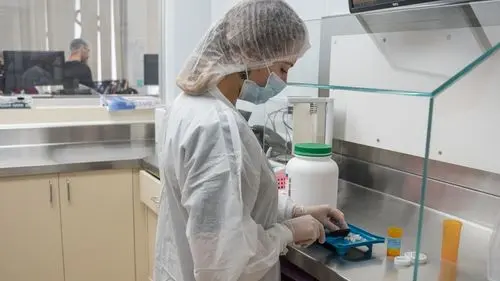
After the recent approval of the revision of Collegiate Board Resolution (RDC) 327, the National Health Surveillance Agency (Anvisa) issued a technical clarification on compounding pharmacies. The regulatory body detailed how the new scenario for the manipulation of cannabidiol (CBD) will work in Brazil.
Although the agency has recognized the technical feasibility of the process, production will depend on specific regulations. This regulation will be discussed and published later, with the new resolution coming into effect 90 days after official publication.
According to the note, the update brings two distinct situations for the sector. The first allows pharmacies to market the industrialized product, while the second addresses the manipulation of CBD (Cannabidiol) itself.
"Regarding the manipulation itself, Anvisa recognized the feasibility of CBD manipulation. But the specific issue will be the subject of a new resolution, which will still be discussed and edited by Anvisa," the agency informed.
Impact of CBD manipulation on costs
For the market, the signal represents a historical correction. Vera Menegatti, from Ephiciencia pharmacy, evaluates the measure as a recognition of the technical competence of pharmacists in manipulation.
"I do not see it as a conquest of pharmacies, but rather a correction of an error that occurred back in the previous legislation. The pharmacist should not have been excluded regarding the production of medications, as it is the profession qualified for this," Menegatti stated.
The specialist points out that the measure is expected to directly impact the patient's pocket, as the supply chain was already preparing. Raw material suppliers have been working on importing Cannabis for the compounding sector since last year.
"There will definitely be an improvement in price and also a greater variety of oils and concentrations," Vera projects about the future of CBD manipulation.
Safety and criteria for CBD manipulation
The regulatory debate focuses on ensuring quality and standardization of products. According to pharmacist Carlos Espinola, it is possible to achieve industrial safety levels in CBD manipulation, as long as rigorous criteria are observed.
Espinola highlights that the draft linked to the Anvisa board's vote initially restricts the exclusive use of the phytopharmaceutical with a minimum purity of 98%. This currently excludes other types of full extracts.
"Technically, the compounding pharmacy already operates under Good Manufacturing Practices and sanitary control, through RDC 67/2007. When using a standardized API, with clear specifications and robust controls, you can ensure safe doses," the pharmacist explains.
The future of the market and CBD manipulation
According to experts, the trend is for the Brazilian market to move towards a hybrid model. CBD manipulation is expected to meet the demand for customization, crucial for children and the elderly, while the industry will maintain practicality.
"I see, in the short term, a scenario of coexistence, with the compounded product gaining space where customization and price weigh more, and the industrial sector maintaining strength where the patient needs specific presentations and quick access," Espinola concludes.
Watch the interview with Marco Fiaschetti, executive director of Anfarmag (National Association of Compounding Pharmacists), on Deusa Cast: