UNILA study on veterinary cannabis to be published in international journal
A research by the Federal University of Latin American Integration (UNILA), conducted in partnership with the Santa Cannabis association, will grace the pages of the renowned scientific journal Frontiers in Pharmacology


A research by Federal University of Latin American Integration (UNILA), conducted in partnership with the Santa Cannabis association, will grace the pages of the renowned scientific journal Frontiers in Pharmacology. The study, which investigated the use of medicinal cannabis extract in dogs with osteoarthritis, has already been accepted for publication between August and September.

"Our expectation is the publication in this journal, which is an internationally recognized periodical in the field of pharmacology and clinical studies. Publication in a journal of this caliber is a sign of the quality of research from the UNILA-Santa Cannabis partnership and will certainly increase the distribution and impact it can have on other research and on veterinary clinics", says Professor Francisney Nascimento, study coordinator.
Cannabis in pain relief
The research showed that the plant extract relieves pain, improves mobility, and the animals' quality of life — and most importantly: without serious side effects. There were 17 dogs involved in the clinical trial, divided between a group that received full-spectrum extract and another that received a placebo, with monitoring from the Pop Vet Veterinary Hospital. Over 90 days, the dogs were evaluated based on scales such as the Canine Brief Pain Inventory (CBPI) and the Helsinki Chronic Pain Index.
"We observed a clinically relevant reduction in pain without significant complications, proving it to be a safe drug", emphasizes Professor Francisney Nascimento.
The second stage of the research is ongoing and foresees the continuous use of the extract for another 90 days. "Cannabis can be considered safe for dogs, even with THC. We can affirm this because our study demonstrated clinical and biochemical safety", explains Nascimento.
The future of veterinary medicine

Neide Griebeler, veterinarian, one of the team members of researchers, celebrates the historic moment experienced by the group and emphasizes the study's importance for the future of veterinary medicine: "The expectation is very high, and we feel very special to be part of the history of cannabis in Brazil, especially here in the countryside, being able to have our work seen throughout Brazil. It is very important and gratifying this recognition, but there is also a huge responsibility for the quality of the information we provide, both as a university and individually."
She also points out that this moment represents just the beginning of a long journey: "This is just the beginning, just a glimpse of the things that are yet to come. Veterinary medicine has much to advance in this field, and we have many other questions to answer, many other research projects we want to develop. We always want to learn as much as possible from the plant — about dosages, the best ways to work, safety — and bring new results that positively impact the animals' quality of life."
Volunteer guardians in the cannabis research
Among the volunteer guardians who followed the study, Kelvinson Viana saw positive effects in his dogs. "In the first few days, she was more sleepy, but soon returned to normal. Over time, she began to walk better, with less discomfort. It was very beautiful to witness this evolution", recalls Kelvinson.
The role of the association
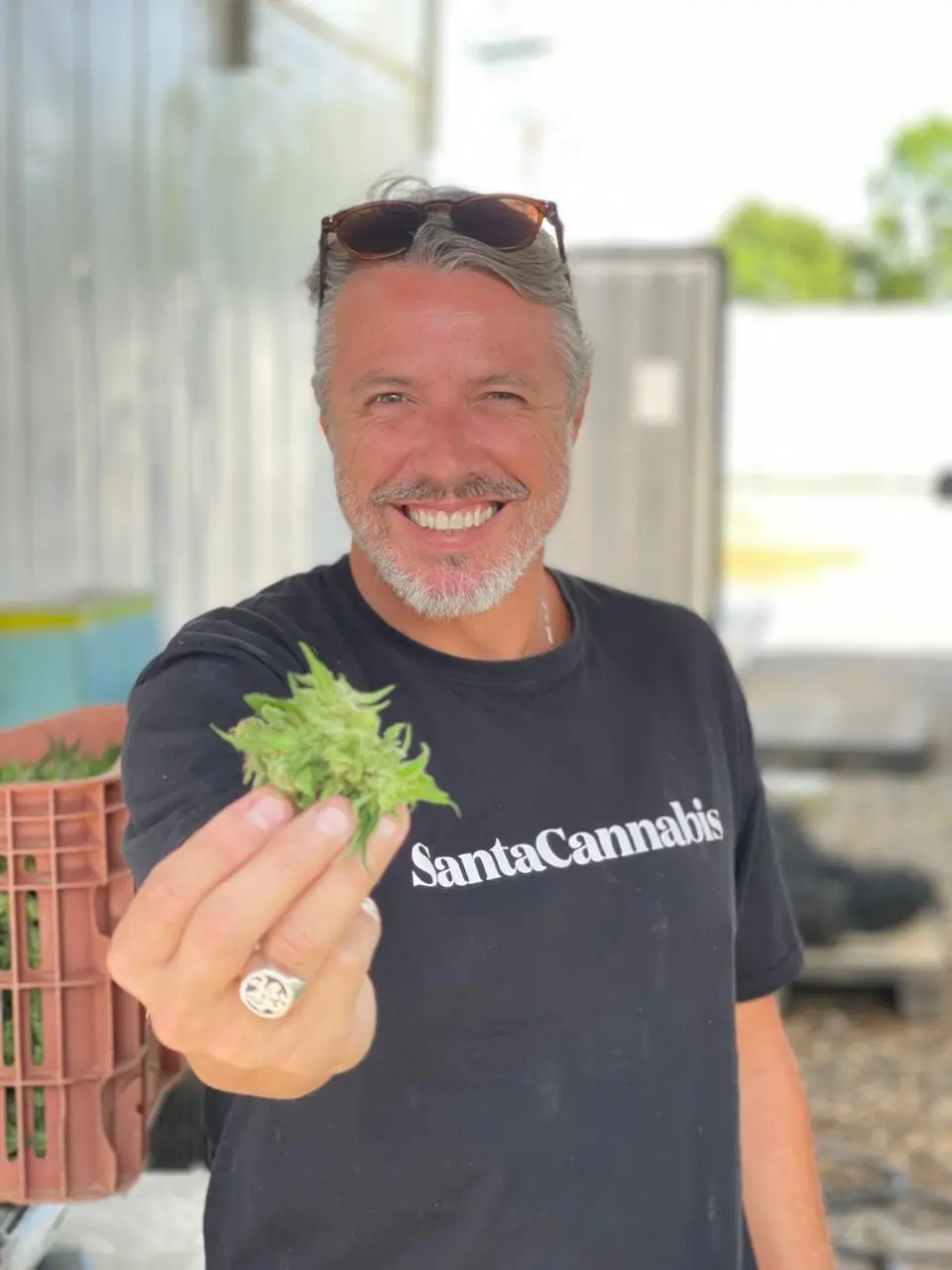
The Santa Cannabis, which provided the extract and provided scientific support for the study, also celebrates the result. "Santa played a fundamental role in this project, providing the extract, supporting the research from the beginning, and contributing with technical-scientific support. They are co-authors of the study and, throughout the research, and even today, the association is very attentive to any of our needs. It is a pleasure and a great stimulus for us to always count on Santa's support to do science in Brazil", emphasizes Professor Ney.
Pedro Sabaciauskis, president of Santa Cannabis, reinforces that "This type of collaboration between universities, veterinary clinics, and associations like ours points the way to a future with more therapeutic inclusion and evidence-based public policies".